

Maddy summaryThis bill (S 1505) aims to address health disparities affecting LGBTQ+ individuals in Massachusetts. The official abstract states it seeks to advance "LGBTQ health equity" under Public Health, but the provided context does not include specific provisions, mechanisms, or affected groups beyond this general goal. No concrete policy changes, funding details, or implementation methods are described in the available information. Therefore, a detailed summary of the bill's specific actions cannot be provided based on the given abstract alone.
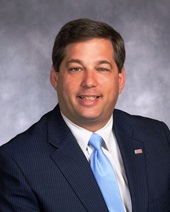
Sen. Bruce Tarr
Sponsored bills
By Mr. O'Connor, a petition (accompanied by bill, Senate, No. 168) of Patrick M. O'Connor, James K. Hawkins, John F. Keenan, Manny Cruz and other members of the General Court for legislation to increase the safety of individuals with disabilities relying on life-support equipment. Children, Families and Persons with Disabilities.
By Mr. Fattman, a petition (accompanied by bill, Senate, No. 2139) of Ryan C. Fattman and Bruce E. Tarr for legislation relative to unpaid student loans. State Administration and Regulatory Oversight.
Maddy summaryThis bill amends Massachusetts law to strengthen penalties for repeat traffic offenders. It increases the minimum revocation period for habitual traffic offenders from 4 to 5 years and creates three classification levels (Level 2 and Level 3) based on offense severity and prior violations. Level 3 offenders - those convicted of DUI, reckless driving, license fraud, or multiple serious violations - face license revocation for up to life (minimum 5 years) and must complete a driver improvement course before reinstatement. The law directly affects individuals with repeated traffic violations who have not had their licenses restored for over 5 years.
Maddy summaryThis bill (SD 45) requires the Massachusetts Department of Developmental Services to formally include "fetal opioid drug exposure and addiction" within the existing definition of "Closely Related Developmental Conditions" under state regulations. It directly affects individuals with developmental conditions linked to prenatal opioid exposure by ensuring they qualify for related support services. The key mechanism is amending regulatory definitions to expand eligibility, without creating new programs or funding. The commissioner may also later add other diagnoses to this category at their discretion.
By Mrs. Dooner, a petition (accompanied by bill, Senate, No. 2738) (subject to Joint Rule 12) of Kelly A. Dooner, Norman J. Orrall, Bruce E. Tarr, Kelly W. Pease and other members of the General Court for legislation to address rising insurance costs for manufactured home residents. Financial Services.
Maddy summaryH 4912 proposes creating the Accessibility in the Creative Economy (ACE) grant program, which would establish a dedicated fund administered by the Office on Disability. The program would provide financial support to for-profit, non-profit, and public arts, humanities, and interpretive science organizations across Massachusetts to make physical and programmatic improvements - such as installing ramps, assistive listening systems, or accessibility training - to remove barriers for people with disabilities. A new ACE Commission, requiring majority representation from people with disabilities, would set grant criteria, prioritize racial and geographic diversity, and oversee funding distribution on a competitive basis. The bill is pending in committee and would require the Office on Disability to report annually on fund usage and grant recipients.
By Mr. Tarr, a petition (accompanied by bill, Senate, No. 1772) of Bruce E. Tarr and Steven George Xiarhos for legislation relative to implementing a blue alert system in the commonwealth. Public Safety and Homeland Security.
By Mr. Tarr, a petition (accompanied by bill, Senate, No. 1777) of Bruce E. Tarr for legislation to pertain to public fire safety and professionalism. Public Safety and Homeland Security.
By Mr. Tarr, a petition (accompanied by bill, Senate, No. 1768) of Bruce E. Tarr for legislation relative to the use of green lights for municipal emergency management vehicles. Public Safety and Homeland Security.