

Maddy summaryThis bill requires Massachusetts state agencies to transition their medium- and heavy-duty truck fleets to battery electric vehicles. Starting July 1, 2025, all new purchases or leases must be battery electric trucks, with the entire fleet fully converted by June 30, 2035, unless infrastructure limitations or lack of suitable models prevent it. Agencies must annually report fleet details and justify any exceptions to using zero-emission vehicles. Additionally, the bill delays Massachusetts from implementing California's Advanced Clean Trucks regulations until at least July 1, 2027. The policy directly affects state agencies managing vehicle fleets and aims to reduce transportation emissions through fleet electrification.
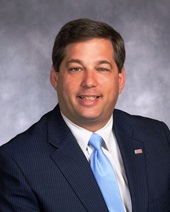
Sen. Bruce Tarr
Sponsored bills
By Mr. Tarr, a petition (accompanied by bill, Senate, No. 290) of Bruce E. Tarr for legislation to allow for a journeyman electrician to have no more than two apprentices under his or her direct supervision or employ. Consumer Protection and Professional Licensure.
Maddy summaryThis bill requires Massachusetts public and charter schools to provide all K-8 students with at least 30 minutes of daily supervised outdoor recess when weather permits, or indoor physical activity if needed. Schools cannot reduce recess time due to curriculum changes or withhold it for academic work, individualized education plans, or completing classroom tasks. Exceptions apply to shortened school days (e.g., delayed openings) and field trip days.
By Mr. Kennedy (by request), a petition (accompanied by bill, Senate, No. 85) of Kevin Gilnack, Bruce E. Tarr and Manny Cruz for legislation to enable private donations to the cannabis social equity trust fund. Cannabis Policy.
By Mr. Fattman, a petition (accompanied by bill, Senate, No. 79) of Ryan C. Fattman, Michael J. Soter and Bruce E. Tarr for legislation to further define eligibility for medical use marijuana. Cannabis Policy.
By Mr. Fattman, a petition (accompanied by bill, Senate, No. 2140) of Ryan C. Fattman and Bruce E. Tarr for legislation to SAVE tax dollars in the Commonwealth. State Administration and Regulatory Oversight.
Maddy summaryThis bill amends Massachusetts law to improve transition planning for youth with disabilities as they leave high school or turn 22. It requires the Transitional Advisory Committee to submit annual county-level reports tracking youth needing habilitative services, residential placement, or agency support. A new commission, including youth/family members and agency representatives, must develop a comprehensive plan within one year addressing communication gaps, service awareness, residential placement delays, and geographic equity in services. The plan will focus on ensuring smoother transitions to adult services for over 22,000 Massachusetts youth annually who lose special education eligibility.
Maddy summaryThis bill establishes a court-supervised outpatient treatment program for adults (18+) with severe mental illness who are at substantial risk of harm to self or others and unable to meet basic needs due to their condition, and who have a history of treatment non-adherence (including multiple hospitalizations or violent behavior). Authorized individuals - such as doctors, family members, or probation officers - can petition a court for a "critical community mental health service treatment plan," which must include supervision, medication, and assistance with housing, food, and other essentials. The court must determine this outpatient care is the least restrictive alternative before approving the plan, with initial orders limited to 180 days and renewals to 365 days. The program aims to prevent hospitalizations by providing structured community-based support.
Maddy summaryThis bill creates a public dashboard showing how residential energy bills are calculated, including detailed breakdowns of charges from gas and electric companies and explanations of each bill component. It requires energy companies to submit quarterly reports on rates, customer data, and clean energy program costs, and mandates the dashboard include analysis of benefits like reduced emissions, system reliability, and avoided energy costs. The bill also requires utilities to return 70% of certain clean energy payments directly to ratepayers through annual bill credits. These changes apply to Massachusetts residential electricity and gas customers and affect all energy companies operating in the state.
Maddy summarySD 1554 requires health insurance plans in the state to cover partial prescription fills for medication synchronization when a prescriber or pharmacist deems it medically appropriate and the patient agrees. It prohibits insurers from denying coverage or applying pro-rated cost-sharing for such partial supplies, and mandates pharmacies to override system denials for this purpose. The bill also bans insurers from using pro-rated dispensing fees, requiring full payment for each partial fill regardless of patient copay amounts. This directly affects patients needing synchronized medications, pharmacists dispensing partial prescriptions, and health insurers managing coverage policies. The law aims to improve medication adherence and reduce costs by removing insurance barriers to flexible prescription scheduling.