Maddy summaryThis bill creates a new fund within the Board of Higher Education in Massachusetts to support educational opportunities for caregivers of adults with disabilities. The fund will be financed through state appropriations, interest on those funds, and public or private donations, with all money held in trust for the program's use. Money from the fund can be spent without needing additional legislative approval each year and will cover both educational activities and the necessary costs to run the program.
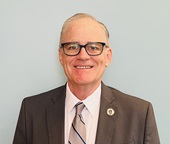
Rep. Tom Stanley
Sponsored bills
Maddy summaryThis bill requires public colleges in Massachusetts to create housing programs specifically designed for students recovering from substance use disorders. These programs must offer an alcohol and drug-free environment along with services such as trauma-informed counseling, mentoring, and peer support. Additionally, the legislation mandates that all students, faculty, and staff receive overdose training and ensures that naloxone is available on campus to treat overdoses. The law directly impacts public higher education institutions and aims to provide a safer, supportive living situation for students in recovery.
Maddy summaryThis bill creates a new state fund called the Caregivers to Adults with Disabilities Fund to support the education of family members caring for adults with disabilities. The Massachusetts Board of Higher Education will manage the fund, which will be financed through state appropriations, interest, and donations, and will automatically carry over any unused money to future years. The primary goal is to help these caregivers by paying for their tuition and fees at eligible community colleges. The bill also requires the board to report annually on how the money is used and directs the state comptroller to transfer an initial $4.125 million from the General Fund to start the program.
Maddy summaryThis bill creates a new grant program to help Master of Social Work students in Massachusetts cover the costs of their field placements. The Department of Education would administer these funds, which are intended to recruit and retain students from historically marginalized and low-income communities. To qualify, students must commit to working in the state for at least two years after graduation, and the program prioritizes first-generation college students while requiring at least half of the recipients to identify as Black, Indigenous, or people of color. The financial assistance ranges from $1,000 to $2,000 per month depending on the student's year of study, with applications accepted annually between January and March.
April 1, 2024 -- The committee on Higher Education to whom was referred the petition (accompanied by bill, Senate, No. 160) of Sal N. DiDomenico, Manny Cruz, Susannah M. Whipps, Jack Patrick Lewis and other members of the General Court for legislation relative to Social Work Uplifting Practices and Exam Removal (“The SUPER Act”), report the accompanying bill (Senate, No. 2673).
April 1, 2024 -- The committee on Higher Education, to whom was referred the petitions (accompanied by bill, Senate, No. 847) of Rebecca L. Rausch, Russell E. Holmes, David F. DeCoste, Michael O. Moore and other members of the General Court for legislation to support college students in recovery; and (accompanied by bill, Senate, No. 849) of John C. Velis for legislation relative to opioid overdose prevention in college housing, report the accompanying bill (Senate, No. 2680).
Maddy summaryThis bill aims to increase diversity among Massachusetts educators by requiring the state Department of Elementary and Secondary Education to create new hiring guidelines and alternative certification options. The law mandates that public schools and districts develop specific plans to eliminate discriminatory barriers, actively recruit underrepresented groups, and set measurable goals for hiring diversity that must be updated every three years. Additionally, it establishes a review process to ensure these plans meet state criteria and requires regular reporting on their implementation. The Department of Elementary and Secondary Education will also explore alternative ways to grant teacher certification, such as accepting portfolios or degrees from other states, instead of relying solely on standard testing.
April 1, 2024 -- The committee on Education, to whom was referred the petitions (accompanied by bill, Senate, No. 239) of Michael D. Brady, James K. Hawkins, Patrick M. O'Connor and Patricia D. Jehlen for legislation to establish a special commission on creating a more diversified teaching workforce in the Commonwealth; (accompanied by bill, Senate, No. 252) of Brendan P. Crighton for legislation to promote racially integrated schools; (accompanied by bill, Senate, No. 254) of Brendan P. Crighton for legislation to promote racially and culturally inclusive K-12 curriculum; (accompanied by bill, Senate, No. 259) of Julian Cyr, Jack Patrick Lewis, Vanna Howard and Rebecca L. Rausch for legislation relative to LGBTQ+ inclusive curriculum; (accompanied by bill, Senate, No. 286) of Adam Gomez and Vanna Howard for legislation to ensure diversity in public education; (accompanied by bill, Senate, No. 288) of Adam Gomez, Tram T. Nguyen, Steven Ultrino, Jack Patrick Lewis and others for legislation to promote racially inclusive curriculum in schools; (accompanied by bill, Senate, No. 299) of Robyn K. Kennedy, Steven Owens and Rebecca L. Rausch for legislation to address racial and cultural bias training in educator professional development; (accompanied by bill, Senate, No. 311) of Jason M. Lewis, Manny Cruz, Joanne M. Comerford, Jack Patrick Lewis and other members of the General Court for legislation relative to educator diversity; (accompanied by bill, Senate, No. 318) of Liz Miranda, Joanne M. Comerford, Lydia Edwards, Jack Patrick Lewis and other members of the General Court for legislation to establish a permanent commission on American Indian and Alaska Native education; (accompanied by bill, Senate, No. 340) of Pavel M. Payano for legislation to enable all students to thrive: protecting a high quality, diverse educator workforce; and (accompanied by bill, Senate, No. 344) of Rebecca L. Rausch, Jack Patrick Lewis, Joanne M. Comerford, Vanna Howard and other members of the General Court for legislation relative to celebrate and teach Native American culture and history, report the accompanying bill (Senate, No. 2709).

Maddy summaryThis bill creates a special commission to study the feasibility of establishing a statewide long-term care insurance program in Massachusetts. The commission will examine how to integrate such a program into the existing state disability insurance system, considering options like payroll taxes and voluntary enrollment for working adults. Its members will include state officials and representatives from various elder care organizations, who will analyze program design, funding, benefits, and workforce needs. The group is required to submit a report with findings and draft legislation within one year, followed by an actuarial review two years later.
Maddy summaryThis bill requires the Massachusetts Board of Elementary and Secondary Education to create rules banning public schools from using Native American names, logos, or mascots for their athletic teams. It mandates that schools currently using such imagery must select new alternatives by a specific deadline set by the state board. The legislation allows schools to keep existing uniforms and materials that feature the prohibited names only if they have already chosen a replacement and stop buying new items with the old imagery. Additionally, any new signs or fixtures displaying the banned names must be removed, while those on existing facilities can remain until the next scheduled maintenance or replacement.