

In committee Feb 26, 2024
1 co-sponsor
Total votes
1,007
all sessions
Attendance
100%
4 missed
Near the chamber average
With party
98%
of cast votes
Lower than 78% of chamber peers
Bipartisan score
1%
crosses aisle rarely
Higher than 76% of chamber peers
Sponsored
852
bills & resolutions
Near the chamber average
Committees
0
assignments
852 bills and resolutions
Sponsored bills
Total
852
Primary
27
Co-sponsor
825
This page
852
matching current filters
An Act to improve augmentative and alternative communication opportunities for children with disabilities
Maddy summaryThis bill directs the Massachusetts Board of Elementary and Secondary Education to update regulations requiring teacher training programs to include instruction on augmentative and alternative communication and assistive technologies. It also mandates that individual professional development plans for educators address the specific needs of students who are nonverbal or have limited speech. These changes aim to ensure that teachers are better equipped to support children with disabilities who rely on alternative methods of communication.
Passed Feb 20, 2024
1 co-sponsor
An Act to establish minimum reimbursement rate to insurance claimants
Maddy summaryThis bill establishes a minimum reimbursement rate that insurance companies must pay to claimants for labor on first- or third-party auto insurance claims in Massachusetts. The new rate is calculated by adjusting the 1988 Insurance Reform Act rate for inflation and will be implemented gradually over two years before being updated annually based on the Consumer Price Index. While the law sets a floor for payments, it allows for higher reimbursements if specific criteria regarding vehicle type, labor expertise, and training are met.
Passed Feb 20, 2024
1 co-sponsor
In committee Feb 20, 2024
1 co-sponsor
An Act establishing farm to school grants to promote healthy eating and strengthen the agricultural economy
Maddy summaryThis bill creates a grant program within the Massachusetts Department of Elementary and Secondary Education to fund local food purchases and cooking equipment for schools and childcare centers. The program aims to improve student nutrition by enabling institutions to buy ingredients grown in the state and prepare scratch-cooked meals while teaching students about the food system. To receive funding, applicants must be public schools or licensed childcare programs that serve meals through specific federal feeding programs. An advisory committee, including representatives from agriculture and early education, will oversee the grants to ensure diverse stakeholder input.
Passed Feb 20, 2024
1 co-sponsor
An Act relative to universal school meals
Maddy summaryThis bill proposes establishing a universal school meal program in Massachusetts to provide free breakfast and lunch to all public school students. It would require the state to allocate funding for these meals and mandate that every school district participate in the program. The legislation aims to ensure that every child attending a public school in the Commonwealth receives nutritious food at no cost to their families.
Passed Feb 20, 2024
1 co-sponsor
An Act updating Nicky’s Law to protect individuals with disabilities in MassHealth day habilitation programs
Maddy summaryThis bill updates Nicky's Law to broaden the legal definition of "employer" for entities providing MassHealth day habilitation services to individuals with intellectual or developmental disabilities. By expanding the criteria to include organizations operating under specific department contracts, funding, or licenses, the legislation ensures these service providers are covered under existing employment protections. The change directly affects the organizations delivering these day programs and the staff who work within them, aiming to clarify their status under current state laws.
Passed Feb 15, 2024
1 co-sponsor
An Act updating terminology and investigative practices related to the protection of persons with disabilities
Maddy summaryThis bill updates the official name of a state agency from the "disabled persons protection commission" to the "commission for the protection of persons with disabilities" to reflect more inclusive language. The legislation directly affects the agency's legal standing and its interactions with individuals and organizations by amending multiple sections of state law. It also clarifies key definitions used in investigations, such as specifying who counts as a "caretaker" and listing various professionals who must report suspected abuse. These changes aim to modernize terminology and ensure consistent definitions for protecting people with disabilities without altering the core investigative functions of the commission.
Passed Feb 15, 2024
1 co-sponsor
In committee Feb 15, 2024
1 co-sponsor
An Act increasing penalties for hit and runs with recreational vehicles in the Commonwealth to be known as the James Ward Act
Maddy summaryThis bill, known as the James Ward Act, increases penalties for drivers who leave the scene of an accident involving a recreational vehicle or snowmobile without stopping. Under the new rules, anyone who hits another person with such a vehicle and flees without providing their name, address, or registration number could face up to one year in jail or a fine of up to $1,000 if no one dies. If the hit-and-run results in a death, the maximum prison sentence rises to two and a half years, or a fine of up to $5,000, or both. The law specifically targets incidents where the driver operates a recreational vehicle or snow vehicle and knowingly causes bodily injury before fleeing. These changes apply to all drivers in the Commonwealth of Massachusetts using these types of vehicles.
Passed Feb 12, 2024
1 co-sponsor
Ask Maddy
·
AI policy assistant
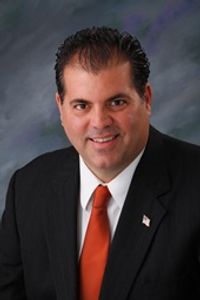
Ask Maddy about Angelo D'Emilia
Scope: massachusetts
Hi! I can help you understand Angelo D'Emilia's legislative record. What would you like to know?
Try one of these
i
Maddy answers using official bill text and legislative records. Always verify before sharing.
Sources cited inline