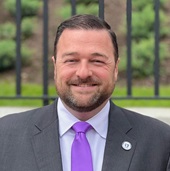
By Representatives O'Day of West Boylston and Philips of Sharon, a petition (accompanied by bill, House, No. 2246) of James J. O'Day, Edward R. Philips and others for legislation to authorize attending physicians to prescribe medical aid in dying medication that will end the life of patients in a peaceful manner. Public Health.
Rep. Ted Philips
Sponsored bills
Maddy summaryThis bill creates a new funding tool within the Massachusetts School Building Authority to invest in vocational-technical education programs and regional schools. It allocates $3 billion to replace or renovate school infrastructure and purchase critical training equipment to better prepare students for industry-relevant careers. The legislation also adjusts reimbursement rates for these projects, allowing the state to cover between 75% and 90% of eligible construction costs, with higher rates available for schools that align with regional workforce needs.
March , 2024 -- The committee on Education, to whom was referred the petitions (accompanied by bill, Senate, No. 256) of John J. Cronin, Manny Cruz and John Barrett, III for legislation to create and expand student pathways to success; (accompanied by bill, Senate, No. 274) of Paul R. Feeney, Jacob R. Oliveira, Adam Scanlon, Susan Williams Gifford and other members of the General Court for legislation to improve access, opportunity, and capacity in Massachusetts vocational-technical education; (accompanied by bill, Senate, No. 297) of Edward J. Kennedy and Joanne M. Comerford for legislation to expand dual enrollment for high school students in Gateway Cities; (accompanied by bill, Senate, No. 306) of Jason M. Lewis, Michael O. Moore, Kate Lipper-Garabedian and Patricia D. Jehlen for legislation relative increase student access to career technical education schools and programs which are aligned with regional labor market needs; (accompanied by bill, Senate, No. 334) of Jacob R. Oliveira, Jeffrey N. Roy and Michael J. Barrett for legislation to expand high school student access to earn industry recognized credentials; (accompanied by bill, Senate, No. 361) of John C. Velis for legislation to expand high school student access to earn industry recognized credentials; and (accompanied by bill, Senate, No. 362) of John C. Velis and Kelly W. Pease for legislation to expand dual enrollment for high school students in Gateway Cities, report the accompanying bill (Senate, No. 2664).

Maddy summaryThis bill creates a special commission in Massachusetts to study blockchain technology and cryptocurrency. The commission will consist of 25 members, including state officials, industry representatives, and consumer advocates, who must meet within 90 days to begin their work. Its main task is to investigate how blockchain could be used by government and businesses, examine tax implications for digital assets, and determine the best ways to protect consumers while encouraging responsible adoption. The group will also look at energy usage, regulatory oversight, and barriers that might prevent certain groups from participating in these emerging technologies. Ultimately, the commission will produce a master plan with recommendations for expanding blockchain use in the state.
By Representative Hogan of Stow and Senator Cyr, a joint petition (accompanied by bill, House, No. 2197) of Kate Hogan, Julian Cyr and others for legislation to protect public health from PFAS. Public Health.
By Representative Philips of Sharon, a petition (subject to Joint Rule 12) of Edward R. Philips relative to rent withholdings. The Judiciary.
Senate, March 14, 2024 -- Text of the Senate Bill ensuring affordability, readiness and learning for our youth and driving economic development (Senate, No. 2707) (being the text of Senate, No. 2697, printed as amended)
By Representative Jones of North Reading, a petition (accompanied by bill, House, No. 2841) of Bradley H. Jones, Jr., and others relative to the taxation of the sale of rolling stock. Revenue.
Maddy summaryThis bill requires all public schools in Massachusetts serving students in grades six through twelve to provide free disposable menstrual products, such as tampons and sanitary napkins, in school restrooms. The law mandates that these items be available at no cost to students and must be distributed in a way that avoids stigmatizing anyone who uses them. School districts are authorized to adjust the quantity of products based on usage rates to ensure adequate supply. The provisions of this act are set to take effect on August 1, 2023.