

Passed Mar 14, 2024
1 co-sponsor
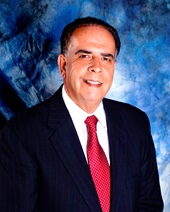
Rep. Alan Silvia
Total votes
1,241
all sessions
Attendance
93%
81 missed
Near the chamber average
With party
96%
of cast votes
Lower than 90% of chamber peers
Bipartisan score
2%
crosses aisle rarely
Higher than 89% of chamber peers
Sponsored
617
bills & resolutions
Lower than 92% of chamber peers
Committees
5
assignments
617 bills and resolutions
Sponsored bills
Total
617
Primary
81
Co-sponsor
536
This page
617
matching current filters
An Act establishing an emergency responder yellow dot program
By Representative McKenna of Webster, a petition (accompanied by bill, House, No. 3379) of Joseph D. McKenna, Alan Silvia and Carol A. Doherty that the Registrar of Motor Vehicles be authorized to establish an emergency responder yellow dot program. Transportation.
Passed Mar 7, 2024
1 co-sponsor
An Act to prohibit mandatory overtime
Maddy summaryThis bill amends Massachusetts law to prohibit hospitals and certain correctional facilities from requiring health care workers to work mandatory overtime. It defines mandatory overtime as any hours worked beyond a pre-agreed schedule that does not exceed 12 hours in a 24-hour period, while excluding doctors, residents, and management from this protection. The legislation allows for mandatory overtime only during emergency situations where patient safety is at risk and no other reasonable alternatives exist. Directly affected individuals include registered nurses, licensed practical nurses, unlicensed assistive personnel, and other support staff employed at covered facilities.
Passed Mar 4, 2024
1 co-sponsor
An Act establishing the Abigail Adams entrepreneurial program for women
Maddy summaryThis bill creates the Abigail Adams Center for Women in STEM within the Massachusetts Technology Collaborative to support women working in science, technology, engineering, and mathematics. The center aims to address the underrepresentation of women in these fields by offering grants for startup costs, business incubator services, and entrepreneurial training. It also provides networking opportunities, help with business planning, and marketing assistance to help women launch and grow their own companies. By establishing this dedicated program, the legislation seeks to create more favorable workplace environments and commercialization opportunities specifically for women in the STEM sector.
Passed Mar 4, 2024
0 co-sponsors
An Act committing to higher education the resources to insure a strong and healthy public higher education system
Maddy summaryThis bill proposes to dedicate state resources to maintain a robust and healthy public higher education system in Massachusetts. It directly affects the state's public colleges and universities by seeking to ensure they have the necessary funding to operate effectively. The legislation aims to commit financial support to these institutions to prevent cuts that could impact educational quality and access. By focusing on resource allocation, the bill intends to provide a stable foundation for public higher education without specifying exact dollar amounts or spending limits.
Passed Mar 4, 2024
1 co-sponsor
An Act reforming labor rates paid by insurance companies to auto repairers in the Commonwealth
Maddy summaryThis bill creates a new advisory board to study and recommend fair labor rates for auto repair shops in Massachusetts. The board will include representatives from insurance companies, repair shops, vocational schools, and consumer groups to conduct a biennial survey of labor costs and regional data. Based on this research, the insurance commissioner will establish a minimum hourly rate that insurers must pay for vehicle repairs, with a floor of $55 per hour. Additionally, the bill ensures that these new labor rates are excluded from certain state programs designed to control insurance costs.
Passed Feb 20, 2024
1 co-sponsor
An Act to create and expand student pathways to success
Maddy summaryThis bill establishes a new Workforce Skills Cabinet within the Governor's office to coordinate state efforts on education and job training. The cabinet will include leaders from key agencies like education, labor, and housing, along with appointed representatives from businesses, workers, and community groups. Its main duties involve aligning school programs with future job needs, studying how well current training paths serve all students, and creating better tools to track student progress. The group is required to meet monthly, publish an annual report on labor market needs, and submit yearly updates to the state legislature.
Passed Feb 20, 2024
1 co-sponsor
An Act to establish minimum reimbursement rate to insurance claimants
Maddy summaryThis bill establishes a minimum reimbursement rate that insurance companies must pay to claimants for labor on first- or third-party auto insurance claims in Massachusetts. The new rate is calculated by adjusting the 1988 Insurance Reform Act rate for inflation and will be implemented gradually over two years before being updated annually based on the Consumer Price Index. While the law sets a floor for payments, it allows for higher reimbursements if specific criteria regarding vehicle type, labor expertise, and training are met.
Passed Feb 20, 2024
1 co-sponsor
An Act incentivizing the awarding of industry-recognized credentials
Maddy summaryThis bill directs the Massachusetts Department of Elementary and Secondary Education to provide financial awards to school districts when students earn industry-recognized certifications. Schools receive $1,000 for each student who obtains a credential in a high-demand occupation or one accepted by state colleges for academic credit, and $800 for certifications addressing local workforce needs. The law requires that at least 80% of these funds be used to support the specific program that led to the certification, such as paying instructor stipends or subsidizing fees for low-income students, rather than replacing existing operational budgets. Additionally, the department must offer separate development funds to help districts create training programs and hire instructors to prepare students for these credentials. The bill also mandates an annual report detailing how many students pursued and earned these certifications, including data on low-income and special education populations.
Passed Feb 20, 2024
1 co-sponsor
In committee Feb 20, 2024
1 co-sponsor
Ask Maddy
·
AI policy assistant
Ask Maddy about Alan Silvia
Scope: massachusetts
Hi! I can help you understand Alan Silvia's legislative record. What would you like to know?
Try one of these
i
Maddy answers using official bill text and legislative records. Always verify before sharing.
Sources cited inline