

By Ms. Lovely, a petition (accompanied by bill, Senate, No. 155) of Joan B. Lovely, Sean Garballey, Alyson M. Sullivan-Almeida, James K. Hawkins and other members of the General Court for legislation relative to supported decision-making agreements for certain adults with disabilities. Children, Families and Persons with Disabilities.
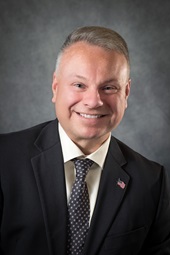
Rep. John Marsi
Sponsored bills
Maddy summaryHD 867 establishes an advisory board to review and advise on services and policies for people with acquired brain injuries (including traumatic brain injury, stroke, or brain tumors) and their families. The board, composed of 20 members including state agency representatives, individuals with brain injuries, family caregivers, clinicians, and service providers, will meet quarterly to assess needs, monitor access to rehabilitation services, and track implementation of prior recommendations. It must file biennial reports with state leaders detailing progress on improving community-based support services and policy changes. The bill directly affects individuals with acquired brain injuries, their families, and the state agencies responsible for their care.
Maddy summaryHD 911 creates an electronic system ("electronic backpack") to store all educational records for foster children and youth under the care of the Department of Children and Families (DCF). The bill requires the Department of Elementary and Secondary Education to develop this system within one year, containing records like transcripts, attendance, Individual Education Plans (IEPs), case worker contacts, and educational decision-maker information. It mandates that schools, authorized educational decision makers, and medical providers (when necessary for care) can access the records to ensure educational continuity during placements. This replaces paper-based record transfers, directly affecting foster youth who frequently change schools while in state care.
Maddy summaryThis bill requires Massachusetts' Department of Children and Families to review and improve policies supporting foster children's education. It mandates the department to create clear rules for foster parents, social workers, and schools about educational responsibilities, streamline procedures for department offices, and establish a training program for new foster parents. The department must also develop systems to track each child's education and share records easily with authorized decision-makers. Finally, it requires an annual report with education data for all foster children, submitted to state leaders and committees. The bill directly affects foster children, foster parents, social workers, schools, and the departments managing foster care.
By Representative Fiola of Fall River, a petition (accompanied by bill, House, No. 236) of Carole A. Fiola and John R. Gaskey relative to mandated reporting of child neglect. Children, Families and Persons with Disabilities.
Maddy summaryThis bill creates a task force to develop standards for identifying and fixing indoor air pollution and mold in schools, nursing homes, public housing, childcare centers, and other residential buildings. The task force, including health and environmental officials plus community representatives, must submit recommendations within one year, including public comment periods. It also requires the Department of Public Health to create new regulations by December 2026 for monitoring ultrafine particles and black carbon in indoor air, based on current health science. These rules will apply to both existing and new buildings, directly affecting residents and staff in the specified facilities.
Maddy summaryH 4590 creates a task force to address indoor air pollution in schools, care facilities, housing, and other community buildings. The task force, including health, environmental, and community experts, must develop recommendations for monitoring and fixing air quality issues within one year, with public input required before finalizing. It also mandates the Department of Public Health to create regulations by July 2027 for testing ultrafine particles and black carbon in indoor air, based on current health science. These regulations will require standard testing procedures and public reporting for existing and new buildings. The bill directly affects residents and staff in the specified facilities by establishing new air quality standards and oversight.
Maddy summaryHD 758 adds a veteran allowance to retirement benefits for public retirees who are veterans. It provides an additional $50 per year of service (capped at $1,000 total) for veterans in Group 1, 2, or 4 retirement systems. Retirement systems must approve the change via board vote and legislative body approval, though the state teachers' and employees' systems are already deemed to have accepted it. The allowance applies prospectively only, with no retroactive payments allowed.
Maddy summaryHD 3698 establishes a commission to study whether to create a retirement credit for certain public employees who worked in person during the early pandemic (March 13, 2020 - January 1, 2021). The study would focus on employees who regularly interacted with the public or faced higher exposure risks, excluding remote workers and elected officials. The commission will evaluate eligibility criteria, credit amounts, and the financial feasibility of such a program. This bill is solely a study; it does not create the credit or provide immediate benefits.
By Mr. Oliveira, a petition (accompanied by bill, Senate, No. 1895) of Jacob R. Oliveira, Ryan C. Fattman, Paul W. Mark, Joanne M. Comerford and other members of the General Court for legislation to provide equity to police officers disabled by cardiac disease. Public Service.