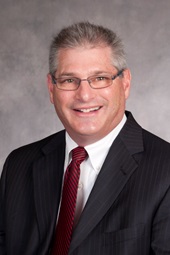
By Representatives Owens of Watertown and Armini of Marblehead, a petition (accompanied by bill, House, No. 3392) of Steven Owens, Jennifer Balinsky Armini and others relative to the electrification of commuter rail lines of the Massachusetts Bay Transportation Authority. Transportation.
Rep. David Linsky
Sponsored bills
By Representative Mahoney of Worcester, a petition (accompanied by bill, House, No. 3375) of John J. Mahoney that municipalities be authorized to install automated road safety camera systems on school buses. Transportation.
Maddy summaryThis bill creates a new grant program called the Hunger Free Campus Initiative to help public colleges and universities in Massachusetts address student food insecurity. The program would provide funding to institutions, including municipally administered and minority-serving colleges, to support students in completing their career and technical education programs. To manage the initiative, the state would hire a program director responsible for developing guidelines and conducting surveys to guide how grants are distributed based on available data on student hunger.
Maddy summaryThis bill aims to improve Massachusetts' Paid Family and Medical Leave Law by clarifying how employers can count toward the required wage contributions. It allows employers to include funds from existing temporary disability policies, paid family leave programs, and various types of paid time off, such as sick or vacation leave, even if those are provided through collective bargaining agreements. Additionally, the legislation requires employers to inform employees of their eligibility for paid leave within five business days of a request, ensuring the notification is provided in the employee's primary language. These changes directly affect employers and employees by expanding the sources of eligible wages and standardizing the process for requesting leave.
Maddy summaryThis bill updates the Massachusetts Paid Family Medical Leave Law by changing how it defines covered businesses and contract workers. It specifically affects employers and independent contractors by adjusting the criteria used to determine who qualifies for the program. Under the new rules, a business is considered covered if more than half of its workforce consists of individuals who are not classified as employees under state law. Additionally, the definition of a covered contract worker is revised to include anyone for whom an employer must make required contributions to the state's Family and Employment Security Trust Fund. These changes aim to clarify eligibility requirements for workers and businesses participating in the paid leave system.
By Representatives Keefe of Worcester and Ultrino of Malden, a petition (accompanied by bill, House, No. 3246) of Mary S. Keefe, Steven Ultrino and others relative to establishing a program for local art and community engagement commission in support of local art and community engagement. Tourism, Arts and Cultural Development.
Senate, March 4, 2024 --The committee on Labor and Workforce Development, to whom was referred the petitions (accompanied by bill, Senate, No. 1197) of Jason M. Lewis, Rebecca L. Rausch, Jack Patrick Lewis, Michael D. Brady and other members of the General Court for legislation to improve the Massachusetts paid family medical leave law; (accompanied by bill, Senate, No. 1198) of Jason M. Lewis, Lydia Edwards, James B. Eldridge and Paul R. Feeney for legislation to amend the Massachusetts Paid Family Medical Leave law definitions of a covered business entity and a covered contract worker; (accompanied by bill, House, No. 1858) of Josh S. Cutler and others relative to the publication of hearing decisions by the Department of Family and Medical Leave; (accompanied by bill, House, No. 1859) of Josh S. Cutler and others relative to data reporting by the Department of Family and Medical Leave; (accompanied by bill, House, No. 1860) of Josh S. Cutler and others for legislation to include bone marrow and organ donation in the paid family and medical leave program; (accompanied by bill, House, No. 1888) of Kenneth I. Gordon and others relative to the Massachusetts Paid Family Medical Leave Law; (accompanied by bill, House, No. 1889) of Kenneth I. Gordon and others relative to the definitions of covered business entity and covered contract worker under the Massachusetts Paid Family Medical Leave Law; and (accompanied by bill, House, No. 1942) of Jeffrey N. Roy relative to unemployment benefits for replacement workers, report the accompanying bill (Senate, No. 2605).

Senate, March 4, 2024 -- The committee on Labor and Workforce Development, to whom was referred the petitions (accompanied by bill, Senate, No. 1171) of Paul R. Feeney, Marc R. Pacheco, Jacob R. Oliveira, Sal N. DiDomenico and other members of the General Court for legislation to include offsite fabrication work for qualified projects under the prevailing wage laws of the Commonwealth; and (accompanied by bill, House, No. 1943) of Jeffrey N. Roy and others relative to compliance with prevailing wage laws for offsite fabrication, report the accompanying bill (Senate, No. 2603).
Maddy summaryThis bill expands the definition of "construction" under Massachusetts prevailing wage laws to explicitly include offsite fabrication work. By amending Section 27D of Chapter 149, the legislation ensures that workers performing manufacturing tasks away from the main construction site are eligible for the same wage protections as those on traditional building projects. The change directly affects contractors and employees involved in prefabricated building components, requiring them to adhere to state wage standards regardless of where the work is physically completed. This update aims to close a potential loophole where offsite fabrication was previously excluded from prevailing wage requirements.