

Maddy summaryH 4650 removes a licensing exam requirement for certain social workers in Massachusetts, renaming "Licensed Certified Social Workers" to "Licensed Independent Clinical Social Workers" to streamline the process. It creates a new paid internship grant program for Master of Social Work (MSW) students from historically marginalized and low-income communities, funded through state or federal resources. The bill also allows licensed clinical social workers to earn continuing education credits for supervising interns. These changes aim to increase workforce diversity and retention, with an evaluation required to assess impacts on access to mental health services and workforce diversity, effective January 1, 2027.
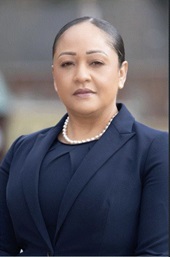
Rep. Estela Reyes
Sponsored bills
Maddy summaryThis bill removes the examination requirement for Licensed Certified Social Workers (LCSWs) and narrows exam focus to Licensed Independent Clinical Social Workers (LICSWs). It creates a paid practicum grant program for Master of Social Work (MSW) students in Massachusetts, prioritizing recruitment and retention from historically marginalized and low-income communities. The bill also allows supervisors providing one-on-one mentoring to earn up to 8 continuing education credits per licensing period. An evaluation of the exam removal's impact on workforce diversity, access to behavioral health services, and patient care for vulnerable populations is required, to be submitted to relevant legislative committees.
Maddy summaryThis bill (HD 2079) updates Massachusetts regulations for clinical laboratories. It requires labs to meet new construction/maintenance standards, participate in proficiency testing, and have qualified directors with specified education/certifications. The bill also establishes an advisory committee with 13 members (including physicians, technologists, and industry representatives) and revises licensing rules, including new application requirements, provisional licensing terms (up to 6 months), and restrictions on transferring licenses without department approval. These changes directly affect all clinical laboratories operating in Massachusetts seeking or holding a license under Chapter 111D.
Maddy summaryHD 2209 strengthens penalties for sexual assaults committed by adults in positions of trust or authority over children. The bill targets individuals like teachers, coaches, mentors, caregivers, or family members who sexually assault minors (ages 14-17 or under 14) while in such roles or afterward. For victims aged 14-17, offenders face up to 10 years in prison; for victims under 14, sentences are life imprisonment with a mandatory minimum of 10 years (no probation, parole, or sentence reductions for 10 years). The law explicitly states children under 18 cannot consent and removes defenses based on the termination of the trusted relationship. This bill directly affects offenders in trusted roles and provides enhanced protections for child victims.
Maddy summaryThis bill amends Massachusetts law to remove charitable immunity protections for cases involving sexual abuse. It directly affects victims seeking legal recourse against charitable organizations by ensuring they can pursue claims without being blocked by liability caps. The key provision adds a specific exception to Section 85K of the General Laws, stating that immunity limitations do not apply to causes of action arising from sexual abuse. This change creates a clear legal pathway for survivors to hold charitable entities accountable in such cases.
Maddy summaryHD 2694 expands funding sources for victim services by adding gifts, grants, and donations to the definition of eligible revenues under two existing law sections. It amends Sections 66 and 66A of Chapter 10 to explicitly include all revenues received from public and private sources as gifts, grants, or donations. This change allows victim service programs to utilize a broader range of funding streams without requiring new legislative appropriations. The bill directly affects state-funded victim service organizations that rely on these revenue sources for program operations.
Maddy summaryThis bill creates a new Office of Access and Opportunity (OAO) within the governor's office to ensure equal access for Limited English Proficient (LEP) and deaf or hard of hearing residents. The OAO, led by a governor-appointed deputy chief, will develop policies to advance non-discrimination in state employment, procurement, and services, and require all state agencies to create language access plans. These plans must outline how agencies will provide oral interpretation, translation, and auxiliary services to ensure LEP and deaf/hard of hearing individuals can effectively access state programs. The bill directly affects state agencies and the public they serve, mandating concrete steps to remove language barriers in government services.
By Representative Decker of Cambridge, a petition (accompanied by bill, House, No. 1136) of Marjorie C. Decker and others relative to the health insurance prior authorization process. Financial Services.
By Mr. Moore, a petition (accompanied by bill, Senate, No. 2184) of Michael O. Moore, Hannah Kane, Edward R. Philips, Francisco E. Paulino and other members of the General Court for legislation to establish Diwali Day in the commonwealth. State Administration and Regulatory Oversight.
Maddy summaryHD 1552 requires shelters, schools, and correctional facilities to provide free disposable menstrual products (like pads, tampons, and liners) to menstruating individuals without stigma. It applies to temporary housing providers (e.g., domestic violence shelters, emergency hotels), all public primary/secondary schools, and correctional facilities (jails, prisons). The bill mandates these products be available in convenient, non-stigmatizing ways, such as in restrooms. This directly affects menstruating people experiencing homelessness, attending school, or in detention. The law creates a new requirement for these specific institutions to cover the cost of products.