

Maddy summaryHD 3756 (Section 3AA) allows religious organizations (including IRS 501(c)(3) groups or state-recognized religious entities) to build multifamily housing on land they've owned for at least three years without needing special zoning permits or facing unreasonable restrictions. The bill sets density rules: up to 50 units per acre if 20-25% of units are affordable to low/middle-income households (at 60-80% of area median income), with height limits matching existing structures or local zoning. It also exempts qualifying projects from off-street parking requirements if near transit, mandates 15-foot setbacks, and requires compliance with environmental regulations. The law directly affects religious landowners seeking to develop housing, aiming to increase affordable housing options on religious property while maintaining local zoning standards.
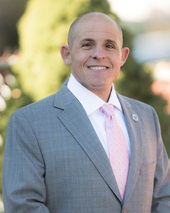
Rep. Steve Ultrino
Sponsored bills
Maddy summaryHD 3816, the "Safe Communities Act," prohibits Massachusetts law enforcement from asking about immigration status during routine interactions (except when legally required) and restricts cooperation with federal immigration enforcement. It requires written consent with clear explanations in multiple languages before DHS interviews of people in custody, and bans automatic notifications to DHS about individuals' release from custody (except for end-of-sentence releases). The law also prohibits police from acting as immigration officers under federal agreements and mandates training for law enforcement on these provisions. These changes directly affect all Massachusetts residents, especially immigrant communities, and apply to state/local police, sheriffs, and correctional facilities.
Maddy summaryThis bill (HD 1848) requires autonomous vehicles registered in Massachusetts to meet federal motor vehicle standards. It mandates that a human safety operator must be physically present in the vehicle during any operation involving transporting passengers or goods across state lines (interstate commerce), and the operator must be able to monitor the vehicle and intervene immediately if needed. The operator must also hold all required state and federal qualifications for driving. This directly affects companies operating autonomous vehicles for passenger or freight services within Massachusetts.
Maddy summaryThis bill draft (HD 909) proposes utility shutoff protections during extreme heat events, but the provided text is incomplete - it only states "DRAFT BEING WORKED ON BY HOUSE COUNSEL" with no substantive provisions. The summary section is empty, so specific mechanisms, affected groups, or policy details cannot be confirmed from the available context. Without finalized text, no concrete policy changes or direct impacts can be described. A complete summary requires the finalized bill language, which is not provided here.
Maddy summaryThis bill establishes an advisory council to minimize harm to wildlife - like North Atlantic right whales and coastal habitats - from offshore wind projects, requiring input on monitoring and mitigation plans. It creates a program giving priority access to state grants (such as MassWorks and Housing Choice) for communities hosting offshore wind facilities, aiming to support local economic development. A special commission will study Massachusetts' offshore wind supply chain, manufacturing jobs, and equity impacts, reporting by June 2026. The bill directly affects wildlife protection agencies, coastal communities hosting projects, and the offshore wind industry, with key changes focused on environmental safeguards and community benefits.
By Representative Biele of Boston, a petition (accompanied by bill, House, No. 325) of David Biele and others relative to the sale of alcoholic beverages at certain venues. Consumer Protection and Professional Licensure.
Maddy summaryHD 856 would allow eligible Massachusetts voters to register in person on election day at their polling place or an early voting site. To register, voters must present proof of residence (like a utility bill or driver's license) and sign an affidavit confirming they meet voting requirements (citizenship, age, residency, etc.), with penalties for false statements including up to 5 years in prison or a $5,000 fine. The bill requires election officials to immediately permit voting after registration, adds the voter to the permanent list, and allows provisional ballots if proof of residence isn't presented upfront (requiring submission within 2-6 days). This directly affects voters who miss traditional registration deadlines but reside in Massachusetts.
Maddy summaryHD 1915, "An Act relative to the occupational therapist interstate licensure compact," creates a system allowing occupational therapists licensed in one participating state (the "Home State") to practice in other participating states ("Remote States") without obtaining a separate license. It establishes a "Compact Privilege" for licensed therapists, requiring participating states to share disciplinary information, conduct background checks, and maintain a central data system. This directly affects occupational therapists and assistants seeking to practice across state lines, particularly those with military service or who relocate. The bill standardizes requirements like background checks and continuing education while enabling reciprocal practice rights under the compact.
Maddy summaryHD 1795 establishes an independent Office of Older Adult Advocate to protect residents aged 60+ receiving state services. The office ensures humane treatment, coordinates access to benefits, examines agency care systems, and investigates serious incidents (like fatalities or near-fatalities) involving older adults in state care. It operates outside executive agency control and must annually report to the governor and legislature on service improvements. The advocate is appointed by the governor, attorney general, and state auditor from a committee representing aging services and advocacy groups, serving a 5-year term with a maximum of two terms.
Maddy summaryThis bill requires medical directors at Massachusetts skilled nursing facilities to hold certification from the American Board of Post-Acute and Long-Term Care Medicine (or an equivalent body). It affects all skilled nursing facilities licensed under Chapter 111 of the General Laws, mandating that new medical directors obtain certification within five years of hire (with existing directors until 2030). Facilities must submit background checks, resumes, and certification proof during licensing applications and annual certifications, while medical directors must report safety concerns to the Department of Public Health and resident councils. The bill establishes concrete documentation, certification timelines, and reporting obligations without altering care standards.