

Maddy summaryThis bill aims to improve Massachusetts' Paid Family and Medical Leave Law by clarifying how employers can count toward the required wage contributions. It allows employers to include funds from existing temporary disability policies, paid family leave programs, and various types of paid time off, such as sick or vacation leave, even if those are provided through collective bargaining agreements. Additionally, the legislation requires employers to inform employees of their eligibility for paid leave within five business days of a request, ensuring the notification is provided in the employee's primary language. These changes directly affect employers and employees by expanding the sources of eligible wages and standardizing the process for requesting leave.
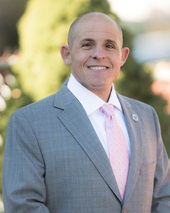
Rep. Steve Ultrino
Sponsored bills
By Representatives Garballey of Arlington and Cahill of Lynn, a petition (accompanied by bill, House, No. 2522) of Sean Garballey, Daniel Cahill and others relative to Parkinson's disease disability and death of certain firefighters and other public safety officers in the contributory retirement plan for public employees. Public Service.
By Representatives Keefe of Worcester and Ultrino of Malden, a petition (accompanied by bill, House, No. 3246) of Mary S. Keefe, Steven Ultrino and others relative to establishing a program for local art and community engagement commission in support of local art and community engagement. Tourism, Arts and Cultural Development.
By Representative Uyterhoeven of Somerville, a petition (accompanied by bill, House, No. 3119) of Erika Uyterhoeven, Steven Ultrino and Lydia Edwards for the annual issuance of a proclamation by the Governor setting apart January 30 of each year as Fred Korematsu Day of civil liberties and the Constitution. State Administration and Regulatory Oversight.
Maddy summaryThis bill amends Massachusetts law to prohibit hospitals and certain correctional facilities from requiring health care workers to work mandatory overtime. It defines mandatory overtime as any hours worked beyond a pre-agreed schedule that does not exceed 12 hours in a 24-hour period, while excluding doctors, residents, and management from this protection. The legislation allows for mandatory overtime only during emergency situations where patient safety is at risk and no other reasonable alternatives exist. Directly affected individuals include registered nurses, licensed practical nurses, unlicensed assistive personnel, and other support staff employed at covered facilities.
Maddy summaryThis bill creates a new state program called the PLACE Fund to finance public art projects on buildings owned or managed by the Commonwealth of Massachusetts. The fund will be supported by a mandatory allocation of state construction money, specifically taking a portion of budgets for new buildings or major renovations, as well as accepting private donations. A newly established 13-member commission will oversee the selection and management of these art projects to ensure they connect communities and support local cultures. The commission includes representatives from various sectors, such as artists, architects, and community development organizations, and will work alongside existing state agencies to implement the program.
Senate, March 4, 2024 --The committee on Labor and Workforce Development, to whom was referred the petitions (accompanied by bill, Senate, No. 1197) of Jason M. Lewis, Rebecca L. Rausch, Jack Patrick Lewis, Michael D. Brady and other members of the General Court for legislation to improve the Massachusetts paid family medical leave law; (accompanied by bill, Senate, No. 1198) of Jason M. Lewis, Lydia Edwards, James B. Eldridge and Paul R. Feeney for legislation to amend the Massachusetts Paid Family Medical Leave law definitions of a covered business entity and a covered contract worker; (accompanied by bill, House, No. 1858) of Josh S. Cutler and others relative to the publication of hearing decisions by the Department of Family and Medical Leave; (accompanied by bill, House, No. 1859) of Josh S. Cutler and others relative to data reporting by the Department of Family and Medical Leave; (accompanied by bill, House, No. 1860) of Josh S. Cutler and others for legislation to include bone marrow and organ donation in the paid family and medical leave program; (accompanied by bill, House, No. 1888) of Kenneth I. Gordon and others relative to the Massachusetts Paid Family Medical Leave Law; (accompanied by bill, House, No. 1889) of Kenneth I. Gordon and others relative to the definitions of covered business entity and covered contract worker under the Massachusetts Paid Family Medical Leave Law; and (accompanied by bill, House, No. 1942) of Jeffrey N. Roy relative to unemployment benefits for replacement workers, report the accompanying bill (Senate, No. 2605).
Maddy summaryThis bill proposes to dedicate state resources to maintain a robust and healthy public higher education system in Massachusetts. It directly affects the state's public colleges and universities by seeking to ensure they have the necessary funding to operate effectively. The legislation aims to commit financial support to these institutions to prevent cuts that could impact educational quality and access. By focusing on resource allocation, the bill intends to provide a stable foundation for public higher education without specifying exact dollar amounts or spending limits.
Senate, March 4, 2024 -- The committee on Labor and Workforce Development, to whom was referred the petitions (accompanied by bill, Senate, No. 1171) of Paul R. Feeney, Marc R. Pacheco, Jacob R. Oliveira, Sal N. DiDomenico and other members of the General Court for legislation to include offsite fabrication work for qualified projects under the prevailing wage laws of the Commonwealth; and (accompanied by bill, House, No. 1943) of Jeffrey N. Roy and others relative to compliance with prevailing wage laws for offsite fabrication, report the accompanying bill (Senate, No. 2603).
Maddy summaryThis bill expands the definition of "construction" under Massachusetts prevailing wage laws to explicitly include offsite fabrication work. By amending Section 27D of Chapter 149, the legislation ensures that workers performing manufacturing tasks away from the main construction site are eligible for the same wage protections as those on traditional building projects. The change directly affects contractors and employees involved in prefabricated building components, requiring them to adhere to state wage standards regardless of where the work is physically completed. This update aims to close a potential loophole where offsite fabrication was previously excluded from prevailing wage requirements.