By Representatives Lewis of Framingham and Domb of Amherst, a petition (accompanied by bill, House, No. 2224) of Jack Patrick Lewis, Mindy Domb and others relative to improving healthcare delivery for underserved residents. Public Health.
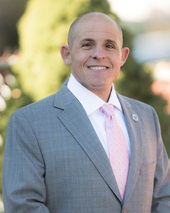
Rep. Steve Ultrino
Sponsored bills
Maddy summaryThis bill amends the Massachusetts General Laws to change how members of the Board of Elementary and Secondary Education are appointed by the governor. It specifies that the nine appointed members must include representatives from labor organizations, business and industry, parents, teachers, school committees, and four additional members. The legislation requires the governor to select these individuals from lists of three nominees provided by specific groups, such as the Massachusetts State Labor Council and the Massachusetts Teachers Association.
Senate, March 14, 2024 -- Text of the Senate Bill ensuring affordability, readiness and learning for our youth and driving economic development (Senate, No. 2707) (being the text of Senate, No. 2697, printed as amended)
March 21, 2024 -- The committee on Education, to whom was referred the petitions (accompanied by bill, Senate, No. 262) of Sal N. DiDomenico and Barry R. Finegold for legislation relative to providing for diabetes management in schools; (accompanied by bill, Senate, No. 279) of Barry R. Finegold, Vanna Howard and Jack Patrick Lewis for legislation relative to the administration of diabetes medication; (accompanied by bill, Senate, No. 287) of Adam Gomez for legislation relative to student representative voting rights; (accompanied by bill, Senate, No. 291) of Patricia D. Jehlen, Jacob R. Oliveira, Steven Ultrino, Sal N. DiDomenico and other members of the General Court for legislation relative to the board of elementary and secondary education; (accompanied by bill, Senate, No. 347) of Rebecca L. Rausch and James B. Eldridge for legislation to modernize the board of elementary and secondary education; (accompanied by bill, House, No. 446) of Manny Cruz and Christopher J. Worrell relative to members of student advisory committees; (accompanied by bill, House, No. 474) of Tricia Farley-Bouvier and others relative to student representative voting rights on school committees; (accompanied by bill, House, No. 596) of Steven Ultrino, Sean Garballey and others for legislation to further regulate the composition of the Board of Elementary and Secondary Education; and (accompanied by bill, House, No. 3572) of David Henry Argosky LeBoeuf relative to the membership of the Board of Elementary and Secondary Education, report the accompanying bill (Senate, No. 2661).

Maddy summaryThis bill establishes a student loan repayment program designed to support human services workers in Massachusetts. It directly affects employees of community-based organizations that receive funding from the Executive Office of Health and Human Services. The legislation creates a new section in state law to define eligible providers and set up the framework for offering loan repayments to encourage individuals to enter and remain in the human services field. By providing financial assistance for student loans, the bill aims to address workforce stability and recruitment challenges within these essential community programs.
By Representative Ultrino of Malden, a petition (accompanied by bill, House, No. 2675) of Steven Ultrino relative to restoration to service of public employees. Public Service.
By Representative Garlick of Needham, a petition (accompanied by bill, House, No. 2528) of Denise C. Garlick and others relative to the presumption for disability or death cause by contagious diseases. Public Service.
By Representative McGonagle of Everett, a petition (accompanied by bill, House, No. 2594) of Joseph W. McGonagle, Jr., and others relative to a post-traumatic stress disorder presumption for certain retirement benefits. Public Service.
By Representative Biele of Boston, a petition (accompanied by bill, House, No. 2443) of David Biele and others for legislation to expand the cancer presumption for firefighters. Public Service.
Maddy summaryThis bill aims to update the rules for licensing social workers in Massachusetts to ensure fair treatment and clearer pathways for those seeking certification. It modifies existing state laws by removing gendered language, eliminating redundant exam requirements, and creating a new provisional license for applicants who have failed the social work associate exam twice but are within a specific score range. Under the new provisions, individuals granted this provisional license would have one year to complete required professional development and supervision before receiving a full license without needing to retake the exam. The changes directly affect social work applicants, current licensees, and the Board of Social Work Examiners by streamlining the licensure process and standardizing terminology.