

Maddy summaryThis law establishes a mandatory educational diversion program in Massachusetts for minors charged with specific offenses related to possessing or sharing sexual images, commonly known as sexting. The Attorney General will lead the creation of this program in collaboration with various state agencies and community groups, focusing on informing youth about legal penalties, social consequences, and the risks of online image sharing. If a child is charged with these offenses, the court will typically pause legal proceedings to require the completion of this program instead of immediate prosecution, unless the district attorney objects. Successful completion of the program allows the case to be dismissed, while failure to participate results in the case being restored for standard legal processing. Additionally, the bill expands the legal definition of abuse to include "coercive control" and requires schools to teach media literacy skills using materials from the new diversion program.
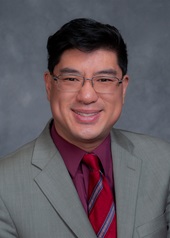
Rep. Tackey Chan
Sponsored bills
By Representatives Kushmerek of Fitchburg and Garballey of Arlington, a petition (accompanied by bill, House, No. 2353) of Michael P. Kushmerek, Sean Garballey and others relative to the equality of wage and recruitment of the State Police. Public Safety and Homeland Security.
By Representative Chan of Quincy, a petition (subject to Joint Rule 12) of Tackey Chan and others relative to increasing interest rate deductions. Revenue.
By Representative Chan of Quincy, a petition (accompanied by bill, House, No. 2734) of Tackey Chan relative to restoring the harbors and inland waters maintenance fund. Revenue.
Maddy summaryThis bill establishes a comprehensive educational diversion program to address the legal and social consequences of adolescents sharing sexual images, commonly known as sexting. It requires the Attorney General to create this curriculum in collaboration with state education and youth services departments, which will be used to divert minors from court proceedings if they are charged with related offenses. The program also mandates that schools integrate media literacy instruction using the same materials to help students understand the risks of online image sharing. Additionally, the legislation expands the legal definition of abuse to include coercive control and increases fines for certain offenses.
Maddy summaryThis bill updates Massachusetts laws to ensure that legal parentage rights apply equally to all families, regardless of the parents' gender, marital status, or sexual orientation. It replaces gender-specific terms like "father" and "mother" with neutral language such as "other parent" and "person who gave birth," while also changing "paternity" to "parentage" throughout the statutes. The legislation introduces new definitions for various family arrangements, including surrogacy and assisted reproduction, to clarify how different types of parents are recognized under the law. By amending existing chapters on birth certificates and family law, the bill aims to provide consistent legal protections for children born through diverse circumstances, including those resulting from surrogacy or non-marital births.
By Representative Chan of Quincy, a petition (accompanied by bill, House, No. 3004) of Tackey Chan and others relative to making Presidential election days state holidays. State Administration and Regulatory Oversight.
By Representative Chan of Quincy, a petition (accompanied by bill, House, No. 3283) of Tackey Chan relative to establishing toll discounts on the Massachusetts Turnpike, Ted Williams Tunnel and the Tobin Bridge for persons sixty-five years of age or older. Transportation.
Maddy summaryThis bill amends Massachusetts law to require state medical boards to consult with the Massachusetts Chiropractic Society when creating training programs for healthcare prescribers. The primary goal is to ensure these programs include accurate education on chiropractic care as a non-opioid alternative for pain management. By mandating this consultation, the legislation aims to integrate knowledge of alternative treatments into the training of doctors and other prescribers. The law directly affects state medical boards and the chiropractic community by establishing a formal process for developing these educational resources.
By Representatives Owens of Watertown and Cruz of Salem, a petition (accompanied by bill, House, No. 3393) of Steven Owens, Manny Cruz and others relative to automated motor vehicle sensor devices that produce digital photographs of motor vehicles committing camera-enforceable violations. Transportation.