

Maddy summaryThis bill proposes to dedicate state resources to maintain a robust and healthy public higher education system in Massachusetts. It directly affects the state's public colleges and universities by seeking to ensure they have the necessary funding to operate effectively. The legislation aims to commit financial support to these institutions to prevent cuts that could impact educational quality and access. By focusing on resource allocation, the bill intends to provide a stable foundation for public higher education without specifying exact dollar amounts or spending limits.
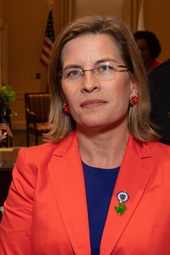
Rep. Marjorie Decker
Sponsored bills
Maddy summaryThis Massachusetts bill establishes a 10-year pilot program to create overdose prevention centers that allow trained staff to monitor individuals using pre-obtained drugs. These facilities aim to reduce the risk of disease transmission and prevent fatal overdoses by providing a safe environment for consumption. Eligible operators include private organizations and municipal departments, but they must first receive approval from their local board of health before applying for a license. The Department of Public Health is tasked with creating specific rules for these centers and must review applications and notify applicants of their decision within 45 days.
Maddy summaryThis bill establishes new standards and accountability measures for clean energy projects in Massachusetts funded by state resources. It defines who must follow these rules, including businesses and public utilities receiving state contracts or grants for renewable energy and climate initiatives. The legislation also sets specific criteria for identifying environmental justice populations, such as communities with lower incomes or significant minority populations. By clarifying these terms and requirements, the act aims to ensure that workforce standards are consistently applied across various state energy programs.
Maddy summaryThis bill amends state regulations to require natural gas companies in Massachusetts to submit detailed plans for transitioning to clean energy while protecting their employees. The law mandates that these companies establish performance-based rate schemes that include specific service quality standards and workforce development strategies. Key provisions require companies to outline training programs for alternative energy sources, ensure sufficient staffing for pipeline safety, and propose mitigation measures like early retirement incentives to handle job losses during the shift away from fossil fuels. Ultimately, the legislation aims to balance the state's goal of achieving net zero emissions with the need to support workers affected by changes in the energy sector.
Maddy summaryThis bill creates a new requirement for state officials to inspect every polling place and early voting site in Massachusetts at least once every four years to ensure they meet federal and state accessibility standards. If an inspection reveals a failure to comply with these laws, the responsible local officials must immediately fix the issue and submit a written plan to the state secretary within five days. The state secretary has the authority to order local towns to comply if they do not act, and the Attorney General can file a lawsuit to enforce these rules. Additionally, the bill mandates that the state secretary report annually to the legislature on all activities related to enforcing these accessibility requirements.
Maddy summaryThis bill prohibits public schools in Massachusetts from suspending or expelling students in pre-kindergarten through third grade for disciplinary infractions. While it immediately bans these exclusions for the youngest students, it also extends the ban to fourth and fifth graders, with the changes taking effect one and two years after the law passes, respectively. To support educators, the legislation requires the state to provide guidance and resources for alternative behavior management strategies, such as mediation and restorative justice. The primary goal is to ensure that young children remain in the classroom to continue their learning and to address disparities in educational outcomes caused by strict discipline policies.
Maddy summaryThis bill requires the Massachusetts governor to issue an annual proclamation designating March 21 as Massachusetts Child Nutrition Day. It also mandates that food service companies serving public schools ensure at least 50% of their weekly lunch entrées are healthy options containing whole grains, vegetables, fruits, legumes, and fiber-rich proteins. Additionally, the law prohibits schools from serving more than 20% of their lunch entrées as ultra-processed foods or items with excessive cholesterol and saturated fat. To enforce these rules, providers must publicly share monthly nutrition data, and they will have a three-year phase-in period to meet the new requirements.
Maddy summaryThis bill proposes establishing a universal school meal program in Massachusetts to provide free breakfast and lunch to all public school students. It would require the state to allocate funding for these meals and mandate that every school district participate in the program. The legislation aims to ensure that every child attending a public school in the Commonwealth receives nutritious food at no cost to their families.
Maddy summaryThis bill is a petition to establish a new committee or task force focused on lifting children out of deep poverty in Massachusetts. It does not contain specific policy provisions, funding allocations, or operational mechanisms, as it serves only as a formal request to the legislature to consider the issue. The document lists numerous legislators who have signed the petition but does not outline any concrete legislative changes. Consequently, the bill functions as a procedural item to raise awareness rather than a standalone law.