

Maddy summaryHD 2762 updates definitions and procedures for protecting people with disabilities in Massachusetts. It clarifies "abuse" to include specific acts like withholding adaptive aids or certain physical force (defined as "abuse per se"), and redefines key terms like "disabled person" (ages 18-59 with intellectual, developmental, or other disabling conditions requiring daily assistance). The bill also revises the Disabled Persons Protection Commission to have 3 appointed members (instead of more) and requires it to create a special investigative unit for abuse reports involving criminal conduct. Additionally, it strengthens privacy protections by limiting disclosure of personally identifiable information in investigations.
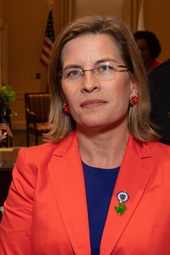
Rep. Marjorie Decker
Sponsored bills
Maddy summaryHD 3080 creates a task force to study whether basic hygiene products like diapers, feminine products, and soap should be covered under the WIC program. The task force, including government officials and community representatives, will analyze hygiene insecurity in Massachusetts and evaluate existing programs. It must submit a report by January 2027 with recommendations on including these products in WIC, including public input. This bill does not change current policy but sets up a formal study to inform future decisions. The direct effect is on the study process, not immediate access to products.
Maddy summaryH 4611 requires public facilities across Massachusetts to provide free disposable menstrual products (like tampons and sanitary napkins) to menstruating individuals. It mandates this in all government-owned buildings, public colleges, shelters, schools, and correctional facilities. Products must be available in accessible restroom locations without stigmatizing the user. The law applies to all entities listed in the bill, including schools, shelters, and jails, ensuring no-cost access in designated areas. It does not cover private businesses or general public spaces outside these specified settings.
Maddy summaryHD 3225 requires large trucks (class 3 or above, over 10,000 pounds gross weight) operated by municipalities, Commonwealth agencies, electric companies, gas companies, utilities, and wireless providers to install lateral protective devices, convex mirrors, crossover mirrors, and backup cameras by January 1, 2028. The bill mandates these safety upgrades for vehicles leased, purchased, or operated under contract with the specified entities. The registrar of motor vehicles will establish standards based on federal guidelines, with exemptions for ambulances, firefighting vehicles, agricultural tractors, and low-speed vehicles. This law directly affects commercial fleets serving public and utility sectors, aiming to improve road safety through standardized equipment.
Maddy summaryHD 3719 establishes the Flexible Assistance for Survivors (FAS) pilot grant program to provide direct cash assistance to survivors of violence and their families. The program, administered by the Department of Public Health, funds community-based organizations to distribute flexible cash payments (e.g., prepaid cards, checks, or direct deposits) to survivors of domestic violence, sexual assault, homicide, firearm injuries, and other specified violence, including family members who witnessed such acts. Eligible organizations must serve survivors directly, with priority given to those working with disproportionately impacted groups like survivors of color, undocumented individuals, people with disabilities, and those facing homelessness. The bill mandates an advisory committee including survivor voices to streamline applications and reduce paperwork burdens for grant recipients.
Maddy summaryH 4773 is a procedural bill that extends the deadline for the House Committee on Public Health to report on five specific pending bills (documents 2362, 2401, 2506, 2532, and 2544). It grants the committee until Friday, December 19, 2025 - beyond the standard timeline under House Rule 27 - to finalize their report on these documents. This extension directly affects the Public Health committee and the legislative process for those five bills. The bill was adopted on November 24, 2025, without debate.
Maddy summaryThis bill establishes a 15-member commission to study staffing and workforce issues in Massachusetts municipal emergency medical services (EMS). The commission, including representatives from fire departments, healthcare associations, state offices, and municipal groups, will assess current staffing effectiveness (like response times and ambulance turnaround), identify workforce challenges (such as shortages and retention), and review existing training programs. It must submit a report with recommendations for standard staffing levels and improved workforce development to legislative leaders by March 1, 2026. The bill directly affects all municipal EMS systems across Massachusetts by requiring a formal review of their operational and staffing needs.
By Representatives Decker of Cambridge and Owens of Watertown, a petition (accompanied by bill, House, No. 4134) of Marjorie C. Decker and Steven Owens (with the approval of the mayor and city council) that the city of Cambridge be authorized to establish an employment and job training trust. Municipalities and Regional Government. [Local Approval Received.]
Maddy summaryThis bill requires Massachusetts cities and towns to inspect all polling places and early voting sites every four years for compliance with federal and state accessibility laws. If barriers are found, local officials must implement temporary fixes within 48 hours and submit a written compliance plan detailing permanent solutions and timelines to the State Secretary. The State Secretary must annually report on inspection results, non-compliance, and corrective actions to the legislature. The law aims to ensure consistent accessibility for voters with disabilities at all voting locations through regular oversight and clear accountability measures.
Maddy summaryThis bill requires cities and towns with less than 10% multi-family housing to designate at least 1.5% of their "calculable developable land" (land suitable for housing, excluding protected areas like wetlands and public parks) for multi-family zoning. It mandates that these zones allow apartment or condo developments at a minimum density of 20 units per acre without special approval. The bill also streamlines approval for "open space residential" projects and creates a commission to study income limits for affordable housing, with a 2026 deadline for towns to identify developable land. It affects all Massachusetts municipalities and aims to expand housing options by clarifying land use rules.