

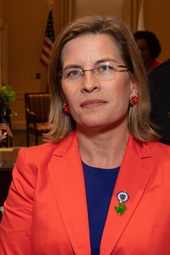
Photo of Marjorie Decker
D Massachusetts House · District 25th Middlesex On the 2026 ballot

Rep. Marjorie Decker

Compare
Total votes
1,241
all sessions
Attendance
97%
38 missed
Lower than 97% of chamber peers
With party
99%
of cast votes
Near the chamber average
Bipartisan score
0%
crosses aisle rarely
Near the chamber average
Sponsored
2,151
bills & resolutions
Higher than 96% of chamber peers
Committees
1
assignment
2,151 bills and resolutions

Sponsored bills

Total
2,151
Primary
335
Co-sponsor
1,816
This page
2,151
matching current filters
Co-sponsor H 1257
Passed · Massachusetts House · Co-sponsor
An Act relative to ensuring treatment for genetic craniofacial conditions

Maddy summaryThis bill (HD 1173) requires specific insurance plans in Massachusetts to cover medically necessary functional repair or restoration for certain congenital craniofacial disorders. It applies to Commonwealth employee health plans, state division programs, private insurance policies, and health maintenance organizations. Coverage must include treatment for ectodermal dysplasia, dentinogenesis imperfecta, and amelogenesis imperfecta (excluding cleft lip/palate, which is covered under separate existing sections), but excludes cosmetic surgery and unrelated dental/orthodontic care. Crucially, these benefits must not face higher deductibles, copays, or out-of-pocket limits than other plan benefits.

Passed Feb 5, 2026 1 co-sponsor
Co-sponsor H 985
Passed · Massachusetts House · Co-sponsor
An Act establishing an ecologically-based mosquito management program in the Commonwealth to protect public health

Maddy summaryHD 1554 establishes a statewide mosquito management program in Massachusetts prioritizing ecological approaches over chemical treatments. It creates a Mosquito Management Board to develop a science-based plan requiring municipalities and mosquito control districts to first use source reduction (like removing standing water and restoring wetlands), limit larvicides to disease-affected areas, and ban PFAS-containing pesticides. The plan prohibits aerial adulticide use and restricts ground applications to locations with confirmed disease risk, while allowing municipalities to opt out of treatments except during declared public health emergencies. This directly affects all local mosquito control programs, public health agencies, and landowners across the Commonwealth.

Passed Feb 5, 2026 1 co-sponsor
Co-sponsor H 1041
Passed · Massachusetts House · Co-sponsor
An Act to protect pollinators and public health

Maddy summaryThis bill bans the sale and use of neonicotinoid-treated seeds for corn, wheat, and soybeans starting January 1, 2029, directly affecting farmers growing these crops. Exceptions require a department-issued waiver based on a pest risk assessment showing the neonicotinoid is necessary to prevent significant crop damage, with no less harmful alternatives available. Waivers must specify location, duration (max one year), and environmental safeguards, and must be publicly posted online. The law mandates farmers to maintain records of waiver use for department review. It aims to reduce neonicotinoid pesticide exposure to pollinators and water sources by restricting their agricultural use.

Passed Feb 5, 2026 1 co-sponsor
Co-sponsor H 1559
Passed · Massachusetts House · Co-sponsor
An Act to maintain stable housing for families with pets

Maddy summaryHD 1706 prevents landlords from evicting tenants solely due to having a pet during a state of emergency (unless the pet causes harm), and bans breed-based restrictions in housing rules, condo bylaws, and tenant screening. It limits additional rent for common household pets to 1% of monthly rent per dog or cumulatively for other pets, while exempting service animals. The bill also prohibits insurance companies from denying coverage or increasing premiums based on dog breed, except for designated dangerous dogs. These changes apply to residential landlords, housing authorities, and insurers, aiming to reduce pet-related housing barriers.

Passed Feb 5, 2026 1 co-sponsor
Co-sponsor H 932
Passed · Massachusetts House · Co-sponsor
An Act relative to the pesticide board

Maddy summaryThis bill creates a 25-member "pesticide control modernization and environmental protection task force" to study Massachusetts' pesticide regulations. The task force, including agency heads and diverse stakeholders (farmers, environmental groups, industry reps, and experts), will examine 12 specific areas like the structure of the pesticide board, pesticide use impacts on watersheds and vulnerable communities, licensing processes, and reporting systems. It must issue a public report with recommendations within one year, including proposals for restructuring the pesticide board and improving oversight. The bill does not change current laws but directs a comprehensive review to inform future policy.

Passed Feb 5, 2026 1 co-sponsor
Co-sponsor H 124
Passed · Massachusetts House · Co-sponsor
An Act relative to improving pesticide protections for Massachusetts schoolchildren

Maddy summaryThis bill strengthens pesticide restrictions around Massachusetts schools and childcare facilities. It requires schools, childcare centers, and related properties (including sports fields for youth teams) to use only EPA-exempt pesticides or those listed on the National Organic Program's approved ingredients, with hardship waivers possible at the department's discretion. The law expands coverage to include all properties within 150 feet of these locations and applies to any entity hiring pesticide services, whether public or private. These changes directly affect schools, childcare providers, and pesticide applicators operating near these facilities.

Passed Feb 5, 2026 1 co-sponsor
Co-sponsor H 1033
Passed · Massachusetts House · Co-sponsor
An Act responding to the threat of invasive species

Maddy summaryThis bill creates the Invasive Species Trust Fund to support efforts against invasive species in Massachusetts. It directly affects municipalities, non-profits, state agencies, and universities by providing grant funding for control projects. The fund, financed by license fees and other sources, requires applicants to submit detailed management plans and prioritizes projects targeting new infestations first, followed by spread prevention and long-term maintenance. Grants cover up to 75% of annual costs for up to five years, with oversight by a statewide coordinator and advisory committee. The bill establishes clear guidelines for project eligibility, environmental impact assessments, and alignment with the statewide strategic management plan.

Passed Feb 5, 2026 1 co-sponsor
Co-sponsor H 1117
Passed · Massachusetts House · Co-sponsor
An Act promoting and enhancing the sustainability of birth centers and the midwifery workforce

Maddy summaryThis bill creates a new Midwifery Workforce Development Fund to support midwifery education, retention, and birth center sustainability. The fund, administered by the state health department, receives state/federal maternal health funds and private donations, with unspent balances rolling over annually. It finances student education costs, midwife loan forgiveness (potentially requiring work in underserved areas), midwifery training programs, and mental health support for practicing midwives. Additionally, the bill mandates that state health insurance programs pay certified midwives and freestanding birth centers at rates no lower than those for physicians or hospital services for equivalent care.

Passed Feb 5, 2026 1 co-sponsor
Co-sponsor H 1339
Passed · Massachusetts House · Co-sponsor
An Act establishing protections and accountability for DNC workers, consumers, and communities

Maddy summaryThis bill reclassifies app-based delivery workers (like food or package couriers for companies such as DoorDash) as employees for wage purposes, requiring delivery network companies to pay them at least the state minimum wage for all "working time" (including both assigned delivery tasks and standby time). Companies must calculate wages to ensure workers earn the minimum wage on average for their first 40 hours per week, with an option to pay 150% of minimum wage for assigned time only if workers control their schedule. The bill mandates detailed payroll reporting for companies, including breakdowns of assigned time, standby time, and wages, and requires quarterly publication of aggregated data on pay and hours. It directly affects app-based delivery workers and the companies that employ them across Massachusetts.

Passed Feb 2, 2026 1 co-sponsor
Co-sponsor H 5032
Passed · Massachusetts House · Co-sponsor
An Act relative to preparing apprentices in the commonwealth

Maddy summaryH 5032 requires that for public construction projects in Massachusetts exceeding $10 million in cost, contractors and subcontractors must ensure at least 15% of labor hours for each trade are performed by registered apprentices. This applies to all public works projects (like schools or roads) and directly affects construction companies bidding on such projects. Contractors must use apprentice programs approved by the Division of Apprentice Standards and maintain required apprentice-to-journeyperson ratios. Public agencies can exempt specific trades only after proving no qualified bidders with apprenticeship programs are available, with strict documentation requirements. The bill does not apply to projects under $10 million or exempt entire projects unless documented per trade.

Passed Jan 29, 2026 1 co-sponsor
Showing 251 to 260 of 2,151 bills
Previous 1 … 25 26 27 … 216 Next