

Maddy summaryThis bill (HD 4212) creates legal protections for harm reduction programs aimed at reducing overdose deaths and improving access to treatment. It defines "harm reduction programs" to include services like needle exchanges, overdose reversal, and referrals to treatment, and grants immunity from arrest, lawsuits, and property seizures for program operators, participants, and property owners when operating under department approval. The law also prohibits searches based on program use, requires annual department reports on program effectiveness, and exempts approved programs from certain registration requirements under Chapter 94C. It directly affects program operators, people accessing services, property owners, and government employees involved in approvals.
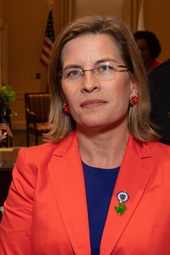
Rep. Marjorie Decker
Sponsored bills
Maddy summaryThis bill expands access to family, friend, and neighbor-provided childcare by establishing a payment structure for caregivers who provide care in a child's home or are relatives, ensuring voucher funds cover the full daily value at an hourly rate. It sets a minimum hourly wage for these caregivers equal to the state's minimum wage and requires their care to be licensed unless reimbursement reverts to original payment levels. The legislation also creates a state advisory committee to gather input on improving support, resources, and oversight for these caregivers over a one-year period.
Maddy summaryThis bill amends Massachusetts education laws to formally include health education as part of the required curriculum in public schools. It mandates that health education standards be age-appropriate and medically accurate, covering topics such as physical development, nutrition, mental health, substance use prevention, and community health. The legislation also requires school districts to notify parents when implementing sexual education curricula and allows parents to request exemptions for their children without penalty. Additionally, the bill clarifies that the state's health curriculum framework serves as a guide for local districts and explicitly states that health education will not be tested on the MCAS exam.
By Representatives Vargas of Haverhill and Garcia of Chelsea, a petition (subject to Joint Rule 12) of Andres X. Vargas, Judith A. Garcia and others for legislation to further regulate state and local participation in federal civil immigration enforcement. Public Safety and Homeland Security.
By Representative Decker of Cambridge, a petition (accompanied by bill, House, No. 547) of Marjorie C. Decker relative to health education in schools. Education.
Maddy summaryHD 1032 establishes privacy protections for drivers by regulating how law enforcement and government agencies collect and use location data from license plate readers and toll systems. The bill requires law enforcement to obtain a search warrant for most access to this data (with limited emergency exceptions requiring a 48-hour report), prohibits selling or sharing the data, and limits retention to 14 days for license plate data and 120 days for toll data. It also bans using illegally collected data in court proceedings and allows drivers to file civil lawsuits for violations. These rules directly protect drivers from unwarranted surveillance and data misuse by government agencies and private entities collecting vehicle location information.
Maddy summaryHD 2223 establishes the Whole Child Grant Program to fund public school districts in Massachusetts for student and educator wellbeing. The bill creates a dedicated fund administered by the Department of Elementary and Secondary Education, providing $150 per pupil for districts with 20%+ low-income students, $100 for 10-20%, and $50 for under 10%. Funds must be used for specific, allowable purposes including hiring school nurses, counselors, social workers, and psychologists (following state and national staffing recommendations), implementing mental health programs, and developing policies on student safety and technology use. School districts must submit plans detailing fund allocation, agree to supplement existing funding (not replace it), and report annually on expenditures and progress. The program directly affects all public school districts, with increased support targeted to those serving higher concentrations of low-income students.
Maddy summaryHD 1243 requires private gas and distribution companies to increase transparency when awarding construction contracts over $100,000 for work on public ways. Companies must notify all qualified bidders within two business days of their decision, including the award criteria, bidder score, and winning amount. They must also post the contractor name, project location, and work duration on their website. This applies to all such contracts except single-bid situations or when disclosure would harm law enforcement, public interest, or commercial interests. The state department enforces these requirements.
Maddy summaryThis bill establishes a payment structure for family, friend, and neighbor (FFN) childcare providers - those offering unlicensed care in homes or caring for relatives - to ensure families using childcare vouchers or other funding can fully access their voucher value. It mandates a minimum hourly rate equal to the state’s minimum wage and requires the childcare department to create this structure through public hearings. The bill also creates a 60-day advisory committee with diverse representation (including caregivers, advocates, and community groups) to hold public hearings and address FFN care challenges like application processes, resource access, and quality standards. The committee must report findings to state legislators within a year, focusing on improving support for FFN caregivers and families.
Maddy summaryThis bill prohibits the harvesting of horseshoe crabs for bait, aiming to protect their population by requiring a complete phase-out by January 1, 2029. It allows limited exceptions for educational or scientific purposes with a permit and permits incidental capture during legal fishing as long as the crabs are returned unharmed. The law establishes a $25 fine for each horseshoe crab taken in violation of the ban and requires the state to create rules to enforce these provisions.