By Representative Garlick of Needham, a petition (accompanied by bill, House, No. 3040) of Denise C. Garlick and others relative to providing for hybrid access to public meetings. State Administration and Regulatory Oversight.
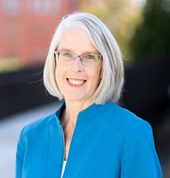
Rep. Margaret Scarsdale
Sponsored bills
By Representative Muratore of Plymouth, a petition (accompanied by bill, House, No. 2902) of Mathew J. Muratore and others relative to providing for an exemption from the motor vehicle excise tax for certain armed forces medal recipients. Revenue.
Maddy summaryThis bill amends Massachusetts state law to allow public bodies to hold meetings where members participate remotely via technology like video conferencing. It grants remote members full voting rights and counts them as present for quorum purposes, while also requiring these bodies to provide free, accessible ways for the general public to join virtually. Additionally, the legislation mandates that all meetings be recorded and posted online within two business days, with related documents and recordings kept available for at least two years.
By Representative Driscoll of Milton, a petition (accompanied by bill, House, No. 3025) of William J. Driscoll, Jr., and others relative to remote access for public bodies and town meetings. State Administration and Regulatory Oversight.
By Representative Scanlon of North Attleborough, a petition (accompanied by bill, House, No. 2946) of Adam Scanlon and others relative to the senior circuit breaker tax credit. Revenue.
By Representative Muratore of Plymouth, a petition (accompanied by bill, House, No. 3525) of Mathew J. Muratore and others relative to parking at certain airports for disabled veterans. Veterans and Federal Affairs.
By Representative Smola of Warren, a petition (accompanied by bill, House, No. 3538) of Todd M. Smola, Margaret R. Scarsdale and F. Jay Barrows relative to emergency medical transportation provided to veterans. Veterans and Federal Affairs.
Maddy summaryThis bill aims to improve access to biomarker testing for cancer patients in Massachusetts to help them receive the most appropriate therapy. It requires health insurers to cover the cost of these specific tests without imposing additional restrictions or requiring prior authorization beyond what is already standard for other medical services. The legislation directly affects cancer patients, their families, and health insurance providers by ensuring that necessary diagnostic tools are financially accessible. By removing barriers to testing, the bill seeks to facilitate better treatment decisions based on individual patient biology.
Maddy summaryThis bill creates a new Board of Registration in Midwifery within the Department of Public Health to oversee the licensing and regulation of midwives in the state. The board will consist of eight appointed members, including licensed midwives with significant experience, a physician, a nurse-midwife, and a public representative, with specific requirements for members to address racial disparities in maternal health. Additionally, the legislation establishes a new Board of Allied Health Professions that includes representatives from various health fields such as physical therapy, occupational therapy, and lactation consulting. The bill also expands the legal definition of "licensed midwife" to allow them to issue prescriptions and grants local health agencies the authority to conduct in-depth reviews of fetal and infant deaths to improve community health services.

Maddy summaryThis bill creates a new Board of Registration in Midwifery within the Department of Public Health to oversee and regulate the practice of midwifery in the state. The board will consist of nine appointed members, including licensed midwives, obstetricians, and a public representative, with a specific requirement to consider racial disparities in maternal health during appointments. Additionally, the legislation expands the definition of who can prescribe medication to include licensed midwives and establishes a program for postpartum depression screenings for state employees. It also updates various state laws to formally recognize and define the roles of certified nurse-midwives and licensed midwives across different departments.