

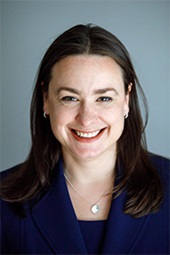
By Representative Garlick of Needham, a petition (accompanied by bill, House, No. 3040) of Denise C. Garlick and others relative to providing for hybrid access to public meetings. State Administration and Regulatory Oversight.
Rep. Lindsay Sabadosa
Sponsored bills
By Representative Uyterhoeven of Somerville, a petition (accompanied by bill, House, No. 2964) of Erika Uyterhoeven and others for legislation to reform the charitable deduction. Revenue.
By Representatives Decker of Cambridge and Vargas of Haverhill, a petition (accompanied by bill, House, No. 2761) of Marjorie C. Decker, Andres X. Vargas and others relative to establishing a child and family tax credit. Revenue.
Maddy summaryThis bill amends Massachusetts open meeting laws to explicitly guarantee the public a right to attend, speak, and participate in government meetings. It requires public bodies to allow comments on any topic within their jurisdiction without needing prior notice or permission from the speaker. The legislation also mandates that the Attorney General publish guidelines and training materials to help government agencies manage these comment periods fairly. Additionally, the bill clarifies that while agencies can set rules like time limits or restrict speakers to local residents, they must avoid showing bias when enforcing these restrictions.
By Representative Khan of Newton, a petition (accompanied by bill, House, No. 2860) of Kay Khan, Samantha Montaño and Natalie M. Higgins for legislation to provide for credit against taxes for the costs of certain advertising campaigns that feature digitally unaltered images of human models. Revenue.
By Representative Chan of Quincy, a petition (accompanied by bill, House, No. 2731) of Tackey Chan and others relative to tax exemptions for home office expenses. Revenue.
Maddy summaryThis bill amends Massachusetts state law to allow public bodies to hold meetings where members participate remotely via technology like video conferencing. It grants remote members full voting rights and counts them as present for quorum purposes, while also requiring these bodies to provide free, accessible ways for the general public to join virtually. Additionally, the legislation mandates that all meetings be recorded and posted online within two business days, with related documents and recordings kept available for at least two years.
By Representative Driscoll of Milton, a petition (accompanied by bill, House, No. 3025) of William J. Driscoll, Jr., and others relative to remote access for public bodies and town meetings. State Administration and Regulatory Oversight.
By Representative Cabral of New Bedford, a petition (accompanied by bill, House, No. 2722) of Antonio F. D. Cabral and others relative to the taxation of graduate student loan debt. Revenue.
Maddy summaryThis bill updates Massachusetts law to require all public meetings to be physically open and accessible to the public via remote technology. It defines remote access as allowing citizens to view meetings online and remote participation as enabling elected officials to join via video conferencing. The legislation mandates that meeting notices be posted at least 48 hours in advance on official websites and requires that at least one-third of public body members be physically present while permitting remote members to vote and count toward a quorum.