

Maddy summaryThis bill modifies tax exemption rules for small commercial properties in Massachusetts cities and towns. It allows local governments to grant tax exemptions to commercial parcels where at least 50% of occupants are "eligible businesses," or for mixed residential/commercial properties where 50% of the commercial portion meets this threshold. The change directly affects small businesses seeking tax relief and local officials administering property tax exemptions. It does not define "eligible businesses" but sets a clear 50% occupancy requirement for exemption eligibility.
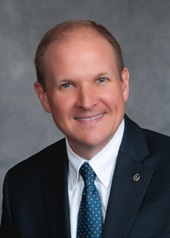
Rep. Todd Smola
Sponsored bills
By Representative Jones of North Reading, a petition (subject to Joint Rule 12) of Bradley H. Jones, Jr., and others relative to a municipal tax amnesty program. Revenue.
Maddy summaryThis bill requires Massachusetts state agencies to transition their medium- and heavy-duty truck fleets to zero-emission vehicles (specifically battery electric models). Starting July 1, 2025, all new purchases or leases for such vehicles must be zero-emission, with the entire fleet fully converted by June 30, 2035. Exceptions are allowed if battery electric trucks don’t meet operational needs or charging infrastructure can’t support them, but agencies must explain each exception annually. The bill also mandates yearly reports detailing fleet composition, vehicle specifications, and justification for non-zero-emission purchases.
Maddy summaryThis bill requires Massachusetts state agencies to transition their medium- and heavy-duty truck fleets to battery electric vehicles. Starting July 1, 2025, all new purchases or leases must be battery electric trucks, with the entire fleet fully converted by June 30, 2035, unless infrastructure limitations or lack of suitable models prevent it. Agencies must annually report fleet details and justify any exceptions to using zero-emission vehicles. Additionally, the bill delays Massachusetts from implementing California's Advanced Clean Trucks regulations until at least July 1, 2027. The policy directly affects state agencies managing vehicle fleets and aims to reduce transportation emissions through fleet electrification.
Maddy summaryHD 3372 creates a commission to study reforms for the state's low-income housing tax credit (LIHTC) program. The commission, including housing officials, legislators, and housing experts, will examine how LIHTC funds are administered, explore ways to streamline projects and preserve existing affordable housing, and recommend improvements to increase transparency and impact. It must hold public hearings and submit a report with findings and recommendations to state lawmakers within 12 months. This bill does not change the LIHTC program itself but sets up a process to evaluate potential reforms.
Maddy summaryThis bill (HD 1398) allows public corporations in Massachusetts to hold shareholder meetings remotely instead of requiring in-person attendance. It directly affects public corporations, such as state-owned utilities or entities, by changing their meeting rules. The key provision permits remote meetings via technology if authorized by the board of directors, with the board setting specific guidelines for how these meetings operate. This replaces the previous requirement for physical meetings, making it easier for corporations to conduct business without gathering in person.
Maddy summaryThis bill creates a one-year pilot program (July 2025-June 2026) offering tuition and fee waivers at Massachusetts public colleges and universities for seniors aged 60 and older. It directly affects qualifying seniors enrolled in undergraduate programs, summer sessions, evening classes, or specific courses, with a limit of four courses per academic year and availability-based enrollment. Institutions must report lost tuition revenue to the state by August 2026, after which the Comptroller reimburses them from the General Fund. The total reimbursement amount established during the pilot will set the annual funding level for future senior tuition waivers in the state budget starting fiscal year 2027. The program applies to all state universities, community colleges, and University of Massachusetts campuses.
Maddy summaryHD 1425 expands Massachusetts' valedictorian tuition waiver program to cover all public and private high school valedictorians who graduate from Massachusetts schools. The bill provides free tuition and mandatory fees for up to four years at qualifying public colleges, funded entirely by the state - not universities. If a valedictorian doesn’t use the waiver, it automatically goes to the salutatorian. This policy applies to graduates beginning in or after 2025. The change directly affects high-achieving Massachusetts high school graduates seeking public college education.
Maddy summaryThis bill (HD 1408) makes a minor technical amendment to an existing law by changing the word "and" to "or" in Section 148B of Chapter 149. It does not change the definition of an independent contractor or affect any workers or businesses. The amendment only adjusts the punctuation in a specific legal line to clarify the wording. As a procedural change to existing text, it has no substantive policy impact.
Maddy summaryThis bill changes how Massachusetts defines "employee" versus "independent contractor" for labor laws. It requires that an individual be considered an employee unless they meet all three specific conditions: (1) free from employer control in performing work, (2) work is outside the employer's usual business, and (3) they run an independent trade or business. This directly affects workers and businesses that classify workers as contractors, determining who qualifies for protections under Chapters 149 and 151 (like minimum wage and overtime). The change clarifies the standard for worker classification but does not create new benefits or penalties.