

Maddy summaryThis bill requires Massachusetts to annually review vehicle manufacturers' compliance with zero-emission vehicle (ZEV) sales targets starting January 1, 2025. It allows the Department of Environmental Protection to delay ZEV requirements for a model year if manufacturers (collectively representing 70% of the market) miss annual goals or if sufficient public charging infrastructure is unavailable. The bill also mandates that all new medium- and heavy-duty trucks purchased or leased by the Commonwealth must be zero-emission vehicles starting July 1, 2025, with full fleet transition required by June 30, 2035. Exceptions are permitted if suitable zero-emission trucks aren't available or charging infrastructure can't support them, and annual progress reports must be submitted to state legislators.
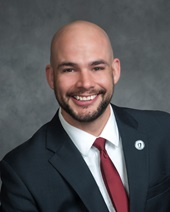
Rep. Joe McKenna
Sponsored bills
Maddy summaryThis bill requires Massachusetts' Department of Environmental Protection to annually review manufacturers' compliance with California's Advanced Clean Cars II Rule starting in 2025. It allows the department to delay zero-emission vehicle (ZEV) sales requirements for a model year if either (1) manufacturers collectively selling 70%+ of vehicles fail to meet annual ZEV goals, or (2) sufficient public charging infrastructure isn't available statewide. The bill also mandates that all new Commonwealth purchases of medium- and heavy-duty trucks must be zero-emission starting July 2025, with full fleet conversion by 2035, while permitting exceptions for trucks that don't meet operational needs or charging requirements. Additionally, it delays implementation of California's Advanced Clean Trucks regulations until July 2029.
Maddy summaryHD 2614 extends the deadline for requiring new passenger vehicles to be zero-emission from 2035 to 2050. This change directly affects automakers who must meet vehicle sales standards and consumers purchasing new vehicles in the state. The bill amends two sections (81 and 96) of Chapter 179 of the 2022 acts to replace "2035" with "2050" in the timeline. It represents a delay in the state's target for transitioning to electric vehicles, providing additional time for industry adaptation. The policy change specifically alters the compliance date without modifying other requirements.
Maddy summaryThis bill amends Chapter 179 of Massachusetts law by removing a 2035 deadline that would have ended in-state sales of non-zero-emission vehicles. It deletes a specific requirement (section 46) and modifies another provision (section 81) to eliminate the sales cessation mandate while retaining language about advancing EV charging access and affordability. The bill directly affects vehicle dealerships, manufacturers, and consumers by removing a future sales restriction. Key change: shifting focus from a mandated sales cutoff to prioritizing infrastructure development for electric vehicles.
Maddy summaryThis bill (HD 280) defines key terms for beverage regulations, specifically creating a new definition for "Miniature" as a small, sealable container (under 100ml) made of glass, metal, or plastic, designed solely for alcoholic beverages. It amends existing law by removing outdated definitions of "Beverage" and "Beverage container" and inserting precise language to clarify what qualifies as a miniature. The bill directly affects alcohol beverage producers, retailers, and regulators by establishing clear criteria for small alcohol containers under state law. It does not create new disposal requirements or regulations, as implied by the title, but solely refines terminology.
By Representative Pease of Westfield, a petition (subject to Joint Rule 12) of Kelly W. Pease, Lindsay N. Sabadosa and Donald R. Berthiaume, Jr. relative to lithium battery storage facilities. Telecommunications, Utilities and Energy.
By Representative Pease of Westfield, a petition (subject to Joint Rule 12) of Kelly W. Pease and Lindsay N. Sabadosa for legislation to establish buffer zones for battery storage facilities. Telecommunications, Utilities and Energy.
Maddy summaryHD 4088 provides tax incentives for corporations and individuals renovating abandoned buildings into housing projects. It allows a 10% deduction of renovation costs when calculating taxable income for qualifying projects. For housing developments, the bill exempts either the sale profits or rental income from taxable income for five years if units are rented out. These provisions apply specifically to projects certified under Chapter 23A and defined as "abandoned buildings" under Chapter 200A.
By Mr. Durant, a petition (accompanied by bill, Senate, No. 1669) of Peter J. Durant, Alyson M. Sullivan-Almeida, Joseph D. McKenna, Steven George Xiarhos and others for an investigation by a special commission (including members of the General Court) relative to post-traumatic stress disorder in law enforcement officers. Public Safety and Homeland Security.
Maddy summaryThis bill (HD 4197) provides financial support for disabled first responders in Massachusetts. It allows firefighters, police officers, EMTs, correction officers, and other public safety workers who can no longer perform essential job duties due to accidental disability to earn up to half their retirement allowance while working part-time. Crucially, recipients cannot work for government entities (state, county, city, or town) while receiving these benefits, but they may work in the private sector without penalty. The law also clarifies that recipients can still receive other retirement benefits not covered by this provision.