

Maddy summaryThis bill creates special license plates for Cold War veterans, specifically those who honorably served during the Cold War era (September 2, 1945, to December 26, 1991). Veterans of private passenger vehicles and motorcycles can apply for plates displaying "COLD WAR VETERAN" on the left side, provided they submit satisfactory proof of service. A $20 annual fee is required in addition to standard registration costs, and the plates do not apply to motorized bicycles.
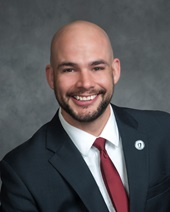
Rep. Joe McKenna
Sponsored bills
Maddy summaryThis bill changes the fee for Massachusetts motor vehicle registration plates displaying "VETERAN" on them. It removes a $20 annual fee that was previously added on top of the standard registration fee for these plates, making the cost equal to regular private passenger vehicle registration. The change directly affects veterans who choose to display these special plates on their vehicles. The law ensures veteran plates will no longer carry an extra $20 charge, aligning their cost with standard registration fees.
Maddy summaryHD 4025 amends a state law to extend disability benefits for POST-certified police officers disabled by cardiac disease to additional police forces. The bill adds the University of Massachusetts police, Massachusetts Port Authority police, state university and community college police, environmental law enforcement, and Department of Mental Health campus police to the list of covered entities. Previously, officers in these forces were excluded from the same benefit provision that applied to entities like the Massachusetts Bay Transportation Authority. This change directly affects POST-certified officers in these newly included forces by making them eligible for the same cardiac disability benefits.
Maddy summaryThis bill creates a presumption that Parkinson's disease causing disability or death in certain firefighters was incurred "in the line of duty," simplifying eligibility for retirement benefits. It directly affects uniformed firefighters in paid departments, state police in fire investigation/K9 units, and airport crash crew personnel (e.g., at Logan Airport, 104th Fighter Wing, or Joint Base Cape Cod) who served at least five years and regularly responded to fire calls. The presumption applies unless non-service factors (like personal health risks) are proven to have caused the condition. The bill amends retirement laws to include this provision, ensuring affected personnel can access benefits under existing systems without needing to prove service connection.
Maddy summaryThis bill changes the rules for public employees seeking disability benefits related to PTSD or psychological injuries. It removes the time limit for filing claims if the injury is emotional or psychological, allowing employees to use employer records showing they directly responded to a work incident. The employer records must confirm the employee's involvement in the incident, without requiring it to have occurred within two years of the claim. This specifically affects state workers and their beneficiaries filing for benefits under disability programs.
Maddy summaryThis bill creates a legal presumption that certain contagious diseases contracted by full-time police, fire, or emergency medical service workers were incurred during their duties, if they passed required physical exams upon entry and had no pre-existing condition. It applies to diseases like COVID-19, hepatitis, tuberculosis, and HIV - those linked to exposure to blood or bodily fluids - excluding the common cold. Workers must apply within five years of leaving active service and demonstrate they regularly responded to emergency calls during their tenure. Benefits, if approved, would cover disability or death claims under existing workers' compensation laws (Chapters 32, 41, 152).
By Mr. Durant, a petition (accompanied by bill) (subject to Joint Rule 12) of Peter J. Durant for legislation relative to creditable service for Vincent Provencher. Public Service.
By Representative Lipper-Garabedian of Melrose, a petition (accompanied by bill, House, No. 780) of Kate Lipper-Garabedian and others that the Executive Office of Health and Human Services be authorized to establish a hospital to home partnership program. Elder Affairs.
Maddy summaryThis bill creates a student loan repayment program for human services workers in Massachusetts. It directly affects employees of community-based human services organizations (funded by state health, elder affairs, housing, or early education offices) who provide client support. Key provisions include: offering up to $30,000 in repayment assistance based on education level (associate, bachelor's, or master's degree), requiring a 1-3 year service commitment in an eligible setting, and prioritizing applicants working in designated health disparity communities (AHEM areas), earning under $60,000 annually, or possessing language skills matching community needs. The program aims to recruit and retain workers in high-need areas by reducing their student debt burden.
Maddy summaryHD 866 requires health insurance plans covering Commonwealth employees (active and retired) and other health benefit plans to provide comprehensive coverage for cognitive rehabilitation treatments related to acquired brain injury (ABI). The bill mandates coverage for specific therapies including cognitive rehabilitation, neurocognitive therapy, community reintegration services, and neurofeedback therapy without lifetime or unreasonable annual limits. Insurers must cover these treatments regardless of facility type (e.g., not just hospitals) and cannot apply stricter cost-sharing (like higher deductibles or copays) than for other medical benefits. This law also requires insurers to train staff on these benefits in consultation with the Brain Injury Association of Massachusetts.