

Maddy summaryThis bill amends an existing law to limit CHAMPS applicants' housing authority preference lists to a maximum of 10 authorities. It directly affects individuals applying for housing through the CHAMPS program by restricting how many housing authorities they can list as preferences. The key provision inserts a specific limit into Section 14 of Chapter 235, changing the eligibility rules for these applications. This is a procedural change focused on streamlining the application process within the CHAMPS system.
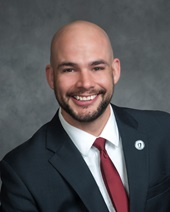
Rep. Joe McKenna
Sponsored bills
By Mr. Fattman, a petition (accompanied by bill, Senate, No. 1840) of Ryan C. Fattman, Joseph D. McKenna and Bruce E. Tarr for legislation to reform sick leave buybacks. Public Service.
Maddy summaryHD 245 creates a state-wide pancreatic cancer initiative administered by the Department of Public Health. It establishes a 13-member pancreatic cancer advisory council (including patient advocates and representatives from cancer networks) to develop hospital certification standards, identify underserved areas for improved care access, create a multi-provider consortium for best practices, and develop a standard tissue consent form for research. The bill also mandates a comprehensive study on pancreatic cancer prevalence and patient needs, plus a public education program about genetic risks and symptoms. Additionally, it requires the insurance commissioner to survey genetic testing coverage and the health center to update pancreatic cancer screening benefit reviews by 2026. This bill directly affects pancreatic cancer patients, healthcare providers, and the state's public health infrastructure.
Maddy summaryThis bill amends Massachusetts' emergency housing assistance program to require applicants to have resided in the Commonwealth for at least one year. It directly affects homeless families seeking emergency housing assistance by adding this residency requirement, which overrides existing laws or regulations. The key provision explicitly states that the program will only be available to residents meeting this one-year residency threshold. This change modifies eligibility criteria without altering other program details.
Maddy summaryThis bill (SD 625) amends Massachusetts law to require that applicants for the HomeBase housing assistance program must have resided in the Commonwealth for at least one year to qualify. It directly affects individuals seeking housing support through HomeBase, adding a new residency requirement to the existing eligibility criteria. The key provision inserts a specific one-year residency rule into the program's legal definition, changing who can apply. This is a concrete policy change to program eligibility under state law.
By Mr. Fattman, a petition (accompanied by bill, Senate, No. 1686) of Ryan C. Fattman and Joseph D. McKenna for legislation relative to change of address for firearm licensing. Public Safety and Homeland Security.
By Mr. Durant, a petition (accompanied by bill, Senate, No. 1675) of Peter J. Durant, John R. Gaskey, Joseph D. McKenna, Donald R. Berthiaume, Jr. and others for legislation to further define sanctuary policies in the commonwealth. Public Safety and Homeland Security.
Maddy summaryHD 650 clarifies how Massachusetts sets payment rates for home health agencies and homemaker/personal care services. It requires the executive office to establish and review these rates at least every two years, using costs from up to four years prior (adjusted for reasonableness and new costs), and including administrative expenses and a reasonable profit factor. The bill mandates that rate-setting consider specific cost factors like minimum wage changes, payroll taxes, health insurance, and employee benefits, using national or regional cost indices. Additionally, it requires detailed reports to legislative committees comparing adopted rates to the federal "Home Health Agency Market Basket" index, with simulations if that index isn't used. The bill directly affects home health providers and homemaker service agencies by changing how their reimbursement rates are calculated and justified.
Maddy summaryHD 5346 would exempt Software as a Service (SaaS) products - like cloud-based software accessed online - from state sales taxes. It directly affects SaaS providers (businesses selling these services) and their customers, removing a tax burden they currently face. The bill amends tax law by deleting language that treated software transfers as taxable tangible goods and adding a new provision specifically excluding SaaS sales from taxation. This policy change simplifies tax treatment for online software services by making them tax-exempt, aligning with how many similar services are handled in other jurisdictions.
Maddy summaryThis bill allows Massachusetts municipalities to use public funds to maintain private roads under specific conditions. It directly affects towns and cities, as well as property owners on private roads serving at least 100 residential properties that pay municipal property taxes. To qualify, the road must be the primary access for those properties, have historical significance to the municipality, and not be maintained by a developer under an agreement. Municipalities must create bylaws outlining maintenance terms and report annual expenditures to the state Department of Revenue. The law aims to clarify when public funds can be used for private road upkeep while ensuring transparency.