

By Representative Frost of Auburn, a petition (accompanied by bill, House, No. 371) of Paul K. Frost and Joseph D. McKenna relative to bans on the sale of legal consumer products by local boards of health. Consumer Protection and Professional Licensure.
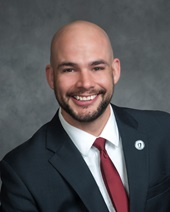
Rep. Joe McKenna
Sponsored bills
By Representatives DeCoste of Norwell and Turco of Winthrop, a petition (accompanied by bill, House, No. 217) of David F. DeCoste, Joseph D. McKenna and Colleen M. Garry relative to providing resources and support for pregnant and parenting families. Children, Families and Persons with Disabilities.
Maddy summaryThis bill repeals Section 3A of Chapter 40A in the General Laws, which previously governed certain requirements for communities receiving MBTA (Massachusetts Bay Transportation Authority) funding. The repeal removes a specific provision related to how these communities must coordinate with the MBTA. It directly affects municipalities that receive MBTA financial support, eliminating this particular administrative requirement. The bill makes a technical change to state law without creating new policies or altering funding mechanisms.
Maddy summaryThis bill exempts towns without MBTA rail, subway, or ferry stations from certain community designation requirements under Chapter 40A. It directly affects municipalities lacking direct MBTA transit access, removing compliance obligations for them. The key provision adds a new exemption to existing law, stating such communities "shall not have to comply with this section." The policy change simplifies requirements for non-transit-accessible towns without altering MBTA service.
Maddy summaryHD 1419 modifies Massachusetts General Laws Chapter 40A, Section 3A, regarding MBTA communities (municipalities near transit hubs). It prohibits state grant programs from considering a community's compliance with Chapter 40A, Section 3A when awarding funds. The bill also delays the effective date of any new or revised compliance guidelines until December 31, 2028. These changes directly affect MBTA communities and state housing agencies administering grants. The bill takes effect immediately upon passage.
Maddy summaryThis bill amends Massachusetts General Laws Chapter 40A, Section 3A, to exempt communities without rail, subway, or ferry stations from certain requirements. It directly affects towns and cities lacking MBTA transit infrastructure, relieving them from compliance with the referenced section. The key provision adds a specific exemption clause to the law, stating such communities "shall have to comply with this section" no longer applies. This is a procedural change to clarify eligibility for community designations tied to MBTA transit access.
Maddy summaryThis bill repeals Section 3A of Chapter 40A of the General Laws, which pertains to MBTA communities. The bill text does not specify what Section 3A previously required or affected, so the direct impact on communities or other entities cannot be determined from the provided text. As a procedural repeal with no additional context about the repealed section's content, this summary is limited to the stated action. No key mechanisms or policy changes beyond the repeal itself are described in the available text.
Maddy summaryThis bill (HD 1173) requires specific insurance plans in Massachusetts to cover medically necessary functional repair or restoration for certain congenital craniofacial disorders. It applies to Commonwealth employee health plans, state division programs, private insurance policies, and health maintenance organizations. Coverage must include treatment for ectodermal dysplasia, dentinogenesis imperfecta, and amelogenesis imperfecta (excluding cleft lip/palate, which is covered under separate existing sections), but excludes cosmetic surgery and unrelated dental/orthodontic care. Crucially, these benefits must not face higher deductibles, copays, or out-of-pocket limits than other plan benefits.
Maddy summaryH 4649 establishes a special commission to study micro-transit services in Massachusetts. The commission will examine different operating models (including those run by regional transit authorities and other entities), assess funding needs and gaps, define micro-transit for state funding eligibility, and estimate annual state funding required to support these services. It will specifically focus on closing mobility gaps, improving connectivity, and addressing transportation inequities in underserved areas and populations. The commission, composed of transit officials, community representatives, and rural stakeholders, must submit a final report to state leaders within three months of the bill's effective date.
By Representative Walsh of Peabody and Senator Lovely, a joint petition (subject to Joint Rule 12) of Thomas P. Walsh and Sally P. Kerans for legislation to authorize electrocardiogram screenings prior to participation in interscholastic athletic competitions. Financial Services.