

Maddy summaryHD 1549 allows former parochial school teachers in Massachusetts to purchase retirement service credit for up to 10 years of prior teaching. To qualify, teachers must have taught in an approved school with a valid teaching certificate, pay contributions based on the average teacher salary for those years (plus capped interest), and have their last 10 years of service as a state employee. The bill requires a single payment or annual payments to the retirement system to receive credit for the purchased service time. This directly affects teachers who worked in parochial schools before joining the state teaching system.
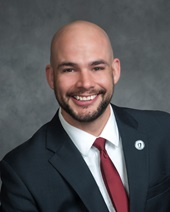
Rep. Joe McKenna
Sponsored bills
Maddy summaryHD 2800 requires state and municipal agencies using public funds to install new permanent outdoor lighting to meet specific energy and light pollution standards by 2026. Key provisions include mandating fully shielded fixtures (except for ornamental lighting or historic structures), limiting light color to 3000K or warmer, minimizing glare and light trespass, and using only necessary illuminance levels. The bill directly affects how municipalities and state agencies fund, install, and operate outdoor lighting like streetlights, parking lots, and building façades. It aims to conserve energy and improve night sky visibility by reducing unnecessary or poorly directed light. Regulations must be finalized by January 2026, with exemptions for emergencies, aviation safety, and certain historical or decorative lighting.
Maddy summaryThis bill streamlines wetlands restoration by removing permit requirements for certain projects, such as restoring salt marshes, provided they're approved by state agencies, don't block public access, and avoid building structures. It also simplifies rules for manually removing invasive plants from natural areas, requiring new state regulations to protect native habitats. The bill mandates a 12-month review of state laws affecting wetland projects to cut permitting costs and time, and launches a 5-year pilot program to fast-track eco-friendly restoration projects like living shorelines. These changes directly affect environmental agencies, restoration contractors, and coastal communities working on wetland conservation.
Maddy summaryHD 4191 increases penalties for assaulting correctional officers and other facility staff, requiring a minimum 5-year prison sentence for such assaults. It also creates new workplace protections for workers exposed to synthetic cannabinoids (K2/Spice) during their jobs, including correctional officers, first responders, and healthcare workers. Affected employees can now access medical leave under Massachusetts law, workers' compensation, and continued health insurance during recovery. The bill requires them to use other short-term disability benefits first before accessing the new medical leave benefits.
By Mr. Fattman, a petition (accompanied by bill, Senate, No. 1842) of Ryan C. Fattman, Paul K. Frost, John J. Marsi, Joseph D. McKenna and others for legislation relative to the retirement of state university and community college police officers. Public Service.
Maddy summaryHD 183 establishes an annual three-day "free snowmobile weekend" in Massachusetts, allowing non-residents to operate snowmobiles on public lands and private lands with agreements from the Snowmobile Association of Massachusetts (or its affiliated clubs) without needing a Massachusetts registration or Trail Pass. This applies only during a mutually agreed-upon weekend in the winter season, provided non-residents show proof of valid registration from any U.S. state or Canadian province. The bill directly affects non-resident snowmobilers seeking to use Massachusetts trails during this designated period. It requires coordination between the Massachusetts Office of Law Enforcement and the Snowmobile Association to set the specific dates each year.
Maddy summaryThis bill prohibits the sale of fur products made from animals raised on fur farms (such as mink or fox) within Massachusetts. It directly affects sellers of new fur products, including retailers and online businesses operating in the state, but excludes used fur items, religious items, and products legally sold under federal law. The law defines "fur product" broadly (covering clothing, accessories, and home goods) but exempts items converted to leather or made from certain animals like sheep or deer. Sellers violating the ban face civil penalties of $500-$5,000 per product, enforced by the Attorney General, with rules to be issued within six months. The law takes effect one year after passage.
Maddy summaryThis bill creates a refundable tax credit for adoptive parents in Massachusetts. It provides $2,500 per adopted child from foster care and $2,000 per adopted child from private or public adoption agencies, refundable against state income taxes. The credit covers expenses like agency fees, attorney fees, court costs, and medical copayments directly related to adopting a minor child. It directly affects adoptive parents who pay these costs through licensed agencies or foster care systems. The change modifies existing tax law to expand and clarify eligible adoption-related expenses.
Maddy summaryThis bill (HD 3633) updates Massachusetts law regarding medical exemptions for school immunizations. It requires physicians to provide a written "Medical Certification" stating a child's health would be endangered by vaccination, based on factors like family history or pre-existing conditions. The certification must be submitted annually to the school health program, kept confidential (not shared outside that program or used in court without consent), and protects physicians from disciplinary action or professional harm for issuing it. This directly affects parents seeking exemptions, schools, and healthcare providers involved in school health requirements.
Maddy summaryThis bill (HD 4223) adds a $50,000 income tax exemption for Massachusetts residents aged 65 or older during the taxable year. It directly affects seniors who meet the age requirement by reducing their taxable income. The key provision inserts a new section into state tax law, allowing eligible seniors to exclude $50,000 from their taxable income when calculating state income tax. This is a concrete policy change that lowers tax liability for qualifying seniors without altering other tax rates or brackets. The exemption applies automatically to eligible individuals who reach age 65 by year-end.