

Maddy summaryThis bill requires all four-year colleges and universities in Massachusetts to report annually on their admissions policies regarding legacy applicants, early decision, and early action programs. Specifically, institutions must disclose whether they offer preferences to students related to donors or alumni and provide detailed statistics on how many applicants from these groups are admitted. The law also mandates that these reports break down data by race and financial need, including information on Pell Grant recipients, to increase transparency in the admissions process. By collecting this information, the bill aims to give the public and state officials a clearer view of how different applicant categories are treated during college enrollment.
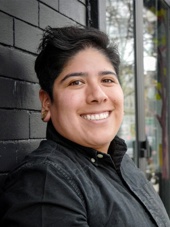
Rep. Sam Montaño
Sponsored bills
Maddy summaryThis bill requires the Massachusetts Board of Elementary and Secondary Education to create rules banning public schools from using Native American names, logos, or mascots for their athletic teams. It mandates that schools currently using such imagery must select new alternatives by a specific deadline set by the state board. The legislation allows schools to keep existing uniforms and materials that feature the prohibited names only if they have already chosen a replacement and stop buying new items with the old imagery. Additionally, any new signs or fixtures displaying the banned names must be removed, while those on existing facilities can remain until the next scheduled maintenance or replacement.
By Representatives O'Day of West Boylston and Philips of Sharon, a petition (accompanied by bill, House, No. 2246) of James J. O'Day, Edward R. Philips and others for legislation to authorize attending physicians to prescribe medical aid in dying medication that will end the life of patients in a peaceful manner. Public Health.
Maddy summaryThis bill prohibits food and retail establishments in Massachusetts from using polystyrene containers and food service ware starting August 1, 2024. It defines "disposable food containers" to include single-use items like plates, cups, and utensils used for serving or packaging food and beverages. Retailers will be banned from selling these polystyrene products to customers, while food establishments cannot dispense food in them. The law allows for a one-year deferment if a business can prove that using polystyrene is the only option and that switching would cause significant economic hardship. Violations of the ban could result in fines of up to $1,000 per incident, though the health department has the authority to grant extensions based on specific circumstances.
By Representative Hogan of Stow and Senator Cyr, a joint petition (accompanied by bill, House, No. 2197) of Kate Hogan, Julian Cyr and others for legislation to protect public health from PFAS. Public Health.
Maddy summaryThis bill creates a new Municipal Reforestation Program within the Executive Office of Energy and Environmental Affairs to help towns and cities plant trees. It establishes an Urban Forest Advisory Council made up of experts from various sectors, including local governments, utility companies, environmental groups, and educational institutions, to guide the program. This council will provide technical advice and oversight to ensure that municipalities and organizations plant the right types of trees in the right places using scientific guidelines. The legislation aims to improve urban tree canopy coverage and address climate resilience through a structured, collaborative approach to reforestation.
Maddy summaryThis bill establishes a new ecologically-based mosquito management program in Massachusetts to protect public health while reducing reliance on broad-spectrum pesticides. It creates a new chapter in state law that defines specific terms like "disease vector" and outlines a strategy that prioritizes prevention, surveillance, and natural controls such as predators and habitat modification. Under this program, the use of chemical pesticides is restricted to last-resort situations where mosquito populations exceed predetermined safety levels. The legislation also repeals the previous chapter governing mosquito control and directs relevant state boards to implement these new sustainable management plans.
Maddy summaryThis bill aims to remove barriers for physician assistants in Massachusetts by changing how their supervision and legal responsibility are defined. It eliminates the requirement for a supervising physician to be personally present during patient care and shifts legal liability from the supervising doctor to the individual physician assistant or the healthcare facility they work for. Additionally, the legislation mandates that physician assistants complete at least 2,000 hours of collaborative practice in a hospital or integrated clinical setting before applying for licensure. While maintaining the rule that they cannot practice independently, the bill allows physician assistants to bill separately for the services they provide.
By Representative Driscoll of Milton, a petition (accompanied by bill, House, No. 2777) of William J. Driscoll, Jr., relative to excluding the Segal AmeriCorps Educational Award from taxable income. Revenue.
By Representatives Khan of Newton and Santiago of Boston, a petition (accompanied by bill, House, No. 2210) of Kay Khan, Jon Santiago and others relative to prohibiting the marketing of certain drinks with added sugar on school grounds. Public Health.