

Maddy summaryThis bill directs the Massachusetts Department of Energy Resources to create a grant program designed to help municipalities, businesses, and nonprofits expand access to electric bicycles. The funding can be used to buy and maintain e-bikes, cover related infrastructure costs, and pay for labor and administrative expenses associated with bike-sharing or ownership programs. To qualify, applicants must run a program using electric bicycles and agree to provide some matching funds while following reporting rules. The department is also instructed to prioritize grants for projects located in environmental justice or disproportionately impacted communities.
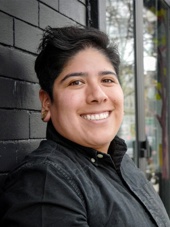
Rep. Sam Montaño
Sponsored bills
Maddy summaryThis bill creates a new Better Buildings Act within Massachusetts law to set energy performance standards for large buildings, defined as those with at least 20,000 square feet. The Department of Energy Resources will establish rules requiring these buildings to meet specific limits on energy use and greenhouse gas emissions by 2050, with interim targets set every five years starting in 2025. Owners of these buildings must report their annual energy consumption, and the department will make this data publicly available. The standards will apply to various building types and occupancies, with the department having the authority to define subcategories and adjust thresholds as needed.
Maddy summaryThis bill requires the Massachusetts Department of Environmental Protection to monitor and report on ultrafine particulate matter, which consists of particles smaller than 100 nanometers. The law mandates that existing air quality monitoring stations include measurements for these tiny particles alongside current tracking of larger particulate matter. Additionally, the bill directs the department to update its regulations so that project proposals must include data on ultrafine particulates when seeking air quality approvals. These changes are set to take effect on January 1, 2025, aiming to improve the state's ability to track and manage specific types of air pollution.
Maddy summaryThis bill expands access to postpartum home visiting services for all Massachusetts residents, regardless of income or other criteria, by establishing a statewide system managed by the Department of Public Health. The program mandates that qualified health professionals provide at least one home visit within eight weeks after birth and a follow-up visit within three months, covering screenings, education, and support for maternal and infant health needs. While the legislation creates this universal program, it specifically guarantees that current state employees covered by the universal postpartum home visiting program will receive these services without any deductibles, co-payments, or co-insurance. The Department of Public Health is tasked with coordinating funding and implementing the program first in communities with the highest maternal health inequities, aiming for full statewide coverage within six years.
Maddy summaryThis bill amends Massachusetts law to require research institutions and product testing facilities to prioritize the adoption of dogs and cats after studies, rather than euthanizing them. Facilities must make reasonable efforts to place these animals with licensed rescue organizations or permanent homes, unless the animal has medical or behavioral issues that pose risks or is being kept by an employee. The legislation also mandates annual public reporting on the number of animals euthanized, adopted, or deemed unsuitable for adoption to increase transparency. Additionally, the bill clarifies that these facilities are not legally liable for any injuries or damages that occur after an animal is adopted through this process.
By Representative Blais of Deerfield, a petition (subject to Joint Rule 12) of Natalie M. Blais relative to establishing a state disaster relief fund for emergency management. Emergency Preparedness and Management.
Maddy summaryThis bill establishes a new commission to study the practicality of a program where the government could voluntarily buy homes and buildings located in flood-prone areas. The commission will be led by state officials from climate, energy, and emergency management agencies, alongside representatives from housing, environmental protection, and various advocacy groups focused on justice and conservation. Its main task is to analyze current and future flood risks using scientific data and determine what such a purchase program would require, including costs and procedures. The commission must submit a report with its findings and recommendations to the state legislature once its work is complete.
Maddy summaryThis bill amends Massachusetts state law to prevent discrimination against people with disabilities in healthcare settings. It specifically prohibits hospitals and other medical entities from denying or deprioritizing life-saving treatment based on assumptions that a person's life is less valuable because of their disability or chronic health condition. While the law bans using disability as a reason to withhold care, it explicitly allows medical professionals to consider short-term survival probabilities when allocating resources during a crisis. Additionally, the legislation forbids using metrics that assign lower value to life extension for individuals with pre-existing disabilities when deciding which treatments to offer or cover.
Maddy summaryThis bill amends Massachusetts Medicaid rules to require certain elders and people with disabilities to pay back a portion of their income that exceeds specific limits. Under the new provision, eligible individuals would owe providers an amount equal to their excess monthly income for six consecutive months, with exceptions for those in home or community-based waiver programs and the special income eligibility group. The change directly affects recipients whose earnings are above the standard exemption thresholds but who still qualify for Medicaid coverage. By introducing this repayment requirement, the legislation aims to adjust how costs are shared between the state and those with higher incomes within the program.