

Maddy summaryHD 3530 creates Massachusetts' Age-Friendly Employer Certification program, targeting employers who support workers aged 55 and older. To qualify, employers must offer remote/hybrid work, flexible schedules, job-sharing, and equal hiring practices. Certified employers receive tax credits: up to $2,500 annually per eligible worker, with additional credits for caregiver accommodations, training programs, and extended health benefits for workers 55+. The program aims to encourage hiring and retention of older workers through financial incentives, administered by state labor and health agencies, effective January 1, 2026.
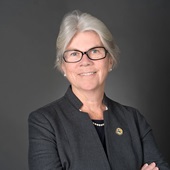
Rep. Alice Peisch
Sponsored bills
Maddy summaryThis bill requires Massachusetts school committee members to complete an 8-hour free orientation within three months of taking office. The training covers school finance, state education laws, open meeting rules, special education, conflict of interest, and other key responsibilities. It must be developed by the state education department and provided annually through approved groups like the Massachusetts Association of School Committees. Members who fail to complete the training lose the right to participate in committee meetings or decisions. The law directly affects all locally elected or appointed school committee members across Massachusetts cities and towns.
By Representative Peisch of Wellesley, a petition (accompanied by bill, House, No. 670) of Alice Hanlon Peisch relative to special education finance. Education.
Maddy summaryThis bill allows the state commissioner to transfer a 3,500-square-foot parcel of land (currently used by Massachusetts Bay Community College for a gravel driveway in Wellesley) to Kimberlee A. Dow or her successors. It requires the commissioner to obtain an independent appraisal of the land’s fair market value or proposed use, review by the inspector general, and approval before the transfer. All proceeds from the sale must be deposited into a new scholarship trust managed by the college president, which funds student scholarships without needing annual legislative appropriations. The college president administers the trust, with unspent funds rolling over annually to support future scholarships.
Maddy summaryThis bill amends a 2020 law to increase the maximum age for retired police officers to serve as special officers in Weston from 65 to 70. It directly affects retired police officers in Weston who wish to continue working in special officer roles after turning 65. The key change is simply updating the age limit in the existing statute, with no other provisions or mechanisms. The law takes effect immediately upon passage.
Maddy summaryThis bill establishes a uniform legal framework for "special deposits" - funds held by banks under specific agreements that require a condition to be met before payment. It defines these deposits as requiring at least two beneficiaries, a clear purpose (such as escrow for transactions, security deposits, or retirement benefits), and a condition (like a completed sale) that must occur first. The law mandates banks pay beneficiaries only after the condition is met and the bank has knowledge of it, while limiting how agreements can be changed without beneficiary consent. This directly affects banks, depositors, and beneficiaries using these accounts for financial arrangements like holding funds for transactions or security.
Maddy summaryThis bill requires the Massachusetts Attorney General to create a standardized real estate disclosure form for property sales. It directly affects real estate brokers, salespeople, and sellers, who must disclose specific property details to buyers. The form mandates disclosure of structural components (roof, foundation), appliances, mechanical systems (electrical, plumbing), natural hazards (flooding, earthquakes), environmental risks (lead, mold, radon), and zoning information. The goal is to ensure consistent, comprehensive property information is provided to buyers across all transactions.
Maddy summaryHD 3833 allows Massachusetts small businesses with 25 or fewer employees to submit their benefits plans directly to the state department instead of using an intermediary. It exempts these businesses from two specific administrative requirements (currently applying to larger employers) under existing law. This change reduces paperwork and compliance costs for small business owners managing their own benefits programs. The bill directly affects small business employers in Massachusetts who previously faced these additional requirements.
Maddy summaryHD 938 amends a law governing charter school renewals by requiring school boards to specifically consider evidence of "inequitable disciplinary practices and culturally insensitive policies" during renewal decisions. It also allows boards to evaluate "any other relative information" they deem negatively impacts student outcomes. This change directly affects charter school boards and the schools seeking renewal, mandating they address equity and cultural factors in their review process. The bill does not create new programs but alters the criteria used for evaluating existing charter schools.
Maddy summaryThis bill (HD 3446) allows eligible retired state employees and their Medicare-eligible dependents to enroll in health insurance plans purchased through the individual Medicare marketplace. It requires health reimbursement arrangements (HRAs) for these retirees to cover the costs of the lowest-cost Medicare Supplement Plan 1 and Part D prescription drug coverage in Massachusetts. The bill mandates that HRAs provide minimum annual funding equal to 50% of the sum of these two costs (based on annual rates set by the state). This change directly affects retired state employees and their Medicare-eligible family members who previously had limited options for supplemental coverage.