

In committee Mar 11, 2024
1 co-sponsor
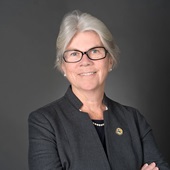
Rep. Alice Peisch
Total votes
1,241
all sessions
Attendance
98%
24 missed
Higher than 94% of chamber peers
With party
99%
of cast votes
Near the chamber average
Bipartisan score
0%
crosses aisle rarely
Near the chamber average
Sponsored
687
bills & resolutions
Lower than 81% of chamber peers
Committees
5
assignments
687 bills and resolutions
Sponsored bills
Total
687
Primary
162
Co-sponsor
525
This page
687
matching current filters
In committee Mar 11, 2024
1 co-sponsor
An Act relative to nonprofit board member compensation
Maddy summaryThis bill modifies Massachusetts law to clarify that nonprofit organizations may legally pay board members more than $500 annually. By amending Section 85W of Chapter 231, the legislation removes the previous cap on such compensation for board members. The change allows these organizations to establish higher pay scales for their volunteer directors without violating state statutes.
Passed Feb 12, 2024
0 co-sponsors
An Act promoting housing opportunity and mobility through eviction sealing (HOMES)
Maddy summaryThis bill amends Massachusetts law to allow individuals with eviction records to have those records sealed under specific conditions, aiming to help people secure future housing. It defines key terms such as "eviction action" and "no-fault eviction" to clarify which cases are eligible for sealing, while also establishing rules for how consumer reporting agencies and courts must handle these records. The legislation requires that sealed eviction records be treated as if they never existed for the purpose of rental applications and credit checks, thereby removing barriers to housing for tenants who have faced past evictions.
Passed Feb 12, 2024
1 co-sponsor
An Act to ensure senior care organization quality and accountability
Maddy summaryThis bill requires MassHealth Senior Care Options programs to pay nursing homes at least the same rate as standard Medicaid fee-for-service payments. The rule applies to facilities licensed under state law and ensures that reimbursement covers room, board, and all necessary add-ons. By guaranteeing these minimum payment levels, the legislation aims to maintain access to critical services and support smooth transitions for patients moving from hospitals to nursing facilities.
Passed Feb 8, 2024
1 co-sponsor
An Act to encourage employer supported childcare
Maddy summaryThis bill establishes a new Public-Private Partnership Trust Fund to help Massachusetts employers offer or expand childcare benefits for their employees. The fund will be managed by state officials and financed through government appropriations, interest earnings, and private donations, with a requirement that no more than half of any project's costs come from public sources. To be eligible for grants, participating employers must have at least 75 employees, or they can form a consortium to meet that threshold. Additionally, the legislation creates a special commission to study the issue and make recommendations, including evaluating potential tax credits for businesses that invest in childcare infrastructure or services.
Passed Feb 7, 2024
0 co-sponsors
An Act protecting the rights of municipalities and districts
Maddy summaryThis bill amends Massachusetts water laws to clarify that the state's permit and registration programs are designed to balance water use while protecting local water resources. It explicitly states that municipalities and other registrants who file renewal statements are entitled to their approved water volumes without additional conditions, with the only exception being the requirement for accurate metering. By restricting the state department from imposing other conditions, the legislation aims to secure existing water rights for local users against new regulatory hurdles.
Passed Feb 5, 2024
0 co-sponsors
An Act authorizing the town of Lincoln to establish a means tested senior citizen property tax exemption program
By Representatives Gentile of Sudbury and Peisch of Wellesley, a petition (accompanied by bill, House, No. 2810) of Carmine Lawrence Gentile, Alice Hanlon Peisch and Michael J. Barrett (by vote of the town) that the town of Lincoln be authorized to establish a means tested senior citizen property tax exemption program in said town. Revenue. [Local Approval Received.]
Passed Jan 18, 2024
1 co-sponsor
An Act authorizing the town of Weston to grant a license for the sale of wines and malt beverages at a food store
Maddy summaryThis bill authorizes the town of Weston, Massachusetts, to issue licenses allowing food stores to sell wine and malt beverages. It achieves this by amending state laws to clarify that such local licenses must follow specific regulations regarding their use and transfer. The legislation also outlines procedures for handling license cancellations and ensures that licenses cannot be transferred to different locations within the town. Ultimately, the bill enables local businesses in Weston to operate as retailers of alcohol without needing to apply for a separate liquor store license.
Passed Nov 20, 2023
1 co-sponsor
An Act relative to the nursing home quality jobs initiative
Maddy summaryThis bill establishes the Nursing Home Quality Jobs Initiative to improve wages, training, and career opportunities for direct care staff in Massachusetts licensed nursing homes. It requires MassHealth to fund a living wage add-on for employees such as certified nurse aides and housekeeping staff, adjusted annually for inflation, while also creating grant programs for supervisory training and career advancement for entry-level workers. Additionally, the legislation mandates a tuition reimbursement program for certified nursing assistant training to support workforce development. These measures aim to enhance staff retention and quality of care by addressing compensation and professional growth without guaranteeing specific outcomes.
Passed Oct 30, 2023
1 co-sponsor
Ask Maddy
·
AI policy assistant
Ask Maddy about Alice Peisch
Scope: massachusetts
Hi! I can help you understand Alice Peisch's legislative record. What would you like to know?
Try one of these
i
Maddy answers using official bill text and legislative records. Always verify before sharing.
Sources cited inline