

Maddy summaryThis bill creates an independent oversight office within Massachusetts' Office of Inspector General to address structural racism in correctional facilities, as recommended by a state legislative commission. The office, led by an appointed "anti-racism corrections inspector general," will collect and analyze data on racial disparities - including by race, ethnicity, language, gender identity, and sexual orientation - to monitor the experiences of Black, Indigenous, and People of Color (BIPOC) incarcerated individuals and correctional staff. The inspector general must have expertise in structural racism and restorative justice, cannot have prior ties to the Department of Corrections, and will report findings to the legislature and public. This office will track progress in dismantling racial inequities in healthcare, programming, staffing, and facility operations.
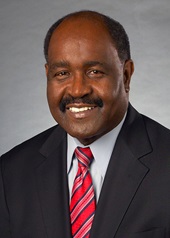
Rep. Bud Williams
Sponsored bills
Maddy summaryH 4554 requires MassHealth (Massachusetts' Medicaid program) and commercial health insurers to cover fertility preservation services - such as freezing eggs or sperm - before medical treatments that risk infertility, like those for sickle cell disease or cancer. It directly affects MassHealth enrollees and insured individuals in Massachusetts who face treatment-related infertility risks. The bill mandates coverage without discrimination based on age, sex, health status, or other personal characteristics. It also establishes a statewide committee to coordinate sickle cell disease care and address racial health disparities. The bill is pending approval after being reported favorably by the Health Care Financing committee.
Maddy summaryThis bill (H 4555) requires Massachusetts Medicaid and health insurers to cover standard fertility preservation services - such as egg, sperm, or embryo freezing - when a patient has a diagnosed condition like sickle cell disease that may cause infertility. It directly affects sickle cell patients needing cancer treatment or other therapies that risk fertility, ensuring coverage matches what's provided for pregnancy-related procedures. The bill also creates a Statewide Steering Committee with patient advocates, medical experts, educators, and racial equity representatives to coordinate care, develop educational materials, and improve access to services. The committee will focus on building inclusive networks and addressing racial health disparities in sickle cell disease care across schools and healthcare systems.
Maddy summaryHD 138 creates new definitions for "Health equity" and "Priority population" (communities facing health disparities) within Massachusetts health law. It requires state health agencies to appoint a chief health equity officer, integrate health equity into all agency duties, and establish specific expenditure targets for primary care and behavioral health services (a 30% increase above baseline through 2026). The bill mandates annual reports tracking health inequities, including data on costs of disparities and strategies to reduce them, and requires public hearings before setting new spending targets. These changes directly affect state health agencies, boards, and healthcare entities managing public health funds.
Maddy summaryThis bill creates Historic District Stabilization Committees in Massachusetts communities facing foreclosure crises in designated historic areas. The committees, formed by local organizations, can acquire properties through eminent domain at fair market value to prevent vacant/vandalized homes. They must conduct market studies to establish a Community Appraisal Framework, manage occupied properties through homeowner counseling, and restore vacant properties to meet federal rehabilitation standards. These committees will also market acquired properties using the established framework to stabilize neighborhood values. The bill directly affects historic districts with high foreclosure rates, aiming to protect community investments without harming legitimate financial interests.
Maddy summaryHD 3816, the "Safe Communities Act," prohibits Massachusetts law enforcement from asking about immigration status during routine interactions (except when legally required) and restricts cooperation with federal immigration enforcement. It requires written consent with clear explanations in multiple languages before DHS interviews of people in custody, and bans automatic notifications to DHS about individuals' release from custody (except for end-of-sentence releases). The law also prohibits police from acting as immigration officers under federal agreements and mandates training for law enforcement on these provisions. These changes directly affect all Massachusetts residents, especially immigrant communities, and apply to state/local police, sheriffs, and correctional facilities.
Maddy summaryThis bill expands Massachusetts' low-income energy assistance program to include cooling support. It provides up to $500 per household for air conditioners, ceiling fans, or box fans, plus electric bill assistance for cooling during warm months. Eligible households must earn under 60% of the state median income, with landlords required to approve window AC units (but not box fans). The program must receive at least 10% of LIHEAP funds annually, prioritizing underserved communities, and requires annual reporting on participation and equipment distribution.
Maddy summaryThis bill prohibits new gas facilities or expansions within 5 miles of environmental justice communities (areas disproportionately affected by pollution) unless required for public safety. It applies directly to gas companies seeking permits or approvals for projects in these zones, requiring state agencies to deny such requests. Key provisions amend state code to block approvals and certificate petitions for gas infrastructure near these communities, with the sole exception being safety-related projects. The law aims to protect community health and reduce climate impacts by halting new gas development in vulnerable neighborhoods.
Maddy summaryHD 122 imposes a moratorium on new natural gas and related infrastructure projects until at least 2026. It prohibits the approval of new combustible fuel facilities (including natural gas, renewable natural gas, and hydrogen systems) or expansions of existing ones, except for safety-related projects. The bill also bans gas companies from expanding into towns without pre-existing gas service and removes the Department of Public Utilities' authority to approve gas expansions beyond a company's charter town. This directly affects gas utilities, towns without current gas infrastructure, and the state's approval process for energy projects.
Maddy summaryHD 142 imposes a temporary moratorium on approving new natural gas infrastructure projects or expanding existing systems until at least 2026, with exceptions only for public safety. It directly affects natural gas utility companies and developers seeking permits for new pipelines or facility expansions. Key provisions include defining "combustible fuel facilities" to cover natural gas systems and prohibiting new construction in towns without active gas service. The law halts all new approvals and expansions until 2026, requiring safety justification for any exceptions.