

Maddy summaryThis bill changes a residency requirement for veterans seeking state benefits. It reduces the required continuous residency period from 5 years to 1 year. This directly affects veterans who want to qualify for specific Commonwealth benefits, making it easier for them to become eligible. The key provision is the amendment to the General Laws, shortening the qualifying time frame for veterans to access these benefits.
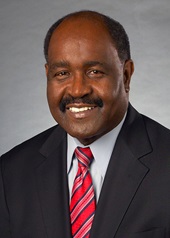
Rep. Bud Williams
Sponsored bills
Maddy summaryThis bill updates Massachusetts property tax exemptions for veterans with service-connected disabilities. It replaces a flat $2000 or $400 exemption with an incremental scale: veterans rated 10% or more disabled by the VA or military receive $400 for 10% disability up to $1,000 for 100% disability, in 10% increments. The exemption applies to primary residences occupied by qualifying veterans or their spouses (if also veterans) and continues annually unless the disability rating drops below 10%. The Department of Revenue must establish this scale by January 1, 2027, to implement the changes.
Maddy summaryHD 3701 requires comprehensive colorectal cancer screening coverage with no out-of-pocket costs for specific groups starting at age 30. It mandates coverage for state employees (via Chapter 32A), Medicaid recipients (Chapter 118E), and private insurance policyholders (Chapters 175, 176A, 176B) using multiple screening methods like colonoscopy, FIT stool tests, and CT colonography. The bill prohibits co-pays, deductibles, or additional charges for all related services, including lab work, physician visits, and polyp removal during screening. It directly affects insured individuals aged 30+ in these coverage categories by ensuring free, medically necessary screening under their existing plans.
Maddy summaryThis bill requires Massachusetts' Department of Community Services to provide at least 120 days' notice to local legislators and legal services organizations before closing or relocating a community service office that serves low-income residents. It mandates the department to share specific data about proposed changes, including transportation access, office hours, accessibility for seniors/disabled individuals, language services, and resident impact surveys conducted in recipients' preferred languages. The law ensures communities and advocates receive detailed information about how closures or relocations would affect service access for vulnerable populations. This directly affects the department's leasing decisions and the low-income residents relying on these community service offices.
Maddy summaryThis bill establishes a special legislative task force to study creating an Underground Railroad, Civil Rights, and Black Heritage Museum and Cultural Center in Springfield. The task force will examine local history, recommend a location, funding options, and operational requirements, with a final report due by July 2027. It directly involves Springfield residents, cultural institutions, and state officials through designated members including legislative leaders, the mayor, and museum representatives. The bill does not fund or create the museum itself but authorizes a study to inform future decisions. (Note: The bill is pending further legislative action after committee referral.)
Maddy summaryThis bill (HD 1468) allows school nurses employed in Department of Education-approved schools to count prior nursing work experience toward their retirement credit if they are already in a teacher's, municipal, or state retirement system. To qualify, nurses must pay 10% of their annual salary for each year of service plus interest (paid in a lump sum or installments), after completing 10 years in the retirement system, with a maximum of three years of creditable service allowed. Nurses must apply within 90 days of being notified of eligibility by the retirement board.
Maddy summaryThis bill establishes clear documentation standards for students with disabilities to access accommodations at public colleges and universities in the commonwealth. It specifies that acceptable proof includes past special education plans, Section 504 plans, evaluations from licensed professionals, or records from other schools or institutions. Public institutions must create and publicly post a simple process for determining eligibility for accommodations on their websites. The Board of Higher Education will develop detailed rules to implement these standards.
Maddy summaryThis bill creates a state-funded "Vacant Lots to Urban Agriculture Fund" managed by the Department of Agricultural Resources to convert vacant urban properties into farms and community gardens. The fund supports land acquisition, infrastructure development, and startup costs for projects prioritizing environmental justice communities - areas defined by Chapter 30 - to boost food security, economic development, and climate-resilient farming. Grants will cover collaborative planning, land purchases, renovations, and pilot programs in underserved neighborhoods. The department must report annually on grant recipients, funding amounts, and projects serving environmental justice areas.
By Representative Duffy of Holyoke, a petition (accompanied by bill, House, No. 121) of Patricia A. Duffy and others relative to the conversion of vacant lots to farms, community gardens, and other agricultural enterprises in environmental justice populations. Agriculture.
Maddy summaryHD 127 authorizes the state to fund and construct a 12,000-square-foot museum and cultural center in Springfield's Mason Square, focusing on the Underground Railroad, Civil Rights Movement, and African American history in Western Massachusetts. The bill requires the Department of Capital Planning and Operations to conduct due diligence studies within 90 days, including land appraisals, traffic impact assessments, and preliminary design specifications developed with input from the African-American Museum and Cultural Center of Western Massachusetts and Springfield city officials. It directs the state to provide funding for land acquisition, construction, and operation, while limiting parking to 200 spaces and establishing operator criteria for managing the center. The project aims to serve as an educational resource for schools and organizations, boost regional tourism, and attract conferences to Springfield.