Maddy summaryThis bill amends Massachusetts law to specifically include public transit workers as protected employees under assault and battery statutes. It expands the definition of assault to cover attacks using bodily substances, such as blood, saliva, or urine, when directed at these workers. By updating the legal text, the legislation ensures that harming transit staff with such substances is treated as a distinct offense. The changes directly affect law enforcement, prosecutors, and public transit employees by clarifying the scope of protected conduct.
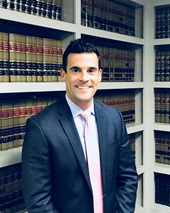
Rep. Chris Hendricks
Sponsored bills
Maddy summaryThis bill creates a special legislative commission to study the intentional misrepresentation and misuse of service animals in Massachusetts. The commission will consist of seventeen members appointed by various government officials and representatives from disability advocacy, business, and service dog organizations. Its primary task is to review current laws, investigate the prevalence of fraud, and examine practices in other states to determine if new regulations or penalties are needed. Additionally, the commission will explore whether service animals should be required to have a certification or registration system. The group must submit its findings and recommendations by April 1, 2025, to state legislators and relevant committee chairs.
Maddy summaryThis bill allows public agencies and municipalities to require Project Labor Agreements on public construction projects if they determine it is in the best interest of the state. Before mandating such an agreement, officials must evaluate factors like construction efficiency, worker availability, project safety, and opportunities for diverse groups including women, minorities, and veterans. The Department of Labor Standards will also create new rules to encourage more minority-owned businesses to participate and ensure the workforce reflects the local community demographics.
Maddy summaryThis bill aims to stop wage theft and hold employers accountable by strengthening how the state enforces labor laws. It creates a new public enforcement unit within the Attorney General's office to investigate unpaid wages and other violations. The legislation also expands the types of penalties available to punish companies that fail to pay workers correctly. These changes directly affect employees who may have been underpaid and the businesses that employ them.
By Representative Decker of Cambridge, a petition (accompanied by bill, House, No. 3012) of Marjorie C. Decker relative to infrastructure projects and public building construction contractors and subcontractors. State Administration and Regulatory Oversight.
Maddy summaryThis bill requires construction contractors and subcontractors in Massachusetts to hire apprentices from state-approved programs on specific building projects. Under the new rules, these companies must have an active apprenticeship program and employ apprentices throughout the duration of the contract, with a new requirement effective in 2025 that the program must have successfully trained at least three apprentices to journey worker status in the past five years. Contractors must also submit proof of compliance and identify their apprenticeship program to the Attorney General within 45 days after a contract is awarded. The law applies to contracts issued more than 90 days after the bill takes effect and covers a wide range of construction, maintenance, and repair work.
Maddy summaryThis bill creates a 15-member legislative commission to study how service animals are used in Massachusetts and to investigate issues like fraud and misrepresentation. The commission will include representatives from law enforcement, disability advocacy groups, business owners, and animal training organizations to review current laws and compare practices in other states. Its findings, due by April 1, 2025, will offer recommendations on whether to update existing definitions, introduce penalties for misuse, or implement a certification system for service animals.
Senate, July 22, 2024 -- The committee on Senate Ways and Means, to whom was referred the Senate Bill establishing a special commission to review the adequacy and equity of the Massachusetts school building program (Senate, No. 2659),- reports, recommending that the same ought to pass with an amendment substituting a new draft with the same title (Senate, No. 2885).
Maddy summaryThis bill prohibits Massachusetts correctional facilities from transferring inmates to work outside the state. It directly affects prison administrators and inmates by banning the practice of sending prisoners to labor in other states. The law adds a new section to state statutes that explicitly forbids moving prisoners across state lines for employment purposes. This change aims to keep all prison labor within Massachusetts boundaries.
March , 2024 -- The committee on Education, to whom was referred the petitions (accompanied by bill, Senate, No. 251) of Brendan P. Crighton, Michael J. Barrett and Peter Capano for legislation to modernize school construction; (accompanied by bill, Senate, No. 278) of Barry R. Finegold, Adam Scanlon and James B. Eldridge for legislation to establish a special commission to study the effectiveness of the Massachusetts School Building Authority; (accompanied by bill, Senate, No. 295) of John F. Keenan for legislation to create a facilities loan program for private special education schools; (accompanied by bill, Senate, No. 309) of Jason M. Lewis, Rebecca L. Rausch and Kate Lipper-Garabedian for legislation to establish a special commission to review the adequacy and equity of the Massachusetts school building program; (accompanied by bill, Senate, No. 331) of Jacob R. Oliveira for legislation to provide school building assistance for Special Education Collaboratives; (accompanied by bill, Senate, No. 359) of John C. Velis for legislation relative to school districts in receivership and the Massachusetts School Building Authority; (accompanied by bill, House, No. 431) of Bruce J. Ayers relative to technology upgrade programs for public schools; (accompanied by bill, House, No. 441) of Daniel Cahill relative to school construction; (accompanied by bill, House, No. 553) of Edward R. Philips relative to the feasibility of ergonomically designed school buildings and its beneficial impact on students and faculty; (accompanied by bill, House, No. 568) of Adam Scanlon, Barry R. Finegold and others for an investigation by a special commission (including members of the General Court) relative to the effectiveness of the Massachusetts School Building Authority; (accompanied by bill, House, No. 569) of Adam Scanlon, Michael P. Kushmerek and others relative to providing for school building assistance for special education collaboratives; and (accompanied by bill, House, No. 606) of Marcus S. Vaughn and Ryan C. Fattman relative to School Building Advisory Board funding, report the accompanying bill (Senate, No. 2659).