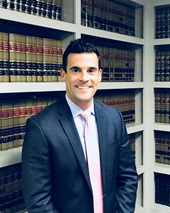
By Representative Livingstone of Boston, a petition (subject to Joint Rule 12) of Jay D. Livingstone and others relative to ivory and rhinoceros horn trafficking. Environment and Natural Resources.
Rep. Chris Hendricks
Sponsored bills
Maddy summaryThis bill requires Massachusetts homeowners insurers and the state property insurance association to provide clear, specific information to property owners when using aerial images to decide not to renew policies. Insurers must include date-stamped images showing exact issues, explain required fixes, and give owners 60 days to correct problems before non-renewal. Property owners must be able to submit proof of repairs through a defined process, and insurers must offer renewed coverage upon verification of fixes. The law directly affects homeowners whose insurance is at risk of non-renewal due to conditions identified via aerial imagery.
Maddy summaryHD 1353 increases monthly benefits for low-income households receiving state assistance programs. It mandates a 20% annual benefit increase starting July 1, 2025, until payments reach 50% of the federal poverty level for each household size. Once this target is met, benefits will automatically adjust each July to maintain at least 50% of the federal poverty level. The bill also includes adjustments for clothing allowances and rental costs for eligible households. This directly affects low-income families relying on these state assistance programs.
Maddy summaryThis bill authorizes the Massachusetts Teachers’ Retirement System to count Kellie Martin’s prior teaching service (August 2003-August 2006) toward her retirement benefits. It directly affects Kellie Martin, a teacher at Greater New Bedford Regional Vocational Technical High School, by allowing her to include this period in her retirement calculation. To qualify, Martin must repay the retirement system the amount that would have been deducted from her salary during that time, plus interest. The bill overrides existing rules to make this adjustment possible under Massachusetts law.
Maddy summaryThis bill allows public colleges with at least 25% of undergraduates in on-campus housing to create substance-free dormitory programs for students in recovery from addiction. These programs must provide on-site counseling, peer support, and trauma-informed services to help students maintain sobriety. Colleges are required to train staff on using overdose reversal drugs (opioid antagonists) and make them accessible to trained personnel during emergencies. Institutions may seek grants to fund these programs, with the state higher education and public health departments providing implementation guidance.
Maddy summaryThis bill requires public colleges and universities to create alcohol- and drug-free housing programs for students recovering from substance use. These programs must offer on-site counseling, mentoring, and peer support services. Additionally, all public institutions must provide overdose prevention training and make naloxone available to students, faculty, and staff. The law directly affects public higher education institutions and students seeking recovery support.
Maddy summaryHD 4087 creates a PFAS Remediation Trust Fund to address contamination from harmful chemicals (PFAS) in Massachusetts drinking water and environmental media. The fund, financed by settlements with PFAS manufacturers and other sources like grants and donations, will cover costs for public water systems, private well owners, municipalities, and regional water systems to test, treat, and remediate PFAS in water, soil, and groundwater. The Department of Environmental Protection will administer the fund, prioritizing vulnerable communities and requiring applicants to disclose any third-party payments to avoid duplicate funding. The fund operates without annual appropriation, with leftover balances carrying over to future years to ensure sustained support for PFAS cleanup efforts.
Maddy summaryThis bill requires Massachusetts to investigate sewage sludge management due to PFAS contamination found in all wastewater treatment plants. The Department of Environmental Protection must study current disposal methods, costs, and locations (like landfills or incinerators), then create a public master plan with goals for reducing sludge toxicity and volume. The plan will prioritize funding and technical help for wastewater facilities, especially in underserved communities, and include new grant programs to support cleaner treatment technologies. Farmers are granted immunity from lawsuits over PFAS in soil/products from standard practices, unless they produced or spread PFAS-containing materials like biosolids. The bill mandates regular public updates and plan revisions every 10 years to address evolving science and infrastructure needs.
By Representative Arena-DeRosa of Holliston, a petition (accompanied by bill, House, No. 109) of James C. Arena-DeRosa and others relative to farming and damages caused by PFAS. Agriculture.
Maddy summaryThis bill requires all newly constructed, reconstructed, or remodeled Massachusetts state-owned public buildings (like libraries, community centers, or government offices) to install at least one universal changing station in public restrooms by January 1, 2028. The stations must support 350 pounds, measure at least 70 inches long by 30 inches wide, and be positioned 20-25 inches off the floor, with clear signage and ADA-compliant safety features like rails and privacy. It directly affects parents, caregivers, and individuals with disabilities who need assistance with diapering or changing in public spaces. Limited exemptions apply for historic properties, non-public buildings, or projects under $10,000 in cost.