

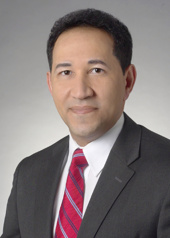
By Representative González of Springfield, a petition (accompanied by bill, House, No. 2812) of Carlos González and others relative to providing certain tax credits for employers of agricultural workers and labor rights for agricultural laborers. Revenue.
Rep. Carlos González
Sponsored bills
By Representative Connolly of Cambridge, a petition (accompanied by bill, House, No. 2747) of Mike Connolly and others for legislation to support affordable housing with a local option for a fee to be applied to certain real estate transactions. Revenue.
By Representative González of Springfield, a petition (accompanied by bill, House, No. 3327) of Carlos González, Bud L. Williams and Brian M. Ashe for legislation to authorize sheriffs and members of sheriffs departments to issue traffic citations. Transportation.
Maddy summaryThis bill improves long-term care in Massachusetts by creating a dedicated fund to support workforce training and capital improvements for skilled nursing facilities. The new fund will finance education and stipends for nurses' aides and home health workers, while also offering interest-free loans to help facilities build specialized care units like dementia or behavioral health wings. Additionally, the law clarifies definitions for assisted living services, specifying which medical tasks qualified staff can perform under a doctor's order. An advisory committee involving health officials and labor union representatives will oversee these programs to ensure they meet the needs of both workers and residents.
Maddy summaryThis bill creates a state-funded residency program designed to help community health centers recruit and keep nurse practitioners. The program offers a 24-month training period where new nurse practitioners work with patient panels under the supervision of experienced physicians or advanced practice nurses. In exchange for this training, participants must sign a contract to work at the center for at least 18 months after completing the residency. The state will provide at least $2.5 million annually to fund these positions and will also seek federal reimbursement to cover the costs as graduate medical education.
Maddy summaryThis bill creates a new Commission on Acupuncture and Wellness to study how acupuncture can be better integrated into the state's healthcare system, specifically focusing on pain management, substance abuse treatment, and wellness. The commission will include representatives from various health agencies, medical organizations, and the public, and it must submit a report with findings and recommendations within six months. Additionally, the legislation mandates that most health insurance policies and hospital plans in Massachusetts must cover acupuncture treatments for specific conditions. These changes aim to expand access to acupuncture services and ensure consistent reimbursement for licensed practitioners across the state.
Maddy summaryThis bill amends Massachusetts law to create a new program that provides grants for expanding mental health services to pregnant and postpartum individuals. It defines key terms such as "perinatal" to cover the time from pregnancy through one year after birth and establishes specific criteria for identifying areas with inadequate access to care. The legislation authorizes the Secretary of Health and Human Services to fund projects aimed at growing and diversifying the workforce of mental health providers who specialize in perinatal care. By creating these definitions and funding mechanisms, the bill seeks to improve access to mental health support for new parents and those involved in the care of infants.
Maddy summaryThis bill amends Massachusetts law to create a new funding program aimed at increasing the number of mental health professionals who specialize in caring for pregnant and postpartum individuals. The legislation allows the Secretary of Health and Human Services to award grants to educational institutions and organizations that train and recruit workers for this specific field. To ensure the program remains equitable, the bill requires that grant recipients prioritize students from underserved communities and include mandatory training on bias and discrimination in their curricula. Ultimately, the law seeks to address gaps in care by expanding the workforce available to support the mental health needs of parents and birthing persons during the year following birth.
Maddy summaryThis bill allows Massachusetts cities and towns to voluntarily implement a property tax cap specifically for homeowners aged 65 and older. To qualify for this benefit, seniors must have an annual income of $50,000 or less if single, $60,000 or less if married, and hold assets of $75,000 or less, excluding their primary home and one car. Participating municipalities would recalculate taxes annually to ensure the homeowner pays the lower amount between their current tax bill and the calculated cap. The legislation does not mandate any town to adopt this program, leaving the decision entirely up to local communities.
Maddy summaryThis bill creates a dedicated state fund to support long-term care facilities and workers in Massachusetts. The fund will finance workforce training programs for nurses and aides, offering financial aid for education, licensing, and childcare, while also providing no-interest loans to facilities for building specialized care units and improving living conditions. An advisory committee comprising state officials and representatives from senior care and labor unions will oversee these initiatives. The legislation also updates legal definitions related to long-term care facilities to clarify terms such as "cohorting" and "isolating" for infection control purposes.