

Maddy summarySB 282, the "Recreational Equality for Service Members Act," expands access to recreational benefits for active-duty service members, veterans, and their vehicles. It modifies Maryland law to exempt these individuals from paying certain entrance fees when entering state parks (under Section 9-901) and prevents fishing licenses in tidal waters from lapsing during active duty (Section 1-405). The bill also broadens the definition of "veteran" to include members of the Public Health Service and NOAA Commissioned Corps, aligning with federal definitions. These changes directly affect uniformed service members, veterans, and their families seeking access to state parks and fishing opportunities.
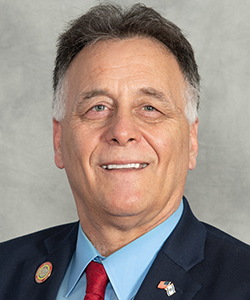
Sen. Johnny Salling
Sponsored bills
Maddy summarySB 354 establishes a Maryland Inventory of Cemeteries and Burial Sites Workgroup to study how to create a statewide cemetery inventory system. The workgroup, including representatives from historical trusts, cemetery oversight, cultural commissions, preservation groups, and local communities, will standardize cemetery definitions, review current documentation practices, and study systems in other states. It will evaluate existing local inventories, recommend data categories and maintenance methods, identify the best entity to manage the system, and propose funding options for a state system starting in 2027. The workgroup must submit its recommendations to the Governor and legislature by December 1, 2025, and the bill expires June 30, 2026.
Maddy summarySB 276 updates Maryland's education laws to include all uniformed services members (not just military personnel) in eligibility for educator certification. It revises definitions to clarify that "veteran" includes those discharged within one year of applying for certification, and expands "eligible spouse" to cover spouses of uniformed services members. The bill creates an expedited process for service members, veterans discharged within one year, and their spouses to obtain teaching licenses, requiring only a valid out-of-state license and meeting basic qualifications. This affects applicants for educator certificates across Maryland's public schools and aligns state law with broader federal definitions of uniformed services.
Maddy summarySB 603 authorizes an annual $350,000 appropriation starting in fiscal year 2027 for the University of Maryland, College Park’s TerpsEXCEED Program. This program provides educational and employment support specifically to students with intellectual disabilities. The funding covers direct services like academic advising, career development courses, internship coordination, and connections to disability support agencies. It aims to create sustainable support for the program’s operations and future expansion. The bill becomes effective July 1, 2025.
Maddy summarySB 502 expands Maryland's existing property tax credit program to include judicial officers, their surviving spouses, and cohabitants - previously, the credit only covered law enforcement officers and rescue workers. The bill modifies the law to define "public safety officer" to include judicial officers and requires counties or municipalities to establish by law who qualifies as a judicial officer. It allows disabled judicial officers, their surviving spouses (if unmarried), and cohabitants to claim the credit against property taxes on their primary residence, with specific residency and disability criteria. The credit applies retroactively to qualifying individuals who met the requirements before the bill's enactment.
Maddy summarySB 516 exempts personal property used in qualifying large family child care homes from property tax under Maryland law (Section 7-227). It repeals outdated requirements for real property improvements to qualify for tax credits and increases the maximum annual property tax credit for eligible facilities from $3,000 to $10,000 (Section 9-213). Local governments (counties, Baltimore City, or municipalities) can now grant this credit against real property tax for portions of property used by registered large family child care homes, licensed child care centers, or day care centers for elderly/adults. The bill takes effect June 1, 2025, applying to taxable years beginning after June 30, 2025.
Maddy summarySB 46 makes it a crime to illegally occupy residential property with the intent to defraud the owner, prohibiting possession or claiming rights to property you don’t legally own. Property owners can submit a sworn affidavit to their sheriff, triggering removal of the occupant unless they present evidence of lawful possession. Violations carry fines up to $2,500 or jail time (up to 1 year for repeat offenses within 2 years). The law explicitly states it does not replace existing wrongful detainer lawsuits, which remain an option for property owners.
Maddy summarySB 279, the "Employment and Insurance Equality for Service Members Act," expands protections for service members and veterans by broadening definitions and regulations across Maryland law. It updates terms like "uniformed services" to cover all military personnel (not just the armed forces) and requires businesses, insurance providers, and labor laws to apply equally to all service members and veterans. Key changes include new provisions for veteran-owned small business loans, updated insurance regulations, and revised employment protections to prevent discrimination. The bill directly affects service members, veterans, and businesses operating under Maryland’s licensing and insurance rules.
Maddy summarySB 564 modifies Maryland's process for transferring funds between the Catastrophic Event Account and the State Disaster Recovery Fund during emergencies. It shortens the Legislative Policy Committee's review period for fund transfers from 15 days to 5 days (and to 2 days during federal shutdowns), enabling faster response to disasters. The bill specifies transfers to the Disaster Recovery Fund only when that fund is depleted or when disaster costs exceed its balance. This directly affects state and local governments needing rapid financial assistance for natural disasters or catastrophic events. The changes aim to streamline funding access without altering the core purpose of these accounts.
Maddy summarySB 541 allows veterans' organizations and eligible fraternal organizations (like nonprofit groups with 300+ members) to operate up to five instant lottery machines at their main meeting location in most Maryland counties, with restrictions in nine specific counties. It changes revenue distribution: veterans' groups keep 50% of sales after costs, while fraternal groups send all proceeds to the state for allocation. The bill removes the prior requirement that veterans' groups must purchase or lease machines. This directly affects how these organizations raise funds through lottery machines statewide.