

Maddy summarySB 52 revises Maryland's chiropractic licensing and oversight rules. It changes the State Board of Chiropractic Examiners' membership structure (reducing chiropractor members from 5 to 3, with 2 consumer members), adds authority for unannounced office inspections when complaints involve CDC guideline violations, and requires licensees or applicants to undergo health provider examinations under specific circumstances. These changes directly affect chiropractors seeking licensure, currently licensed practitioners, and the Board itself. The bill updates definitions, licensure requirements, and disciplinary procedures under the Maryland Chiropractic Act without altering core practice limitations.
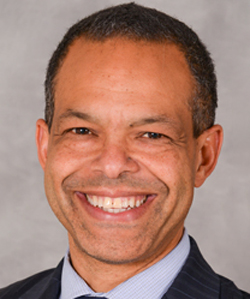
Sen. Malcolm Augustine
Sponsored bills
Maddy summarySB 130 requires all Maryland county school boards to create and enforce a policy banning student use of cellular devices (including smartphones and tablets) during instructional time, defined as the school day except lunch. The policy must mandate secure storage of devices and include disciplinary measures for violations, while allowing exceptions for students with documented health needs, IEP/504 accommodations, or educator-directed educational use. It affects all public school students, parents, and school staff in Maryland’s 24 county school districts. The bill takes effect July 1, 2025, and applies to all county boards of education.
Maddy summarySB 1040 (FEDERAL Jobs Act of 2025) creates an Expedited Hiring Program within Maryland's Department of Budget and Management to recruit former federal employees for state government positions. It directly affects eligible applicants who previously worked for the federal government for at least one year and left after January 15, 2025, as well as state appointing authorities responsible for filling vacancies. Key provisions require appointing authorities to fill eligible vacancies within 40 days, modify job descriptions to appeal to former federal workers, and implement marketing, applicant rating, and referral processes. The program aims to leverage federal expertise for state roles while operating under the State Personnel Management System.
Maddy summarySB 683 (Protect Our Federal Workers Act) renames the "Federal Government Shutdown Employee Assistance Loan Fund" to the "Federal Government Employee Assistance Loan Fund" and expands its eligibility. The bill allows Maryland to use funds from the Catastrophic Event Account to assist federal workers affected by closures, relocations, or mass layoffs of federal offices (beyond just government shutdowns). It specifically adds these new circumstances to the Fund’s purpose, enabling loans to Maryland-resident federal employees who lost pay during shutdowns *or* were terminated due to federal facility changes beyond their control. The bill modifies existing Maryland law (Sections 7-324 and 7-327) to formalize these changes, ensuring the Fund remains continuously available for these purposes.
Maddy summarySB 720 (Safe Staffing Act of 2025) requires non-state hospitals in Maryland to establish clinical staffing committees with equal representation from management and frontline staff, including nurses, technicians, and other care team members. These committees must develop annual staffing plans setting specific staffing levels for each unit based on patient needs, acuity, and evidence-based standards, including nurse-to-patient ratios. Hospitals must publicly post these plans in accessible areas and on their websites, update them annually, and address complaints about staffing deviations. The law directly affects all licensed non-state hospitals and their frontline clinical staff by mandating transparent, data-driven staffing requirements.
Maddy summarySB 808 authorizes Prince George's County to use stop sign monitoring systems at school bus stops on county-maintained highways (with county council approval) or state highways (with State Highway Administration approval). The bill requires local governments to hold public hearings before implementation, place clear signage, and prioritize high-violation areas. It defines key terms like "recorded image" and "violation," ensuring systems capture license plates and only apply to actual stop-sign violations. The law takes effect October 1, 2025, and directly affects drivers near school bus stops in Prince George's County.
Maddy summarySB 433 establishes the Office of Disability Employment Advancement and Policy within Maryland’s Department of Disabilities and creates the "Maryland as a Model Employer Initiative" to improve hiring, retention, and advancement of people with disabilities in state government. The office will develop employment strategies, collect data from state agencies on disability workforce outcomes, and oversee the initiative, which requires agencies to set hiring/retention goals and implement best practices. State agencies must report annually on progress and barriers to employment for people with disabilities starting in 2026. The bill does not create new benefits or entitlements but mandates policy coordination and transparency for state government employment practices.
Maddy summarySB 342, the "Voting Rights Act of 2025," prohibits counties and municipalities from using election methods that dilute or abridge voting rights for protected classes (defined as racial, color, or language minority groups under federal law). It directly affects voters in these local jurisdictions by requiring election systems to allow members of protected classes to elect candidates of their choice. The key mechanism establishes that a violation occurs if elections show "polarized voting" (where voting patterns differ between protected classes and the broader electorate) and the election method dilutes their voting strength. Courts must evaluate this using federal methodologies for enforcing the Voting Rights Act of 1965, applying only to local county and municipal elections - not statewide contests.
Maddy summarySB 8 establishes the Maryland Civic Excellence Program, a voluntary initiative for public school systems in Maryland to recognize student civic engagement. Starting in the 2026-2027 school year, participating schools must award a "Seal of Civic Excellence" to students who pass a government assessment, earn A or B grades in U.S. history, modern world history, and American government, and complete 75 hours of community service (including at least 30 hours on a civic project). Schools may also earn a "Center of Civic Excellence" designation if 50% or more of their graduating students receive the seal. Participating school systems must submit annual reports on the program starting in 2027.
Maddy summarySB 88 authorizes Maryland's State Administrator of Elections to form voluntary agreements (memoranda of understanding) with local municipalities. These agreements would enable the state administrator to collaborate directly with cities and towns to support their election administration, such as providing resources or expertise. The bill modifies existing election law to add this new provision (Section 2-103(e)) without changing voting rules or requirements. It directly affects municipalities managing local elections and the State Administrator's office. The change is procedural, creating a formal mechanism for state-local collaboration in election operations.