

Maddy summarySB 388 would require forfeiture of retirement benefits for certain public employees in Maryland who are convicted of specific crimes committed while performing their duties. It directly affects members of state police, law enforcement, teachers, correctional officers, and judges' retirement systems if convicted of qualifying crimes under Maryland Criminal Law sections 3-303, 3-304, 3-309, or 3-310. The bill establishes automatic forfeiture of retirement benefits upon final conviction, with a limited process allowing a public employee to file for partial payment within one year via court claim. Exceptions include reversals if the Internal Revenue Service determines forfeiture would invalidate the tax-qualified status of retirement systems. The law applies only to service earned on or after July 1, 2025.
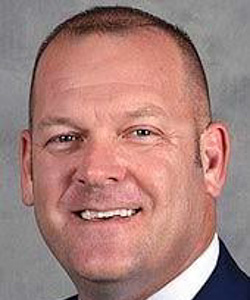
Sen. William Folden
Sponsored bills
Maddy summaryThis bill requires all state and local governments managing public playgrounds to follow specific safety standards for construction and maintenance. It mandates compliance with three key industry standards: the U.S. Consumer Product Safety Commission's playground safety handbook, and two American National Standards Institute specifications for equipment and surface impact. Governments must inspect each playground at least once every two years and document findings in a written record that includes a plan to fix any safety hazards. The law directly affects public playgrounds across Maryland, ensuring they meet nationally recognized safety protocols to protect children.
Maddy summarySB 145 modifies Maryland's Public Information Act to clarify public access to specific records. It explicitly states that records related to misconduct investigations of elected officials (e.g., internal ethics probes) are **not** considered confidential "personnel records," making them publicly inspectable. For ethics committee records, the bill allows public access to complaint-related materials if the involved official consents or if the committee closes the case, while maintaining confidentiality for ongoing investigations. These changes directly affect elected officials, the State Ethics Commission, and the Joint Committee on Legislative Ethics by altering how their records are treated under public disclosure laws. The bill focuses on defining scope and access pathways without creating new programs or altering substantive ethics standards.
Maddy summaryThis bill reclassifies theft of firearms as a felony in Maryland, making it punishable under existing felony theft penalties regardless of the firearm's value. It directly affects individuals who steal firearms by subjecting them to felony charges instead of potential misdemeanor charges under current law. The key mechanism is amending Maryland's theft statute (Section 7-104) to explicitly include firearms in the felony classification, removing a prior exemption that allowed firearm theft to be treated as a misdemeanor if the value was below $1,500.
Maddy summarySB 122 amends Maryland's hate crime laws to explicitly include law enforcement officers as a protected class under the state's criminal code. The bill adds "or a law enforcement officer" to the list of protected categories in Section 10-304 (which defines hate-motivated crimes) and updates Section 10-305 to prohibit hate crimes against buildings associated with law enforcement officers. This means attacks on officers personally, or damage to properties linked to officers (like police stations), will now qualify as hate crimes when motivated by animosity toward their status. The law takes effect October 1, 2025, expanding existing protections previously covering race, religion, sexual orientation, gender identity, disability, national origin, and homelessness.
Maddy summarySB 104 creates a $3,000 refundable state income tax credit for Maryland residents who live with and provide care for a parent aged 70 or older for at least six months during the tax year. To qualify, individuals must not be claimed as dependents by another taxpayer, meet income limits ($103,650 for single filers or $161,000 for joint filers), and provide care. The credit is refundable, meaning taxpayers can receive cash back if the credit exceeds their state tax liability. Starting in 2026, income thresholds will adjust annually for inflation based on federal cost-of-living measures. The bill applies to taxable years beginning after December 31, 2024, and takes effect July 1, 2025.
Maddy summaryThis bill updates Maryland's mental health laws to improve how individuals in crisis are evaluated and treated, specifically affecting peace officers, emergency facilities, and people with severe mental illness. It allows peace officers to transport individuals to nearby emergency facilities rather than strictly the nearest one and expands the ability to evaluate patients for involuntary admission to include psychiatric nurse practitioners. Additionally, the legislation mandates that every county establish an assisted outpatient treatment program, which can legally require individuals with severe mental illness to attend treatment to prevent homelessness and repeated hospitalizations. The law also ensures that public defenders provide legal representation during these assisted outpatient proceedings and permits electronic submission of evaluation petitions.
Maddy summarySB 1041 updates Maryland laws to allow breweries, wineries, and distilleries to directly ship alcoholic beverages to consumers within the state. The bill creates new permits for out-of-state producers to deliver beer and liquor, while also setting annual production limits that include any affiliated companies. To qualify for these permits, applicants must meet specific requirements and post security for state taxes, and recipients of direct shipments are capped on the total amount they can receive each year. Additionally, the legislation repeals previous restrictions on how much alcohol a consumer could buy in person at certain manufacturers. Overall, the law aims to regulate the direct sale and transport of alcohol while maintaining oversight over production volumes and tax compliance.
Maddy summaryThis bill expands Maryland's existing Law Enforcement Cadet Apprenticeship Program into a broader Public Safety Apprenticeship Program that includes correctional facilities and other public safety agencies. It increases the maximum grant amounts available to agencies, raising the startup grant limit to $200,000 and the per-apprentice stabilization grant to $5,000, while also requiring agencies to bargain with unions regarding employment terms before receiving funds. Additionally, the legislation mandates the Maryland Police Training and Standards Commission to create mental health wellness policies for law enforcement and correctional facilities and establishes a new workgroup to study ways to increase employment in these sectors.
Maddy summaryThis Maryland law strengthens penalties for individuals who solicit minors or law enforcement officers posing as minors to engage in illegal sexual acts. The bill defines "solicit" broadly to include requests made in person, over the phone, via mail, or through any electronic means like computers and the internet. It makes it a felony to encourage a minor or their parent to participate in activities that would otherwise be unlawful, such as producing or viewing child pornography or engaging in sadomasochistic abuse. Convictions carry prison sentences of up to ten years for a first offense and up to twenty years for repeat offenders, along with substantial fines.