

Maddy summarySB 431, the Registered Apprenticeship Investments for a Stronger Economy (RAISE) Act, creates new programs to expand apprenticeships in Maryland. It allows the State Board of Plumbing to waive journey plumber license exams for those completing approved apprenticeships and authorizes the Secretary of Labor to waive exams for other licenses after approved training. The bill establishes the Maryland Apprenticeship Incentive Pay Per Apprentice Program, which provides payments to employers for each apprentice they train, funded by a new nonlapsing special fund. These changes directly affect apprentices, employers offering training, and licensing boards by reducing barriers to entry and incentivizing employer participation in registered apprenticeship programs.
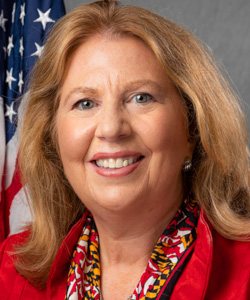
Sen. Mary Beth Carozza
Sponsored bills
Maddy summarySB 101 prohibits individuals from standing in roadways, median dividers, or intersections in Wicomico County to solicit money or donations from vehicle occupants. This bill amends Maryland’s vehicle laws (Section 21-507(c)) to explicitly include Wicomico County in the existing prohibition, which previously applied to Calvert, Carroll, Charles, Harford, and Washington counties. The law directly affects people attempting to solicit funds from drivers at road intersections or along roadways in Wicomico County. The prohibition will take effect on October 1, 2025.
Maddy summarySB 25 establishes specific qualifications for individuals appointed by Maryland courts as child custody evaluators. It requires evaluators to be licensed mental health professionals (such as psychiatrists, psychologists, clinical social workers, or marriage and family therapists) with defined training, experience, and expertise in areas like domestic violence, child trauma, and family dynamics. The bill mandates that courts cannot appoint someone who doesn't meet these standards, effective July 1, 2025. This directly affects courts, custody evaluators, and families involved in contested custody cases by ensuring evaluators have verified expertise to assess children's best interests.
Maddy summarySB 8 establishes the Maryland Civic Excellence Program, a voluntary initiative for public school systems in Maryland to recognize student civic engagement. Starting in the 2026-2027 school year, participating schools must award a "Seal of Civic Excellence" to students who pass a government assessment, earn A or B grades in U.S. history, modern world history, and American government, and complete 75 hours of community service (including at least 30 hours on a civic project). Schools may also earn a "Center of Civic Excellence" designation if 50% or more of their graduating students receive the seal. Participating school systems must submit annual reports on the program starting in 2027.
Maddy summarySB 879 expands eligibility for two Maryland higher education grant programs by redefining "dually enrolled student" to include students from nonpublic secondary schools and home schools. This change directly affects those students, who were previously excluded from applying for the Part-Time Grant Program and Early College Access Grant. The bill amends specific sections of Maryland's education code (15-127, 18-1401, and 18-14A-01) to update the definition, ensuring these students qualify for financial aid when taking college courses while still in secondary education. The policy change takes effect July 1, 2025.
Maddy summarySB 88 authorizes Maryland's State Administrator of Elections to form voluntary agreements (memoranda of understanding) with local municipalities. These agreements would enable the state administrator to collaborate directly with cities and towns to support their election administration, such as providing resources or expertise. The bill modifies existing election law to add this new provision (Section 2-103(e)) without changing voting rules or requirements. It directly affects municipalities managing local elections and the State Administrator's office. The change is procedural, creating a formal mechanism for state-local collaboration in election operations.
Maddy summarySB 780 modifies Maryland's prekindergarten program to allow eligible private providers to enroll 3-year-olds who meet income or homelessness criteria (family income ≤300% of federal poverty level or homeless status). It changes the definition of "Tier I child" to include these 3-year-olds, but only in counties where private providers choose to participate and sign a memorandum of understanding with the State Department of Education and county boards. Private providers must be licensed, charge no more than the "cost of quality" tuition, and enroll only families meeting the eligibility requirements. This expands access to publicly funded prekindergarten for low-income 3-year-olds through private providers, without changing the existing income thresholds for 4-year-olds.
Maddy summarySB 44 (Sherry and Christian's Law) requires individuals charged with reckless or negligent driving that causes a death to appear in court instead of paying fines upfront. It directly affects drivers convicted of causing fatal accidents through reckless or careless driving. The bill mandates court appearances and prohibits prepayment of fines, though judges may waive the appearance requirement for "good cause" after setting a court date. The law amends Maryland's transportation code to enforce these specific procedural changes for such offenses.
Maddy summarySB 783 requires Maryland public school principals to investigate every student fight or physical struggle. It prohibits school staff from disciplining students who, after such an investigation, more likely than not used reasonable force necessary to protect themselves or escape an attack. If a student was wrongly disciplined during the investigation but later determined to have used justified force, the school must expunge all disciplinary documentation from their record. The law directly affects students involved in school conflicts, school administrators, and staff responsible for discipline, taking effect July 1, 2025.
Maddy summarySenate Bill 821 requires county boards of education to grant temporary admission to students whose parents or guardians cannot immediately provide proof of required immunizations. To receive temporary admission, parents or guardians must provide evidence of an upcoming appointment with a health professional or local health department. This appointment must be scheduled within 60 calendar days of the student's temporary admission and is for receiving an immunization, reconstructing a lost record, or acquiring evidence of immunity. Following the appointment, parents or guardians must provide evidence of the student's required immunizations on the next school day.