

Maddy summaryThis bill removes a requirement that livestock operations must obtain a water pollution permit from Maryland's Department of the Environment before beginning construction on new facilities. It directly affects new concentrated animal feeding operations (CAFOs) in Maryland by eliminating the pre-construction permit step. The change means CAFO operators can start building without first securing a permit, though permits remain required for operating the facilities after construction is complete. The bill does not alter existing permit requirements for operational discharges.
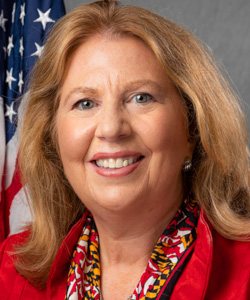
Sen. Mary Beth Carozza
Sponsored bills
Maddy summarySB 326 expands the authority of physician assistants (PAs) in Maryland by allowing them to perform specific healthcare actions currently restricted to physicians. The bill directly affects PAs, patients requiring guardianship, inmates needing infirmary care, and mental health facilities by adding PAs to certification requirements for treatment incapacity (Section 5-606), guardianship petitions (Section 13-705), and inmate infirmary admissions (Section 9-601.1). It also requires the Maryland Department of Health to cover PA examinations for emergency evaluations and adds PAs to the Statewide Advisory Commission on Immunization. These changes aim to align PA practice with other licensed healthcare professionals in defined clinical scenarios.
Maddy summarySB 443 changes the qualifications for legal counsel serving on Maryland's local election boards. It replaces a requirement that counsel must be a registered voter in their specific county with a statewide requirement that counsel must be a registered voter in Maryland. The bill also maintains the existing requirement that counsel must be licensed to practice law in Maryland. These changes apply directly to county election boards statewide, affecting who can serve as their legal counsel.
Maddy summarySB 508 modifies Somerset County Board of Education rules by adding a nonvoting student member position elected by high school students, who serves a one-year term starting July 1. It increases annual compensation for adult board members from $3,000 to $6,000 (chair) and $2,700 to $5,000 (member), and provides a $5,000 scholarship for student members completing a full term. The bill also restricts student members from attending executive sessions unless invited by a majority vote of the board. These changes directly affect Somerset County's school board members, high school students (as voters for the student seat), and the county’s budget for board compensation.
Maddy summarySB 860 establishes the Aging Resilience Fund, a dedicated, nonlapsing fund administered by Maryland's Department of Aging. The fund is designed to support the department's mission by covering administrative costs like personnel, partnership development, and senior-focused programs. Interest earnings from the fund must be reinvested into the fund itself, and money can only be spent following state budget rules. This bill directly affects the Department of Aging's operations and senior services programs in Maryland.
Maddy summarySB 7 repeals the expiration date for the Douglas J. J. Peters Veterans of the Afghanistan and Iraq Conflicts Scholarship, removing the June 30, 2030 cutoff that previously prevented new awards after that date. This change allows the scholarship to be awarded indefinitely to eligible veterans, active service members, or their dependents who meet Maryland residency and educational requirements. The bill also removes restrictions on renewing scholarships for recipients who received their initial award before 2030. The scholarship covers up to 50% of tuition, fees, and room/board at Maryland public universities, requiring a 2.5 GPA and 5 years of full-time study. It takes effect July 1, 2026.
Maddy summarySB 300 establishes the Rural Readiness Program, administered by the Rural Maryland Council, to help eligible rural communities (including nonprofits, local governments, tribes, and economic development organizations) build capacity for economic growth through grant application support and project development. It creates a priority for these communities to receive certain state grants, such as those from the Maryland Agricultural Education Fund and the Rural Maryland Prosperity Investment Fund, after completing the program. The bill also creates the Rural Maryland Capacity Building Fund - a permanent fund for grants supporting planning and capacity-building initiatives in rural areas. These provisions directly aim to address rural communities' challenges in accessing resources, infrastructure, and skilled staff.
Maddy summarySB 632 creates a new Office of State Elected Officials Information Privacy within Maryland’s Department of Legislative Services. It allows state elected officials (the "protected individuals") to request that their personal details - such as addresses, phone numbers, and email - be removed from public online sources like government websites, social media, or social networks. The bill also establishes criminal penalties for intentionally posting an official’s personal information online under certain circumstances. This replaces the existing Address Confidentiality Program for domestic violence survivors with a dedicated system specifically for protecting state elected officials’ privacy.
Maddy summarySB 301, the Veterans' Discounts Act, authorizes Maryland state agencies to waive certain fees set by law for veterans. It requires these agencies to adopt specific regulations before implementing fee waivers, ensuring consistent application. The bill affects veterans seeking reduced fees for services like business licenses, professional registrations, and recreational permits managed by various state departments. It amends multiple sections across Maryland’s code (including Agriculture, Business Regulation, and Natural Resources) to establish this waiver framework. The law creates a formal process for fee reductions but does not specify which fees or veterans qualify.
Maddy summarySB 270 requires Maryland's Public Service Commission to analyze the full costs to ratepayers of different electricity generation options, including natural gas, nuclear, and offshore wind (specifically 8,500 MW capacity). The analysis must compare costs under three scenarios: natural gas alone, nuclear alone, and offshore wind with energy storage, while accounting for wind's intermittency and reliability costs. It mandates using a standardized cost model to identify the most cost-effective energy sources for ratepayers. The Commission must submit findings and policy recommendations to relevant legislative committees by December 1, 2027. This bill directly affects Maryland electricity consumers by informing future energy policy decisions.