

Maddy summarySB 276, the "So Every Body Can Move Act," requires Maryland’s Medicaid program (Maryland Medical Assistance Program) and certain health insurers, nonprofit health plans, and HMOs to cover orthoses (custom braces or supports for musculoskeletal conditions) starting January 1, 2027. It mandates coverage for the devices themselves, components, repairs, and replacements without lifetime limits if a treating provider deems them medically necessary for daily living or work activities. Insurers must follow Medicare’s medical necessity standards and cannot impose higher copays or separate annual dollar limits for this coverage. The bill directly affects Medicaid enrollees and private insurance plan members needing orthotic devices, ensuring broader access to these essential medical supports.
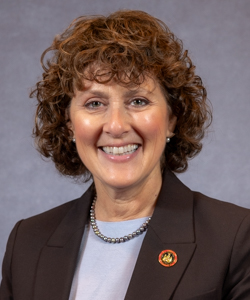
Sen. Shelly Hettleman
Sponsored bills
Maddy summarySB 323 (Youth Charging Reform Act) removes restrictions that previously prevented Maryland juvenile courts from handling cases involving youth aged 16 and older accused of serious crimes. It repeals provisions that excluded such cases for offenses like murder, robbery, gun crimes, and aggravated violence, expanding juvenile court jurisdiction to include these charges. Now, youth 16+ facing these specific allegations will be processed in juvenile court instead of being automatically sent to adult court. This change affects juvenile courts, prosecutors, and youth aged 16+ charged with the listed offenses under Maryland law.
Maddy summarySB 253 authorizes supervisory employees at Baltimore County Public Library to form unions, join collective bargaining efforts, and participate in related activities. It reclassifies certain supervisory staff as "management employees" if they exercise independent judgment (e.g., resolving grievances or making hiring decisions beyond routine tasks), rather than automatically excluding them from unionization. The bill establishes two fixed bargaining units: one for non-supervisory staff and one for supervisory staff, while preserving existing union agreements in place before June 30, 2026. This change directly affects library supervisors who may now engage in collective bargaining under specific conditions.
Maddy summarySB 378 updates Maryland's funding formula for regional library resource centers and county public libraries, increasing per-resident funding from $8.75 (2022) to $11.58 (2032 and beyond) for regional centers, and from $17.10 (2022) to $22.37 (2032 and beyond) for county libraries. It requires each public library to offer at least one new service, such as early childhood literacy programs, digital equity initiatives, or mental health support, by partnering with community organizations. The bill also mandates that libraries adopt written policies meeting state standards to receive state funding, with the Comptroller withholding funds for non-compliance. These changes affect all 23 Maryland county library systems and their regional resource centers, directly impacting how they allocate state funds and deliver services. The bill takes effect July 1, 2026.
Maddy summaryThis bill prohibits landlords from refusing to rent to potential tenants who use income-based housing subsidies (like federal housing vouchers) based on the tenant's income, credit score, or past credit history that occurred before they received the subsidy. It directly affects landlords and tenants using such subsidies, ensuring they cannot be discriminated against for relying on government assistance to pay rent. The law amends Maryland's housing discrimination statutes to clarify that such refusals constitute a discriminatory practice enforceable by the Maryland Commission on Civil Rights, with a limited exception for properties receiving funding that requires income verification for tenant eligibility.
Maddy summaryThis bill requires Maryland law enforcement officers to remove face coverings during official duties, with limited exceptions for religious garb, inclement weather, or safety equipment (like gas masks). It mandates the Maryland Police Training and Standards Commission to create a model policy, which all agencies must adopt. Officers violating the rule face civil penalties (up to $2,000) but not criminal charges. The law specifically excludes undercover operations and does not apply to face coverings used for health protection or religious reasons. It directly affects all state and local law enforcement officers performing public safety duties.
Maddy summarySB 410 adjusts Maryland's funding formula for public libraries by increasing per-resident allocations for both regional resource centers and the State Library Resource Center. It raises the regional funding rate from $9.59 per resident in 2025 to $9.79 in 2026 and $9.99 annually starting in 2027. For the State Library Resource Center, it increases funding from $1.97 per resident in 2024 to $2.07 for 2025-2027, then gradually rising to $2.64 per resident by 2032 and beyond. These changes directly affect all regional libraries receiving state funding and the statewide State Library Resource Center. The bill takes effect July 1, 2026.
Maddy summarySB 204 establishes the Maryland Civic Excellence Program within the State Department of Education to recognize public school students who demonstrate proficiency in civics and civic literacy. Local school systems can choose to participate, using state-developed guidelines (to be finalized by 2027-2028) to determine student eligibility. Participating schools may award a "Seal of Civic Excellence" and attach it to students' high school diplomas. The program requires annual reports from participating schools starting July 2028, and schools may collaborate with civic organizations to support implementation. The bill takes effect July 1, 2026.
Maddy summarySB 340 requires the Governor to allocate at least 3% of funds collected from nursing facilities' Medicaid quality assessments toward the Office of the Long-Term Care Ombudsman's operations in the state budget. It directly affects nursing facilities with 45 or more beds operating in Maryland, which must pay the quality assessment. The bill mandates that these funds - collected quarterly based on non-Medicare patient days - must be used solely for the Ombudsman office, with no reduction to existing funding for this purpose. This creates a dedicated, ongoing funding source to support the Ombudsman's role in investigating resident complaints and advocating for long-term care rights.
Maddy summarySB 858 establishes the Audit and Finance Compliance Unit within Maryland's Department of Budget and Management. The unit directly affects all Executive Branch state agencies by monitoring their progress in resolving audit findings from the Office of Legislative Audits. Key provisions require the unit to create a public dashboard on its website showing agency audit status (including resolution timelines and repeat findings), form a specialized team to assist agencies with four or more repeat audit issues, and report quarterly to the Joint Audit and Evaluation Committee. The dashboard must launch by October 1, 2027, and track corrective actions for all agencies annually.