

Maddy summaryHB 1476 prohibits Maryland employers from disclosing or threatening to disclose an employee’s immigration status to government agencies to hide violations of labor, wage, or tax laws. It directly affects employers who might use immigration status to conceal issues like unpaid wages (under Maryland’s Wage and Hour Law) or failure to provide benefits. The bill authorizes Maryland’s Commissioner of Labor and Industry to investigate complaints, attempt mediation within 90 days, and impose civil fines up to $10,000 for repeated violations. Employers can request an administrative hearing within 15 days of a penalty notice. The law takes effect October 1, 2025.
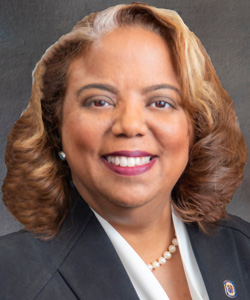
Del. Deni Taveras
Sponsored bills
Maddy summaryHB 498, the DECADE Act, reorganizes Maryland's economic development programs by repealing the Maryland Economic Development Commission and creating a new Strategic Closing Fund within the Department of Commerce. It updates eligibility rules for existing programs like the Build Our Future Grant Pilot and Child Care Capital Support Fund, expands financial assistance for projects in RISE zone areas, and modifies tax credit calculations for businesses (including film production and biotechnology). The bill affects businesses seeking economic development incentives, local governments managing RISE zones, and state agencies administering these programs. Key changes include altering how certain tax credits are calculated, waiving filing fees for businesses in designated zones, and extending or terminating specific tax credit programs. The act streamlines oversight by consolidating programs under the new Strategic Closing Fund structure.
Maddy summaryHB 1097 establishes a 10-member workgroup to examine mail-in ballot accessibility, specifically focusing on the impact of requiring paper returns on voters with disabilities. The workgroup includes election officials, disability advocates (like Common Cause Maryland and the National Federation of the Blind), and experts in voting accessibility, security, and cybersecurity. It must assess current processes, research accessible alternatives from other jurisdictions, and evaluate options considering security, privacy, cost, and potential discrimination. The group must report findings and recommendations to the Governor and legislature by December 31, 2025, with the bill expiring June 30, 2026.
Maddy summaryHB 1092 redefines "recycling" to exclude specific chemical processes that convert plastic waste into fuel or feedstock, such as pyrolysis, gasification, and enzymatic breakdown. It prohibits new construction of facilities in Maryland that use these methods to convert plastic into fuel or feedstock, effective October 1, 2025. The bill directly affects companies planning to build such facilities and alters how recycling is legally defined in Maryland law. Existing facilities are not impacted, as the prohibition applies only to new construction.
Maddy summaryHB 501 (RAISE Act) simplifies licensing for workers who complete approved apprenticeships. It allows the State Board of Plumbing to waive the journey plumber exam for those who finish an approved program, and authorizes the Secretary of Labor to waive exams for other licensed trades under similar conditions. The bill creates new programs, including the Maryland Office of Registered Apprenticeship Development and an Apprenticeship Incentive Program, funded by a nonlapsing special fund for interest earnings. These changes directly affect apprentices, licensed trades workers (like plumbers), and employers participating in approved training programs. The law applies retroactively to existing apprenticeship completions.
Maddy summaryHB 735 removes psychiatry and all subcategories of psychiatric services from Maryland's Certificate of Need (CON) requirements. This means psychiatric health care facilities and providers offering mental health services no longer need state approval to establish, operate, or expand these services. The bill amends Maryland law by deleting "psychiatry" from the definition of "medical service" in Section 19-120(a)(6)(i) and removing it from the list of services requiring a CON under Section 19-120(j)(iii)(5). This directly affects psychiatric hospitals, clinics, and mental health providers by eliminating a regulatory hurdle for their operations.
Maddy summaryHB 845 creates a framework for Maryland to establish six community-based overdose and infectious disease prevention programs, approved by the Maryland Department of Health and located in areas with high drug use incidence (two urban, two suburban, two rural). These programs provide supervised consumption sites with health professionals, sterile drug supplies, overdose response (including naloxone), referrals to treatment and testing for HIV/hepatitis, and education on safe drug use and disposal. The bill allows programs to bill insurance for covered services, accept donations/grants, and prohibits arrests or penalties for individuals using these services. It also requires programs to coordinate with existing health services and maintain security while operating within specified locations.
Maddy summaryHB 1014, the "Fair Share for Maryland Act of 2025," makes significant changes to Maryland's tax code affecting residents, businesses, and estates. It adjusts estate tax calculations to maintain Maryland's tax rate despite potential federal changes, imposes a business transportation fee on corporations and pass-through entities, and expands eligibility for the earned income tax credit by lowering income thresholds for individuals without qualifying children. The bill also requires annual inflation adjustments for tax credit phase-out amounts, limits net operating loss deductions, and modifies child tax credit eligibility. These changes directly impact Maryland taxpayers, businesses, and families relying on state tax credits.
Maddy summaryHB 387 imposes an excise tax on firearms dealers' gross receipts from firearm sales within Maryland and to Maryland residents. The tax revenue will fund three existing state programs: the Coordinated Community Supports Partnership Fund (Education), the Maryland Trauma Physician Services Fund (Health), and the Maryland Violence Intervention and Prevention Program Fund (Public Safety). The bill creates new tax provisions under "Title 7.7" in the Tax-General Article to collect and distribute these funds, replacing previous language in multiple code sections. This directly affects firearms dealers through the new tax obligation and directs funding to community safety and health programs. The policy change is a concrete tax mechanism for reallocating firearm sales revenue to specific public safety initiatives.
Maddy summaryHB 134 requires public schools to include seat belt safety instruction in their safety education programs. It mandates that all new school buses purchased on or after July 1, 2027, and registered in Maryland must have 3-point seat belts for every seat. The bill also prohibits civil lawsuits claiming damages due to a school bus operator not ensuring passengers wore seat belts. These changes directly affect public schools, students, and school bus operators in Maryland. The law amends specific sections of Maryland’s education and transportation codes to implement these requirements.