

Maddy summaryHB 1254 establishes a state program to provide funding to Maryland public and nonpublic schools participating in the federal child nutrition program's community eligibility provision. The program covers the difference between federal paid and free meal reimbursement rates, helping schools avoid financial shortfalls when serving more students at no cost. The State Department of Education will distribute funds based on poverty concentration and geographic diversity in school districts. The state will appropriate $10 million annually starting in fiscal year 2027 to support this program.
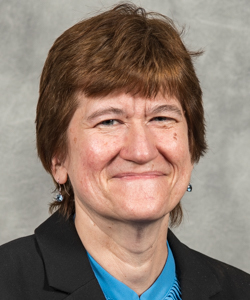
Del. Sheila Ruth
Sponsored bills
Maddy summaryHB 912 requires Maryland colleges and universities to train instructors on federal disability laws (the Americans with Disabilities Act and Section 504 of the Rehabilitation Act) and how to provide academic accommodations for students with disabilities. New instructors must complete this training before teaching, and current instructors must do so by October 1, 2026. The Maryland Higher Education Commission will develop a model training program for institutions to adopt. This law applies to all higher education institutions in Maryland, except those already offering training that meets the required standards.
Maddy summaryHB 1511 establishes Maryland's Wildlife Damage Prevention and Reimbursement Fund to reimburse agricultural producers for crop damage caused by deer, geese, and other wildlife. The fund, financed by $5 conservation deer stamps, state appropriations (minimum $50,000 annually), and grants, reimburses eligible farmers up to $5,000 per year for verified damage after they follow department-recommended prevention measures. It also funds prevention projects - like reducing wildlife food sources in communities - that require local support, cost-effectiveness, and community planning. The bill excludes damage from domestic animals or black bears and requires verification by University of Maryland Extension agents.
Maddy summaryHB 1287 prohibits manufacturing, selling, purchasing, receiving, or transferring "convertible pistols" in Maryland. A convertible pistol is defined as any semiautomatic pistol that can be converted into a machine gun solely by attaching a switch or auto-sear. The bill amends Maryland's Criminal Law to specifically target these firearms, directly affecting anyone handling such weapons or their conversion components. It does not ban all semiautomatic pistols, only those that meet this specific conversion definition. The law aims to prevent the use of devices that enable rapid-fire capabilities through simple attachment.
Maddy summaryHB 1496 requires new multifamily housing buildings and certain significant renovations to include electric vehicle (EV) charging infrastructure. Specifically, it mandates that new buildings with separate parking per unit must include either one fully installed EV charging space or one "EV-ready" space (with wiring capacity for future installation). For common parking areas, developers must provide one EVSE-installed space per 25 units, plus increasing percentages of EV-ready spaces (10% by 2025, 20% by 2031, 30% by 2036) for new projects. This applies to multifamily housing subject to the International Residential Code, directly affecting developers and builders of new residential properties in Maryland. The bill defines technical terms like "EV-ready" to ensure consistent implementation.
Maddy summaryThis House Joint Resolution (HJ 4) is a non-binding ceremonial measure affirming Maryland's support for Diversity, Equity, and Inclusion (DEI) as foundational to the American Dream. It does not create new laws or policies but formally encourages state, local, and federal entities to uphold DEI principles. The resolution directs certified copies to federal leaders including the President, Vice President, and congressional leadership, citing DEI's historical role in civil rights advancements. As a procedural resolution, it has no direct policy impact on constituents or funding mechanisms.
Maddy summaryThis bill allows terminally ill Maryland residents with decision-making capacity to request medication to end their lives through a structured process. It requires two physician consultations (including a consulting physician confirming the diagnosis), a mental health assessment, and written requests spaced at least 15 days apart. Pharmacists may dispense the medication only to qualifying patients, and the law clarifies that providers acting under these rules won’t violate assisted suicide laws. Death from self-administered medication will be recorded as natural causes for insurance and legal purposes.
Maddy summaryHB 1346, the PACE Act, protects criminal defendants and juvenile respondents from having their creative works (like music, poetry, art, or film) used as evidence against them in court. The bill requires courts to make four specific findings before admitting such expression: that the creator intended it literally (not figuratively), it directly relates to the specific crime, it addresses disputed facts, and it has unique value not available through other evidence. This applies to all criminal and juvenile proceedings, with an exception allowing creative expression to be used in juvenile cases for mental health evaluations. The law aims to prevent artistic expression from being misinterpreted as confessions or evidence of guilt without strong judicial scrutiny.
Maddy summaryMaryland's HJ 3 is a resolution requesting the state to formally ratify a 1924 constitutional amendment proposal that would grant Congress authority to regulate child labor for minors under 18. The bill does not create new laws but completes Maryland's ratification process for an amendment first proposed by Congress in 1924, which currently requires 10 more state ratifications to become part of the U.S. Constitution. If fully ratified by all necessary states, the amendment would empower Congress to set federal standards for child labor, including restrictions on work hours and types of labor for youth. This resolution follows other recent state efforts, such as those in Hawaii and Connecticut, to advance the long-pending amendment.
Maddy summaryThis House Joint Resolution (HJ 6) is a symbolic statement by Maryland's General Assembly expressing support for nuclear disarmament efforts. It formally joins 73 other jurisdictions (including seven states and over 75 counties/municipalities) that have passed similar "Back from the Brink" resolutions. The resolution urges Maryland's U.S. Congressional delegation to cosponsor a federal resolution supporting the Treaty on the Prohibition of Nuclear Weapons and the five key policies of the Back from the Brink initiative (like ending hair-trigger alerts and ending first-use nuclear policies). It also calls on the U.S. President and Senate to endorse the international treaty banning nuclear weapons. As a resolution, it has no legal effect but serves as a formal position statement.