

Maddy summaryHB 568 expands Maryland's public campaign financing program to include candidates for State Senate and House of Delegates, who were previously ineligible. The bill establishes specific qualifications (like residency and contribution limits) that candidates must meet to receive public funds from the Fair Campaign Financing Fund. It sets limits on the total public contributions these candidates can receive during elections and requires the State Board of Elections to distribute funds in a specified manner. The fund is financed through voluntary contributions, tax checkoffs, and campaign finance penalties, making it available to qualifying legislative candidates alongside existing gubernatorial candidates. This change directly affects candidates running for state legislative office by providing a new public financing option.
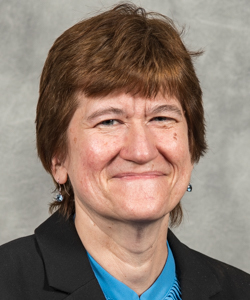
Del. Sheila Ruth
Sponsored bills
Maddy summaryHB 777, the "Hot Cars Act," requires new motor vehicles with rear seating (like passenger cars, trucks, and multipurpose vehicles) sold in Maryland after October 1, 2029, to include a rear occupant alert system. This system must alert drivers to check the back seat after turning off the engine, meeting federal standards set by the National Highway Traffic Safety Administration (NHTSA). The law prohibits dealers from selling non-compliant vehicles and bars the Motor Vehicle Administration from registering such vehicles. It directly affects car manufacturers, dealers, and vehicle buyers in Maryland, with compliance tied to upcoming federal safety rules.
Maddy summaryHB 796 redefines "recycling" in Maryland law to exclude specific chemical processes that convert plastic waste into fuel or feedstock. It directly affects companies or entities planning to build new facilities using these methods. The bill prohibits constructing such facilities through processes like pyrolysis, gasification, methanolysis, hydropyrolysis, or enzymatic breakdown, as defined by the state Department. The law takes effect October 1, 2026.
Maddy summaryHB 935 requires Maryland to establish a dedicated prerelease facility for female incarcerated individuals, directly affecting women eligible for prerelease programs at the Maryland Correctional Institution for Women. The bill mandates a separate facility meeting specific criteria: at least 3 acres, not within 1 mile of other prisons, and designed to house 1.25 times the 2024 prerelease-eligible population. It requires the Department of Public Safety and Correctional Services to provide comprehensive rehabilitative services (including gender-responsive programming) and report progress to legislative committees by a specified deadline. The facility must operate by June 1, 2023, with the Department of General Services directing procurement for its construction.
Maddy summaryHB 779 requires state and local projects funded with state money (at a specified cost threshold) to follow new riverine siting and design criteria aimed at reducing flood risks from rivers. It directs the Coast Smart Council to establish these criteria by specific dates and review them periodically, with updates under certain conditions. The bill creates a new "Part VII" in Maryland law specifically for riverine criteria, separate from existing coastal flooding rules. This applies directly to public infrastructure projects like roads, buildings, or utilities financed with state funds, focusing on resilience against river flooding.
Maddy summaryHB 926 modifies Maryland's income tax code to adjust how itemized deductions are calculated for certain taxpayers. It requires individuals who itemize deductions to further reduce their Maryland itemized deductions by either the amount of real property taxes paid (capped at $10,000) or $10,000, for tax years 2025 through 2029. This applies to Maryland taxpayers who claim federal itemized deductions, including homeowners who deduct property taxes. The bill also maintains a separate phase-out for high-income earners (exceeding $100,000 single/$200,000 married) where deductions are reduced by 7.5% of the excess AGI. The changes take effect July 1, 2026.
Maddy summaryHB 930 modifies Maryland’s income tax code to decouple from federal changes affecting education expenses. It prohibits the Governor from joining a federal tax credit program for elementary/secondary education scholarships and adjusts how employer contributions to education accounts (like Maryland’s Prepaid College Trust or College Investment Plans) are treated. Specifically, it adds tax on unused distributions from these accounts if not used for qualified education expenses, while excluding contributions and qualified distributions from taxable income. This directly affects Maryland residents using these education savings accounts and ensures state tax rules differ from federal law.
Maddy summaryHB 488 establishes the geographic boundaries for Maryland's eight congressional districts for the 2026 elections. It specifies exact county and election district portions, using census tract data to define district lines where precincts are split, based on boundaries as they existed on January 13, 2026. This bill directly affects voters in Maryland's congressional districts by determining which communities are grouped together for electing U.S. Representatives. It replaces previous election law sections (8-702 through 8-709) and clarifies that certain districting rules apply only to state legislative districts, not congressional ones.
Maddy summaryHB 331 establishes Maryland's Beverage Container Recycling Refund and Litter Reduction Program. It requires beverage producers to register, pay fees, and join a stewardship organization to manage recycling, mandates that all redeemable containers display refund information, and requires retailers to include the container's refund value in prices. Consumers receive refunds when returning containers to designated redemption facilities, while local governments can operate facilities to earn credits toward recycling targets. The bill also creates a grant program to fund public water fountains and refill stations, aiming to reduce litter and increase recycling rates.
Maddy summaryHB 438 establishes the Adult Prison School Board Model Development Committee to create a school board system for correctional education in Maryland's prisons and juvenile facilities. The committee, composed of state officials, correctional education representatives, and experts (including formerly incarcerated individuals and nonprofit advocates), must develop a funding and operational plan by June 2028, examining costs for staff, materials, and budget management. This procedural bill does not enact immediate policy changes but sets a timeline for recommendations to the Governor and legislature. It expires automatically on June 30, 2028, after its two-year study period.