

Maddy summaryHB 544 prohibits smoking, vaping, or consuming cannabis in the passenger area of a motor vehicle when a minor (under 18) is present. This applies to all occupants, including drivers and passengers, and creates a new misdemeanor offense for violations. Penalties include up to one year in jail, a $1,000 fine, or both. The bill, introduced in January 2026, will take effect on October 1, 2026.
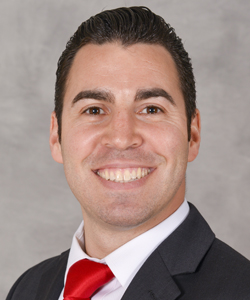
Del. Nino Mangione
Sponsored bills
Maddy summaryHB 475, the Juvenile Offender Protection Act, prohibits Maryland's Department of Juvenile Services from hiring or retaining employees convicted of specific serious crimes, including abduction, kidnapping, murder, rape, sexual offenses against minors, and certain assaults. It directly affects individuals seeking or holding jobs with the Department of Juvenile Services who have prior convictions for the listed offenses. The law adds these restrictions to Maryland's Code, with an exception allowing hiring if the conviction was reversed or vacated. The bill takes effect October 1, 2026.
Maddy summaryHB 581 requires Baltimore County election officials to verify both a voter’s signature and a witness signature on absentee ballot envelopes before counting the ballot, with exceptions for active-duty military personnel overseas and their spouses/dependents living overseas. The bill mandates that officials compare voter signatures against registration records to confirm validity. It applies exclusively to Baltimore County absentee ballots and modifies existing election law to enforce these signature requirements. This policy change directly affects all Baltimore County voters requesting absentee ballots, ensuring additional verification steps for ballot processing.
Maddy summaryHB 460 limits solar energy generating station construction in Maryland's priority preservation areas (protected lands established before 2025) to 2% of the total acreage, down from a previous 5% cap. It requires counties to report when this 2% limit is reached and prohibits local zoning laws from blocking solar projects meeting specific criteria. The bill also mandates the Maryland Department of the Environment to study the environmental impact of disposing of solar panels at end-of-life and report findings by September 2027. This directly affects counties, developers, and landowners in priority preservation areas by restricting solar development space and creating new reporting requirements. The policy change aims to balance renewable energy growth with conservation of sensitive lands.
Maddy summaryHB 482, the "Fair Districts for Maryland Act," proposes constitutional changes to overhaul Maryland's redistricting process. It establishes an independent Legislative and Congressional Redistricting and Apportionment Commission to draw both state legislative and congressional districts, replacing the current Governor-led process. The bill mandates new boundary rules requiring districts to respect natural geography, community interests, and geographic compactness, while explicitly prohibiting consideration of voter registration, past voting patterns, or political party affiliation. If the General Assembly fails to adopt a redistricting plan within 45 days of the census, the Commission would submit a plan to the Supreme Court for approval. This directly affects all Maryland residents by changing how voting districts are drawn, aiming to reduce partisan influence in the redistricting process.
Maddy summaryHB 1200 expands Maryland's existing property tax credit program to include judicial officers, who were previously excluded. The bill modifies the tax code to allow counties or municipalities to grant a property tax credit on a dwelling owned by a judicial officer who is disabled, a surviving spouse of a judicial officer who died in the line of duty, or a qualifying cohabitant. It defines "judicial officer" and "public safety officer" to explicitly include judicial roles, requires local governments to define these terms in their laws, and applies the credit retroactively to past years. This change directly affects judicial officers, their families, and cohabitants who meet the eligibility criteria for the tax credit.
Maddy summaryHB 1558 restricts fundraising activities for Maryland state elected officials during legislative sessions. It prohibits the Governor, Lieutenant Governor, Attorney General, Comptroller, Treasurer, and state legislators (or their staff acting on their behalf) from receiving contributions, hosting events, soliciting funds, or depositing money raised during the session - except for specific cases. Exceptions include activities solely for their own federal or local election campaigns, contributions made electronically before the session began, and gubernatorial campaign financing under the Public Financing Act. Violations result in civil penalties paid into the Fair Campaign Financing Fund.
Maddy summaryHB 117 designates October as Italian Heritage Month in Maryland each year. The bill requires the Governor to annually proclaim this month to recognize Italian Americans' contributions to the state. It also urges educational and cultural organizations to host appropriate programs and events during October. This is a commemorative measure with no new funding or regulatory changes, solely focused on symbolic recognition.
Maddy summaryHB 1188 requires Maryland law enforcement agencies, agents, and local detention facilities to run a national criminal database search when taking custody of an individual. If the search reveals someone not lawfully present in the U.S. has an outstanding criminal warrant, the agency must notify federal immigration authorities and may hold the person for up to 48 hours to facilitate transfer. The bill prohibits local governments or agencies from adopting policies that limit cooperation with federal immigration authorities in these cases. It directly affects police departments, sheriffs' offices, and jail facilities across Maryland, effective October 1, 2025.
Maddy summaryHB 1374 expands eligibility for publicly funded prekindergarten to include 3-year-olds in certain private providers. It modifies the definition of "Tier I child" to include 3-year-olds whose families meet income requirements (≤300% federal poverty level) or are homeless, live in counties where private providers have opted to enroll them, and choose full-day programs. Eligible private providers (licensed, charging tuition ≤ "cost of quality," meeting quality standards) must sign a memorandum of understanding with the State Department of Education and county boards to enroll these children. The bill directly affects qualifying 3-year-olds, eligible private prekindergarten providers, and local departments responsible for notifying families about enrollment options.