

Maddy summaryHB 935 requires Maryland to establish a dedicated prerelease facility for female incarcerated individuals, directly affecting women eligible for prerelease programs at the Maryland Correctional Institution for Women. The bill mandates a separate facility meeting specific criteria: at least 3 acres, not within 1 mile of other prisons, and designed to house 1.25 times the 2024 prerelease-eligible population. It requires the Department of Public Safety and Correctional Services to provide comprehensive rehabilitative services (including gender-responsive programming) and report progress to legislative committees by a specified deadline. The facility must operate by June 1, 2023, with the Department of General Services directing procurement for its construction.
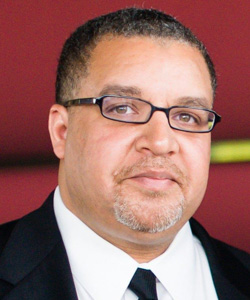
Del. Sean Stinnett
Sponsored bills
Maddy summaryHB 819 establishes a commission to examine Maryland's expungement laws, which allow individuals to clear criminal records from public records. The commission includes 12 members - such as two people with criminal records currently ineligible for expungement, state officials, public defenders, and experts in employment and reentry - to review current processes, compare them with other states, and develop a new system that would streamline eligibility and expand access. It must submit a report to the Maryland General Assembly by December 31, 2027, outlining findings and recommendations. The bill expires on June 30, 2028, requiring the commission to complete its work within two years.
Maddy summaryHB 824 would allow individuals convicted of distributing controlled substances (like drugs) to clear those felony convictions from their criminal records through expungement. Currently, such convictions are excluded from expungement eligibility, but this bill would add them to the list of eligible offenses under Maryland law. The change modifies specific sections of Maryland's Criminal Law and Criminal Procedure codes to explicitly include distribution convictions in the expungement process. This directly affects people with past felony drug distribution convictions who seek to remove these records from public access.
Maddy summaryHB 740 requires every public school in Maryland to hire a full-time, state-licensed therapist who provides mental health services during school hours. This directly affects all public schools and their students, mandating access to licensed mental health support as part of school-based services. The bill specifies therapists must be certified by the State Board of Professional Counselors and Therapists and replaces existing language in the education code. It takes effect July 1, 2026.
Maddy summaryHB 530 establishes a task force to study using artificial intelligence to proactively review audio and video recordings from special education buses, aiming to enhance student safety. The task force, composed of state education officials, transportation representatives, disability advocates, and parents, will examine AI tools, privacy concerns, costs, and best practices from other states. It will analyze current recording systems, investigate incidents like abuse or harassment, and evaluate implementation feasibility for special education bus safety. The task force must report findings and recommendations to Maryland lawmakers by December 1, 2026, with the bill expiring June 30, 2027.
Maddy summaryHB 488 establishes the geographic boundaries for Maryland's eight congressional districts for the 2026 elections. It specifies exact county and election district portions, using census tract data to define district lines where precincts are split, based on boundaries as they existed on January 13, 2026. This bill directly affects voters in Maryland's congressional districts by determining which communities are grouped together for electing U.S. Representatives. It replaces previous election law sections (8-702 through 8-709) and clarifies that certain districting rules apply only to state legislative districts, not congressional ones.
Maddy summaryHB 722 removes the legal protection known as "charitable immunity" that previously shielded charitable organizations (like youth programs or non-profits) from lawsuits related to child sexual abuse. It allows victims to sue these organizations for abuse that occurred while they were minors, regardless of when the abuse happened, and applies retroactively to all past, pending, or dismissed cases. The bill also sets limits on attorney fees for such cases (20% of settlements or 25% of judgments) and takes effect on October 1, 2026. This change directly affects victims seeking compensation and charitable organizations previously protected from liability in these claims.
Maddy summaryHB 695 establishes the Green and Renewable Energy Efficiency for Nonprofits (GREEN) Loan Program to provide no-interest loans to 501(c)(3) nonprofit organizations in Maryland. The program, managed by the Maryland Clean Energy Center, funds the planning, purchase, and installation of qualifying renewable energy systems (like solar panels) and energy efficiency improvements (such as HVAC upgrades or window replacements). Eligible projects must support Maryland’s environmental and greenhouse gas reduction goals. The program is funded through a new special nonlapsing loan fund, with interest earnings reinvested into the fund.
Maddy summaryHB 559 revises how Maryland distributes highway user revenue funds for capital grants to Baltimore City, counties, and municipalities. It changes the percentage allocations from the Gasoline and Motor Vehicle Revenue Account across specific fiscal years: Baltimore City’s share increases to 12.2% for 2026-2027 (down to 9.5% after 2028), counties’ share rises to 4.8% for 2026-2027 (then 3.7%), and municipalities’ share grows to 3.0% for 2026-2027 (then 2.4%). These adjustments apply to funds calculated annually based on highway user revenues like fuel taxes and vehicle registration fees. The bill directly affects local governments receiving these state-funded transportation grants.
Maddy summaryHB 641 establishes a three-county pilot program to test curbside voting in Maryland, directly affecting voters with mobility challenges and local election officials implementing the program. The bill requires the State Board to select one county each with small, medium, and large voter populations to test curbside voting at designated locations outside early voting centers or polling places. Key provisions mandate that locations must prioritize accessibility for historically disenfranchised communities, proximity to voters, and public transportation access, while ensuring ballot secrecy and allowing voters to complete ballots without assistance unless requested. The pilot program requires voting systems to accommodate curbside voting and specifies that election officials must set boundaries to prevent campaigning near curbside locations. This pilot will run during early voting and election days at designated sites, with implementation starting at least six months before each statewide primary election.