

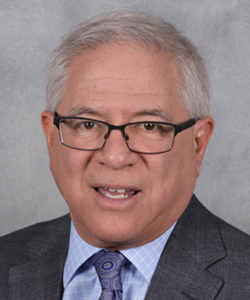
Photo of Sandy Rosenberg
D Maryland House · District 41 On the 2026 ballot

Rep. Sandy Rosenberg

Compare
Total votes
11,915
all sessions
Attendance
98%
251 missed
Higher than 80% of chamber peers
With party
99%
of cast votes
Near the chamber average
Bipartisan score
0%
crosses aisle rarely
Near the chamber average
Sponsored
1,170
bills & resolutions
Higher than 87% of chamber peers
Committees
3
assignments
1,170 bills and resolutions

Sponsored bills

Total
1,170
Primary
826
Co-sponsor
344
This page
1,170
matching current filters
Primary HB 344
In committee · Maryland House · Lead sponsor
Business Regulation - Sale of Motor Fuel - Pricing Signage

Maddy summaryHB 344 requires Maryland gas stations to clearly display the standard price (without conditions) for motor fuel more prominently than any conditional price (e.g., membership discounts or payment method requirements). It mandates that all price signs must be at least 8 inches high, show both credit/debit and cash prices if different, and avoid fractional cent displays that could confuse customers. The bill directly affects all retail service stations selling gasoline or diesel in Maryland, requiring them to comply with these signage rules or face penalties assessed by the Comptroller. It also specifies that sign suppliers must provide new signs at no cost to gas stations. The law supersedes conflicting local signage rules.

In committee Mar 3, 2026 0 co-sponsors
Primary HB 1544
died · Maryland House · Lead sponsor
Maryland Justice Corps Program - Establishment

Maddy summaryHB 1544 establishes the Maryland Justice Corps Program to create an alternative pathway for qualifying law graduates to become licensed attorneys without taking the traditional bar exam. The program targets graduates of the University of Maryland Francis King Carey School of Law or University of Baltimore School of Law who haven't taken the Maryland bar exam, requiring a 3-year commitment with a legal employer in Maryland. Key provisions include providing participants with a $75,000 annual salary, $15,000 housing stipend, and up to $30,000 yearly toward law school debt, with the state and employer each covering 50% of these benefits. Upon completing the program and meeting Supreme Court requirements, participants can be admitted to the Maryland bar.

died Feb 23, 2026 0 co-sponsors
Primary HB 932
In committee · Maryland House · Lead sponsor
Maryland Transit Administration - Fifth Bus Division Facility - Construction

Maddy summaryHB 932 requires the Maryland Transit Administration (MTA) to complete construction of its fifth bus division facility by June 30, 2032. The bill directly affects the MTA, mandating it to identify necessary funding in the 2027-2033 Consolidated Transportation Program to ensure the facility is operational by the deadline. Key provisions include a fixed completion date and annual funding planning requirements for the MTA’s capital budget. This bill does not alter service operations but sets a concrete timeline and funding process for a new infrastructure project.

In committee Feb 20, 2026 0 co-sponsors
Primary HB 1547
In committee · Maryland House · Lead sponsor
Environment - Reduction of Lead Risk in Housing - Modified Risk Reduction Standard

Maddy summaryHB 1547 modifies Maryland's lead risk reduction requirements for property owners in housing. It requires owners to complete specific lead hazard reduction measures - such as inspecting paint, repairing peeling paint, covering lead-based paint on windows, and cleaning after repairs - within 30 days of receiving written notice about a person at risk (e.g., a child with elevated blood lead levels) or a reported defect. The bill updates the timeline for compliance, adjusting the conditions under which the "modified risk reduction standard" must be met based on the date of blood lead testing or defect notification. This affects owners of housing properties where lead hazards are present and a person at risk is identified.

In committee Feb 17, 2026 0 co-sponsors
Primary HB 1549
In committee · Maryland House · Lead sponsor
Reduction of Lead Risk in Housing - Rental Dwelling Unit - Definition

Maddy summaryHB 1549 amends Maryland law to clarify the definition of "rental dwelling unit" under lead risk reduction regulations. It specifies that a rental unit must have permanent access to living, sleeping, eating, cooking, and sanitation facilities - removing the previous term "independent" from the definition. The bill excludes unfinished basements, hotel/motel units, inaccessible areas, and units not offered for rent from this definition. This change directly affects landlords and tenants in rental properties covered by Maryland's lead safety laws, ensuring clearer application of existing lead risk reduction requirements. The amendment takes effect October 1, 2026.

In committee Feb 17, 2026 0 co-sponsors
Primary HB 453
died · Maryland House · Lead sponsor
Real Property - Insufficient Condominium Reserve Account Grant Fund - Establishment

Maddy summaryHB 453 establishes the Insufficient Condominium Reserve Account Grant Fund to provide grants to low-income condominium owners (defined as households earning ≤80% of area median income) who face increased assessments needed to meet reserve account requirements. The fund, which automatically earns interest and continues year-to-year, covers these costs directly and prioritizes applicants aged 65 or older. Condominium associations must report annual reserve balance updates to the Department of Housing and Community Development for grant recipients. This policy change directly affects qualifying condominium residents and associations in Maryland, ensuring financial assistance without replacing other funding sources.

died Feb 17, 2026 0 co-sponsors
Primary HB 444
Signed into law · Maryland House · Lead sponsor
Public Safety - Immigration Enforcement Agreements - Prohibition

Maddy summaryHB 444 prohibits Maryland state and local governments, including county sheriffs and agencies, from entering into new agreements with federal authorities to enforce civil immigration law. It requires existing agreements to be terminated by July 1, 2026, or immediately upon the law’s effective date (June 1, 2026). The bill specifically targets contracts, memorandums, or agreements that allow local entities to assist in federal immigration enforcement under federal laws like 8 U.S.C. § 1103 or § 1357. This directly affects local law enforcement agencies and government bodies that previously collaborated with federal immigration authorities. The law aims to prevent state/local resources from being used for immigration enforcement under federal programs.

Signed into law Feb 17, 2026 0 co-sponsors
Primary HB 715
In committee · Maryland House · Lead sponsor
Algorithmic Addiction Fund – Establishment

Maddy summaryHB 715 establishes the Algorithmic Addiction Fund as a special, nonlapsing state fund to address harms linked to social media algorithms affecting children. The fund is financed by civil penalties from settlements/judgments about social media-related harm to youth, state budget appropriations, and interest earnings. It mandates the Maryland Department of Health to use these resources exclusively for evidence-based prevention, intervention, and treatment services - including school education programs on digital literacy, mental health support for issues like depression and anxiety, and research - prioritizing youth mental health outcomes. The fund cannot replace existing state funding for these services.

In committee Feb 17, 2026 0 co-sponsors
Primary HB 1051
In committee · Maryland House · Lead sponsor
Public Health - Patient Access to Medication

Maddy summaryHB 1051 creates Maryland’s "Meds-to-Beds Program," requiring all state hospitals to partner with licensed pharmacists who deliver discharge medications to patients *before* they leave the hospital, aiming to reduce readmissions. It also expands insurance coverage for telehealth to include automated drug dispensing systems and remote dispensing systems, allowing pharmacies to outsource prescription processing under specific conditions. The bill directly affects hospitals (mandated to participate), pharmacists (who deliver medications), and patients (who receive timely discharge drugs). Key changes include updating telehealth definitions in insurance law and establishing new regulations for medication access systems.

In committee Feb 16, 2026 0 co-sponsors
Primary HB 1542
In committee · Maryland House · Lead sponsor
Public Health - Goods, Services, or Technologies Used in Death Sentences - Prohibition

Maddy summaryHB 1542 prohibits businesses in Maryland from knowingly manufacturing, selling, distributing, or supplying drugs, medical devices, or other goods/services intended for use in carrying out a death sentence. It directly affects pharmacies, medical suppliers, and healthcare providers who may be asked to provide such items for executions. The bill imposes a $10,000 civil penalty for violations and requires health licensing boards to deny or revoke licenses for offenders. These provisions apply when sellers know or should know the items will be used in an execution, aiming to limit medical involvement in capital punishment.

In committee Feb 16, 2026 0 co-sponsors
Showing 91 to 100 of 1,170 bills
Previous 1 9 10 11 117 Next