

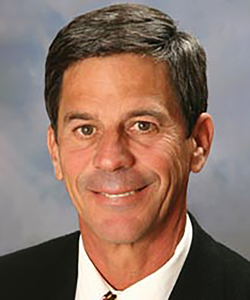
Photo of Jay Jacobs
R Maryland House · District 36 On the 2026 ballot

Rep. Jay Jacobs

Compare
Total votes
6,880
all sessions
Attendance
100%
29 missed
Higher than 87% of chamber peers
With party
95%
of cast votes
Near the chamber average
Bipartisan score
2%
crosses aisle rarely
Near the chamber average
Sponsored
276
bills & resolutions
Near the chamber average
Committees
2
assignments
276 bills and resolutions

Sponsored bills

Total
276
Primary
276
Co-sponsor
0
This page
276
matching current filters
Primary HB 535
Signed into law · Maryland House · Lead sponsor
Food Establishments - Cottage Food Businesses - Maximum Annual Revenue

Maddy summaryHB 535 increases the maximum annual revenue limit for cottage food businesses in Maryland from $50,000 to $100,000. This change directly affects home-based food producers who sell nonhazardous, packaged foods (like baked goods or jams) from their residences or through approved channels such as farmers markets, retail stores, or direct delivery. The bill revises existing law to allow these small-scale businesses to generate higher sales while still qualifying as cottage food operations under state regulations. It does not alter the types of foods permitted or the sales channels, only the revenue threshold for eligibility. The change takes effect October 1, 2026.

Signed into law Apr 28, 2026 0 co-sponsors
Primary HB 429
Signed into law · Maryland House · Lead sponsor
On-Farm Organics Diversion and Recycling Grant Program - Established

Maddy summaryHB 429 establishes two grant programs to reduce food waste and promote composting. The On-Farm Organics Diversion Grant Program (under Agriculture) funds farmers, urban farmers, and related entities to implement on-farm composting, food rescue, and waste prevention. The Wasted Food Reduction Grant Program (under Environment) funds projects like food rescue infrastructure, community composting, and education to reduce wasted food statewide. Eligible projects must meet specific standards, such as producing certified compost and prioritizing underserved communities, with grants awarded annually starting July 2028.

Signed into law Apr 28, 2026 0 co-sponsors
Primary HB 613
Signed into law · Maryland House · Lead sponsor
Department of the Environment - Waivers for Living Shorelines and Nonstructural Shoreline Stabilization Measures - Regulations and Scoring System

Maddy summaryHB 613 requires property owners in Calvert and St. Mary's Counties to use natural erosion control methods (like marsh creation, native plants, and oyster reefs) instead of hard structures (such as seawalls) for shoreline stabilization. It exempts these counties from general state requirements for nonstructural measures and creates a new waiver process where owners must demonstrate to the Department of Natural Resources that natural methods are not feasible due to factors like extreme erosion or narrow shorelines. The bill defines "living shorelines" as projects using natural materials and ecological principles to absorb wave energy and restore habitats, while still allowing structural measures in specific high-energy areas. This directly affects property owners along navigable waters in those two counties, changing how they must address shoreline erosion.

Signed into law Apr 28, 2026 0 co-sponsors
Primary HB 395
Signed into law · Maryland House · Lead sponsor
Water Pollution Control - Discharge Permits - Animal Feeding Operations

Maddy summaryHB 395 repeals a requirement that new Concentrated Animal Feeding Operations (CAFOs) must obtain a general discharge permit from Maryland's Department of the Environment before beginning construction. This directly affects developers and operators planning new CAFO facilities by removing a pre-construction permitting step. The bill modifies Maryland's Environment Article by deleting Section 9-323(a)(2), which previously mandated this permit for new CAFO construction. The change only applies to the construction phase, not to operating permits or existing CAFOs.

Signed into law Apr 28, 2026 0 co-sponsors
Primary HB 654
Signed into law · Maryland House · Lead sponsor
Natural Resources - Maryland Heritage Areas Authority - Funding and Grants

Maddy summaryHB 654 modifies funding rules for Maryland's Heritage Areas Authority, directly affecting local jurisdictions and entities managing certified heritage areas. It removes previous 50% limits on grant coverage for project costs (allowing full funding for eligible activities like preservation and marketing) and adjusts how Program Open Space funds are used. Specifically, it increases the allowable percentage for operating expenses from 10% to 7% or $600,000 (whichever is greater), and raises the maximum funding transfer to the Authority's Financing Fund. These changes aim to provide greater flexibility for heritage area management while maintaining oversight of fund usage.

Signed into law Apr 28, 2026 0 co-sponsors
Primary HB 947
Signed into law · Maryland House · Lead sponsor
Natural Resources - Invasive Blue Catfish Pilot Program - Alterations

Maddy summaryHB 947 modifies Maryland's commercial blue and flathead catfish fishing license to allow holders to use gill nets with a mesh size of no more than 7 inches, in addition to the existing finfish trotline method. This change directly affects commercial fishermen who currently hold this specific license and wish to use the new gear. The bill updates the license regulations under Maryland's Natural Resources code without altering the $15 annual fee, one-year term (September 1-August 31), or other core requirements. It does not change eligibility, transferability, or possession rules for the license. The policy change specifically expands permitted fishing methods for blue catfish in tidal waters.

Signed into law Apr 14, 2026 0 co-sponsors
Primary HB 1508
Passed · Maryland House · Lead sponsor
State Highways - Highway Work Permits - Notice

Maddy summaryHB 1508 requires the State Highway Administration to immediately notify state legislators representing the district where proposed highway work will occur. The notice must include the applicant's name, work location, expected start date, and a brief description of the work. This applies to all permit applications for highway projects, such as digging, placing structures, or planting trees. The bill updates Maryland law to ensure legislators receive timely information about highway work in their districts.

Passed Mar 25, 2026 0 co-sponsors
Primary HB 1375
In committee · Maryland House · Lead sponsor
Health Insurance - Lyme Disease and Related Tick-Borne Illnesses - Long-Term Antibiotic Treatment

Maddy summaryHB 1375 requires Maryland health insurers, nonprofit health plans, and health maintenance organizations to cover the full duration of long-term antibiotic treatment for Lyme disease and related tick-borne illnesses (like babesiosis or ehrlichiosis) when ordered by a licensed physician for therapeutic purposes. It prohibits these entities from imposing caps or time limits on such treatment or denying coverage solely because the treatment is labeled "unproven," "experimental," or "investigational." The law applies to all health insurance policies issued, delivered, or renewed in Maryland after January 1, 2027. This directly affects patients with chronic Lyme disease or related conditions who rely on extended antibiotic therapy and their insurers.

In committee Mar 13, 2026 0 co-sponsors
Primary HB 1459
In committee · Maryland House · Lead sponsor
Public Safety - Stationary Energy Storage Systems

Maddy summaryHB 1459 requires owners or operators of large battery energy storage systems (like grid-scale batteries) to pay for specialized fire response training and equipment for local fire departments serving those locations. The training must follow the NFPA 855 safety standard for battery fire suppression. The State Fire Marshal will administer and enforce these requirements, which take effect October 1, 2026. This directly affects battery storage facility owners and the fire departments responsible for responding to incidents at these sites.

In committee Mar 13, 2026 0 co-sponsors
Primary HB 1079
In committee · Maryland House · Lead sponsor
Office of Regulatory Management and State Government Authorizations

Maddy summaryHB 1079 creates Maryland's Office of Regulatory Management to streamline state government processes. It requires all executive branch agencies to report on their regulatory permits, licenses, and certifications by December 2026, including processing times, fees, and online capabilities. Agencies must also develop strategies by December 2026 to reduce regulatory requirements by 25% and simplify application processes, aiming to cut approval times for permits and licenses. The bill directly affects state government agencies, not the public, and mandates annual reports starting July 2027 on upcoming regulatory changes.

In committee Mar 11, 2026 0 co-sponsors
Showing 11 to 20 of 276 bills