

Maddy summaryHB 1412 prohibits licensed crab harvesters from selling cooked hard or soft crabs or crab meat (except for direct sales to consumers under "local family trade" rules) and bans seafood dealers and mobile vendors from purchasing cooked crab from harvesters without a seafood dealer license. It requires mobile vendors to obtain a seafood dealer license and mandates all seafood dealers and vendors to comply with Maryland Department of Health health requirements. The bill directly affects crab harvesters, seafood dealers, and mobile seafood vendors by changing sales rules for cooked crab products. Key provisions include banning certain sales transactions, mandating licenses for vendors, and ensuring health compliance for all crab-related sales.
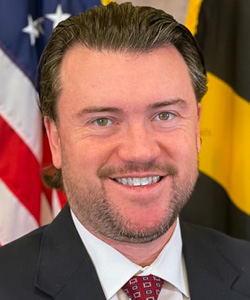
Del. Kevin Hornberger
Sponsored bills
Maddy summaryHB 974 removes several existing regulatory requirements for electricity and gas suppliers in Maryland. It repeals rules about licensing energy salespersons, residential supplier terms, and reporting obligations, while modifying how electric cooperatives and standard offer service operate. The bill also changes the name and purpose of the "Education and Protection Fund" to better support customer education about energy choices. These changes aim to reduce regulatory barriers for suppliers, potentially increasing competition in the retail energy market for residential customers. The bill directly affects electricity/gas suppliers, energy salespersons, and residential customers seeking alternative energy providers.
Maddy summaryHB 1024 prohibits the State of Maryland or its local governments from using eminent domain to take privately owned property subject to a permanent agricultural or conservation easement. This directly affects landowners who have placed such easements on their property, including farmers and conservation organizations. The bill amends Maryland law to explicitly state that state entities "may not take by eminent domain" these easement-covered properties, while maintaining existing procedures for state roads and Baltimore City. The law takes effect October 1, 2026.
Maddy summaryHB 958 prohibits Maryland's Public Service Commission from banning natural gas companies from offering discounts or payment plans for connecting or extending natural gas lines to customer properties. It directly affects natural gas customers who might struggle with upfront connection costs and the public service companies that provide these services. The bill requires the Commission to allow companies to provide these financial options without regulatory restrictions, effective October 1, 2026. This changes how gas connection fees can be structured but does not mandate specific discount levels or create new financial assistance programs.
Maddy summaryHB 773 increases the minimum age requirement for registering vehicles as "historic" or "street rods" in Maryland. Historic vehicles (Class L) must now be at least 30 years old (previously 25 years), while street rods (Class N) must be at least 40 years old (previously 25 years). The bill maintains existing registration fees, usage restrictions (e.g., no daily commuting), and exemptions from vehicle inspections and emissions testing for these vehicles. It applies only to new registrations after July 1, 2026, and does not affect vehicles already registered before that date.
Maddy summaryHB 967 prohibits Maryland electric companies from collecting certain environmental surcharges or fees during the year following any year when residential electricity bills rise faster than the Consumer Price Index (CPI) for urban consumers. It directly affects residential electricity customers by preventing additional charges if their bills outpace general inflation. The bill requires the Public Service Commission to annually calculate the annual growth in both the CPI and average residential electricity bills (using data ending June 30) and to block environmental fees if bill growth exceeds CPI growth. This applies to most environmental fees but excludes three specific fee types listed in the bill.
Maddy summaryThis bill directs the Maryland Department of Health to create regulations ensuring that drug and alcohol treatment programs discharge patients only when it is appropriate for their mental health or substance use disorder diagnosis. It specifically prohibits discharging patients who would become homeless or need residential care, while requiring programs to refer such individuals to halfway houses or recovery residences if they agree to that level of care. The legislation also mandates that treatment programs establish referral agreements for medical, mental health, legal, and social services within three working days after creating an individualized treatment plan, and ensures these agreements remain valid even if a patient is discharged. These standards apply to medium-intensity and high-intensity residential treatment programs in Maryland.
Maddy summaryThis bill removes licensing requirements for energy salespeople and vendors who sell electricity and gas to residential customers in Maryland. It also eliminates the Public Service Commission's authority to discipline these suppliers and adjusts the civil penalties for violations. The legislation abolishes a specific division within the Commission and transfers certain employees to other departments. Additionally, it repeals several reporting requirements for electricity suppliers and removes restrictions on offering and selling certain energy supply services.
Maddy summaryHB 459 modifies Maryland's education enforcement procedures by changing how the State Board of Education reviews county school board decisions. It establishes that appeals of county board actions must be judged based on whether the decision was an "abuse of discretion" (e.g., unreasonable, without guiding rules, or illogical) or illegal. The bill also limits the State Superintendent’s temporary halts to county actions to a maximum of 90 days. These changes directly affect county school boards, the State Board of Education, and the State Superintendent when enforcing education rules under Maryland law.
Maddy summaryHB 449, the Juvenile Justice Restoration Act, requires law enforcement officers to consult with an attorney before questioning a child (under 18) in custody. It mandates that officers first notify the child’s parent/guardian and ensure the child speaks with an attorney - either one retained by the parent or provided by the Office of the Public Defender - before any interrogation. Exceptions only apply if an officer believes immediate public safety is threatened (with limited questions) or if a parent consents to skip the attorney consultation. The bill also requires detailed records of notifications and attorney contact, and creates a strong presumption that any statement obtained without compliance is inadmissible in court. The Office of the Public Defender must develop policies to guide attorneys on these new requirements.