

Maddy summaryHB 898, the DECADE Act, reorganizes Maryland's economic development programs to streamline administration and expand incentives. It redesignates the Economic Development Opportunities Program Account as the "Strategic Closing Fund" under the Department of Commerce, alters eligibility and calculation rules for tax credits (including Job Creation, R&D, and film production credits), and extends the Build Our Future Grant Pilot Program. The bill allows pass-through entities to allocate tax credits to members and removes limits on film production tax credit certificates. These changes directly affect businesses, investors, and film producers seeking state economic development incentives.
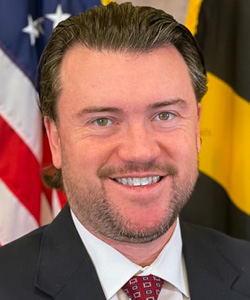
Del. Kevin Hornberger
Sponsored bills
Maddy summaryHB 1063 modifies Maryland's hunting regulations to allow the Department of Natural Resources to authorize deer population reductions on properties with documented deer damage (such as crop destruction or forest harm) through permits permitting Sunday deer hunting, while restricting it within 25 yards of designated equestrian trails. It repeals the ban on Sunday hunting for migratory game birds and allows the Department to establish county-specific Sunday hunting rules during game bird and mammal seasons, with most counties now permitting limited Sunday hunting (typically from 30 minutes before sunrise until 10:30 a.m.). The bill directly affects property owners with deer damage on 10+ acre properties, hunters in counties like Calvert, Caroline, and Worcester, and the Department of Natural Resources, which gains new authority to set hunting rules. Key provisions include standardized time limits for Sunday hunting and eliminating outdated prohibitions, focusing on practical management of wildlife impacts.
Maddy summaryHB 635 requires all individuals seeking positions involving direct contact with children in Maryland child care facilities - including staff and volunteers - to undergo a criminal history background check. It creates a centralized unit within the State Department of Education to process these checks, with strict timelines (10 days for initial status, 45 days for final eligibility) and strict confidentiality rules prohibiting unauthorized sharing of results. The bill directly affects child care facilities, their employees, and volunteers by mandating these checks and establishing a standardized process for handling them. It also updates existing licensing rules to align with this new requirement, effective October 1, 2026.
Maddy summaryHB 721, the Uniformed Services Spouses Act, extends existing Maryland benefits for military service members and veterans to include their spouses. It adds "eligible spouse" as a defined term to priority registration at public colleges (within 15 years of service member’s last active duty, max four academic years), community college resource centers with tailored support, and senatorial/Delegate scholarships for spouses of active service members. The bill also modifies hiring preferences for state public service roles to include spouses of veterans. These changes directly affect spouses of active-duty service members and veterans living in Maryland who seek education, career support, or scholarships. The law updates multiple sections of Maryland’s education and employment codes to include spouses in eligibility criteria previously limited to service members themselves.
Maddy summaryHB 1400 creates penalties for shellfish aquaculture permit and registration card holders who violate specific regulations. It directly affects commercial shellfish harvesters in Maryland who hold these permits. Key violations include harvesting oysters too close to closed areas, using prohibited gear, exceeding time restrictions, harvesting from leased areas without authorization, or taking oysters commercially without proper permits. For a first violation, permits may be suspended for up to 5 years; repeat violations result in permanent revocation. During suspension or revocation, individuals cannot work in any aquaculture activity, even if unrelated to shellfish.
Maddy summaryHB 895 prohibits large food retailers (defined as those with at least 15,000 square feet selling tax-exempt food) from using dynamic pricing (real-time price changes based on demand or AI) or consumer surveillance data to set prices for individual shoppers. It also bans retailers from using data about protected characteristics (like race or gender) to deny discounts or services to specific customers. The bill further protects union rights by preventing retailers from weakening employee benefits under existing collective bargaining agreements without negotiation. Violations would be treated as unfair trade practices under Maryland’s Consumer Protection Act, subject to enforcement and penalties.
Maddy summaryHB 1395 requires farmers who purchase new agricultural equipment to provide written notice (via certified mail) to manufacturers or dealers about defects during the warranty period. It mandates that manufacturers or dealers correct defects within 30 days at no cost to the farmer, even if repairs occur after the warranty expires. If repeated repair attempts fail to fix issues that substantially impair the equipment’s use or value, farmers can choose a replacement or refund. The bill applies to self-propelled farm vehicles (excluding lawn mowers, ATVs, or off-road vehicles) sold on or after January 1, 2026, and makes warranty violations subject to enforcement under Maryland’s Consumer Protection Act.
Maddy summaryHB 1149 modifies Maryland's state finance law to allow the Comptroller to settle overdue state claims without requiring them to be in arrears for at least two years. The bill directly affects state claimants (such as contractors or vendors who owe money to the state) and the Comptroller's office, which gains broader authority to resolve unpaid claims. Key provisions include removing the 2-year waiting period for settlements, requiring the Comptroller to confirm the claim cannot be collected through legal action before settling, and mandating written records for partial settlements. The bill takes effect October 1, 2026, streamlining the process for resolving long-outstanding state financial claims.
Maddy summaryHB 972 establishes the Maryland Fair and Agricultural Education Promise Fund, a permanent fund to provide annual grants supporting agricultural fairs and education. The fund will receive lottery proceeds (before allocation to the general fund) and replace previous requirements for horse racing fund allocations. It directs specific annual grants: $825,000 to the Maryland Agricultural Fair Board, $75,000 to the Maryland Agricultural Education Foundation, $550,000 to the Maryland State Fair Society (for youth programs like 4-H and FFA), and $50,000 to the Maryland FFA Association. These grants aim to advance agricultural fairs, education, and youth programs across Maryland.
Maddy summaryHB 1533 (the Crown and Care Act) bans 12 specific harmful ingredients - including certain phthalates, formaldehyde, mercury, and PFAS chemicals - from cosmetic products sold in Maryland. It directly affects cosmetic manufacturers, retailers, and salons by prohibiting the sale or distribution of products containing these ingredients, with limited exceptions for unavoidable trace amounts from manufacturing processes. The bill authorizes the Maryland Department of Health to investigate complaints, inspect businesses, and enforce penalties, while allowing consumers harmed by violations to seek civil damages and attorney fees. This law aims to protect public health by reducing exposure to chemicals linked to health risks like skin irritation and potential long-term harm.