

Maddy summaryThis bill prohibits placing children in unlicensed settings (such as hotels, motels, or nonresidential offices) under Maryland's out-of-home placement program for foster care, with limited exceptions for kinship caregivers or parental placements. It creates a new Child and Youth Placement Review Panel within the Governor’s Office to oversee placements and requires the Placement Manager to convene a Rapid Response Team for urgent cases. The bill also establishes an Advisory Council to improve Maryland’s system of care for children and families and modifies hospital overstay protocols for pediatric patients. These changes directly affect children in foster care, hospitals, and the agencies managing their care, aiming to ensure safer, licensed placements.
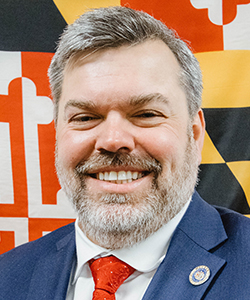
Rep. Mike Griffith
Sponsored bills
Maddy summaryHB 789 amends Maryland's Law Enforcement Officers' Pension System to allow current or former members to receive pension credit for military service under specific conditions. It permits credit only if the member hasn't already received military service credit from another retirement system (with exceptions for Social Security, railroad retirement, or military disability payments). The bill limits total military service credit to a maximum of 5 years, with special provisions: National Guard/reserve members get 4 months per year (max 36 months), and service academy attendees get 4 months per year (max 16 months). This change applies to individuals who haven't met prior pension service requirements and takes effect July 1, 2026.
Maddy summaryHB 972 establishes the Maryland Fair and Agricultural Education Promise Fund, a permanent fund to provide annual grants supporting agricultural fairs and education. The fund will receive lottery proceeds (before allocation to the general fund) and replace previous requirements for horse racing fund allocations. It directs specific annual grants: $825,000 to the Maryland Agricultural Fair Board, $75,000 to the Maryland Agricultural Education Foundation, $550,000 to the Maryland State Fair Society (for youth programs like 4-H and FFA), and $50,000 to the Maryland FFA Association. These grants aim to advance agricultural fairs, education, and youth programs across Maryland.
Maddy summaryHB 980 (Kanaiyah's Law) creates the Office of the Child Welfare Ombudsman within the Attorney General's office to handle complaints about Maryland's child welfare system. It requires juvenile courts to include specific information-sharing requirements in guardianship orders and expands criminal background checks to cover all adults living in a child's guardian's home. The bill also prohibits unlicensed placements for certain children, protects complainants from retaliation, and exempts certain complaint records from public disclosure. These changes directly affect child welfare agencies, guardians, and families navigating the system, aiming to improve transparency and accountability.
Maddy summaryHB 175 repeals the $300 annual limit on Maryland’s income tax credit for hunters donating processed antlerless deer meat to 501(c)(3) organizations, allowing individuals to claim up to $75 per deer processed for human consumption. It requires hunters to comply with state hunting laws and donate meat through eligible nonprofit programs, while mandating donation programs to report donor names and donation counts to the Comptroller annually. The bill directly affects hunters who process and donate antlerless deer meat to qualified nonprofits, removing a previous cap on the total credit amount. Key provisions include maintaining the $75 per deer limit, requiring donations to 501(c)(3) organizations, and adding reporting requirements for donation programs. This changes the policy by expanding access to the credit without increasing the per-deer benefit.
Maddy summaryHB 395 repeals a requirement that new Concentrated Animal Feeding Operations (CAFOs) must obtain a general discharge permit from Maryland's Department of the Environment before beginning construction. This directly affects developers and operators planning new CAFO facilities by removing a pre-construction permitting step. The bill modifies Maryland's Environment Article by deleting Section 9-323(a)(2), which previously mandated this permit for new CAFO construction. The change only applies to the construction phase, not to operating permits or existing CAFOs.
Maddy summaryHB 478 modifies Maryland's income tax by expanding the existing $250 deduction for unreimbursed classroom supply expenses to include prekindergarten teachers. Previously, only K-12 classroom teachers qualified; this bill explicitly adds prekindergarten teachers employed full-time in state programs. The deduction remains limited to $250 per year for supplies used by students or for teaching preparation, excluding expenses already deducted federally. This change affects prekindergarten teachers statewide who purchase classroom supplies without reimbursement, effective for taxable years starting after December 31, 2025.
Maddy summaryHB 720 repeals the expiration date for the Douglas J. J. Peters Veterans of the Afghanistan and Iraq Conflicts Scholarship, removing the current cutoff of June 30, 2030, for awarding new scholarships and eliminating restrictions on renewing scholarships for recipients who received their initial award before that date. This change directly affects eligible veterans, active service members, or their dependents (spouses, children) who served in the Afghanistan or Iraq conflicts and meet Maryland residency and enrollment requirements at participating institutions. The bill maintains all existing provisions, including the 50% tuition coverage limit, 2.5 GPA requirement, and 5-year full-time renewal period. It ensures the scholarship program continues indefinitely without time-based restrictions on new awards or renewals.
Maddy summaryHB 915 establishes a workgroup focused on youth transitioning out of foster care in Maryland. The workgroup includes state agency representatives and 15 youth aged 18-25 who have aged out of foster care, along with advocates from relevant organizations. It must identify current resources for housing, education, health, and other needs; assess service effectiveness; and find successful programs by June 1, 2027. The workgroup's report will inform future policy, but the bill itself creates no new laws or funding.
Maddy summaryThis bill requires Maryland counties with volunteer fire companies to provide no-cost preventive cancer screenings to volunteer firefighters, as defined by the bill. Volunteer fire companies must maintain and annually submit a list of their volunteer firefighters to the county, which must then keep this list on file. Counties can meet this requirement by either offering a free annual health exam including cancer screenings or applying for a specific grant to fund advanced screening technologies like multi-cancer blood tests. The law applies to all counties with volunteer fire companies and takes effect July 1, 2026.